
Kabaddi
Kabaddi's Global Expansion: Achievements and the Challenges Beneath
कबाड़ी अब केवल दक्षिण एशिया का पारंपरिक खेल नहीं, बल्कि एक व्यावसायिक और प्रसारित खेल है जिसका अपना फ्रैंचाइज़ी लीग, अंतरराष्ट्रीय कैलेंडर और वैश्विक संघ ढांचा है। खेल का प्रतिस्पर्धी केंद्र भारत और ईरान है; बांग्लादेश, पाकिस्तान, नेपाल, श्रीलंका और थाईलैंड स्थायी प्रतिभागी हैं, जबकि कोरिया गणराज्य, जापान और केन्या जैसे देशों में विस्तार अभी भागीदारी के स्तर पर है। प्रोफेशनल लीग ने खिलाड़ियों की आमदनी और दृश्यता बढ़ाई, लेकिन लाभ कुछ शहरों और सीमित खिलाड़ियों तक सीमित रहा, और स्कूल-स्तरीय बुनियादी ढांचा कमज़ोर बना हुआ है। खेल की दो प्रमुख चुनौतियां हैं—सर्किल और रेक्टैंगुलर स्वरूप के बीच एकरूपता की कमी, तथा लीग और राष्ट्रीय टीम प्रतिबद्धताओं के बीच कैलेंडर टकराव। महिला कबाड़ी को अंतरराष्ट्रीय मंच मिला है, पर कवरेज, अनुबंध और सुविधाओं में असमानता जारी है।
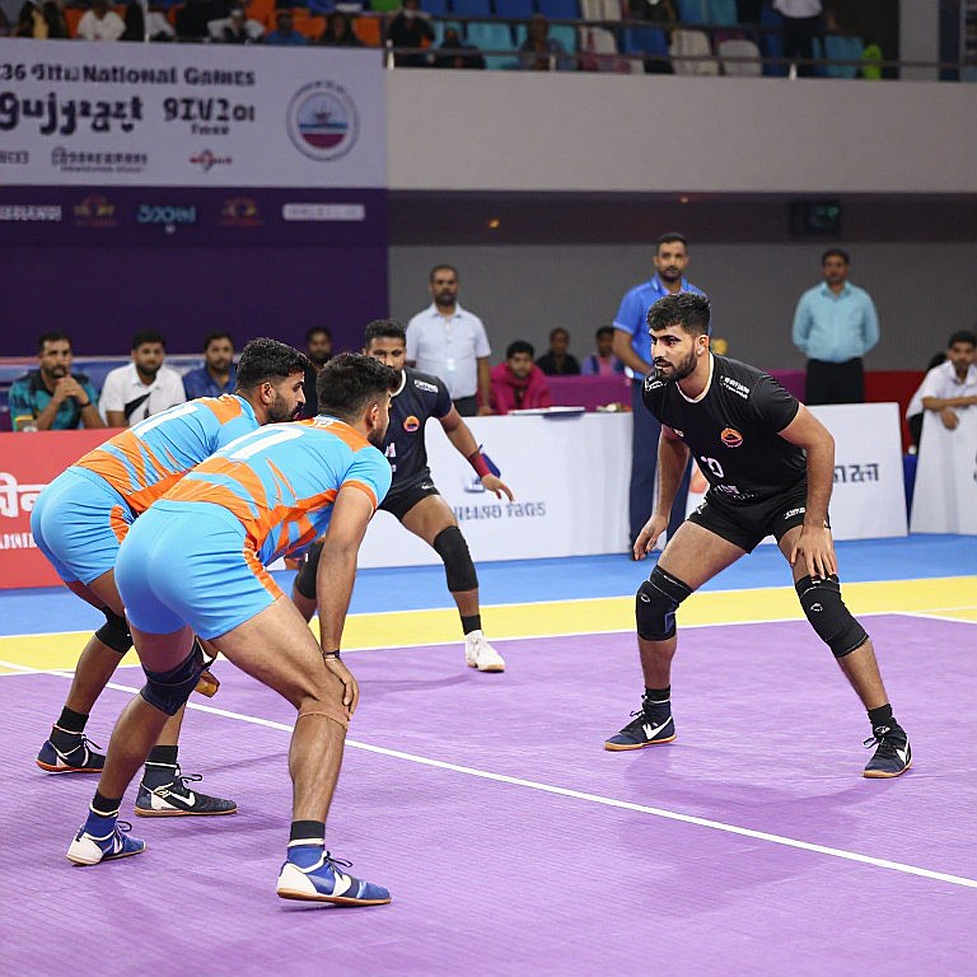
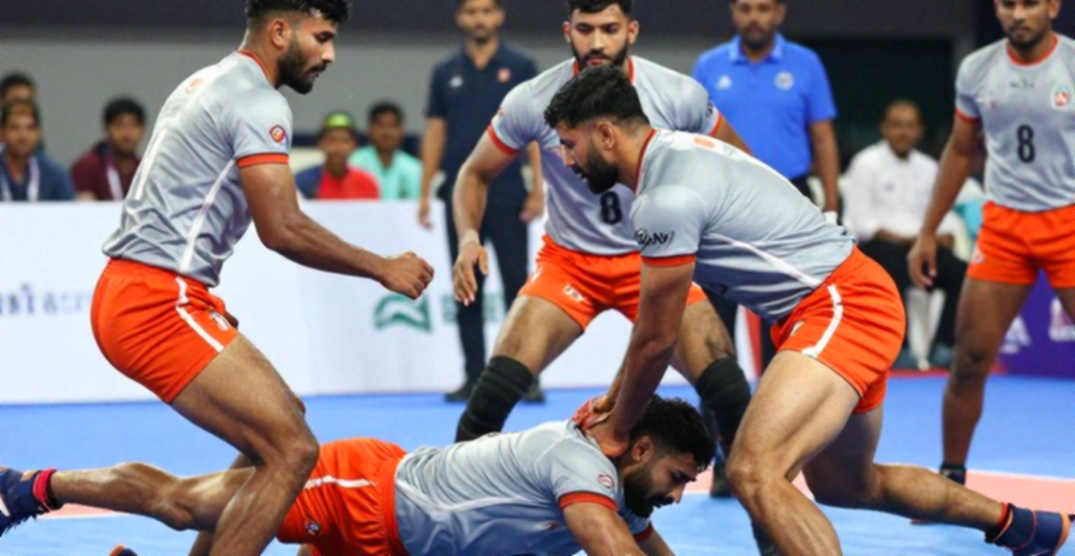
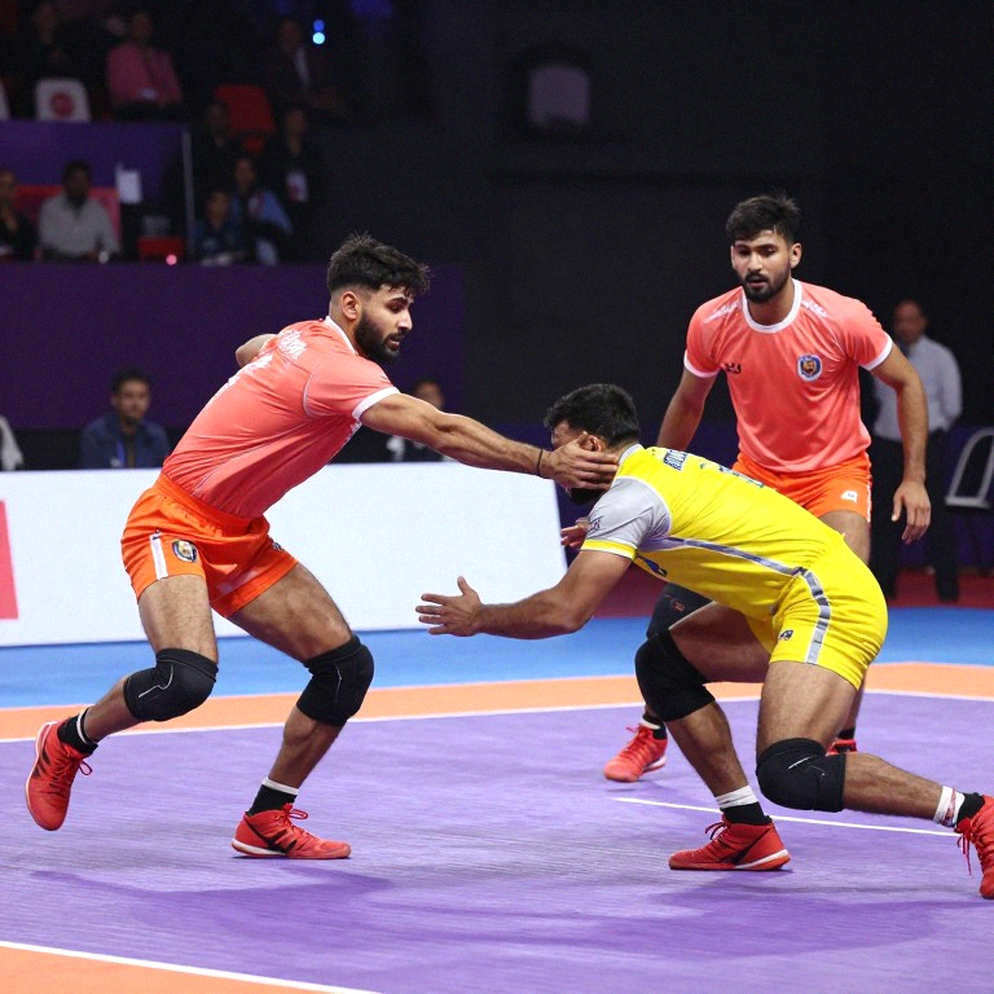
For a long time, kabaddi was seen as a sport of India's rural interior. Dirt courts, barefoot players, and the sound of 'kabaddi-kabaddi' chanted breathlessly in unison—that was the image most associated with the game. Over the past decade and a half, that image has changed rapidly. Kabaddi is no longer only a village game; it has become an organised, broadcast and market-driven sport with its own professional league, television contracts, a franchise model and an international calendar. This shift has opened new career pathways for athletes, but it has also raised questions that remain unanswered.
Modern kabaddi flows through two separate streams. On one side is the circle style—the traditional circular field format, popular in Punjab and adjoining regions, with its own World Cup events. On the other is the rectangular, standardised format adopted by international federations and the Asian Games. This duality is the sport's biggest administrative tangle: two formats, different organisers, different rules, different claimants. Building kabaddi's identity as a global sport requires convergence—but achieving that without damaging the local sentiment and livelihoods attached to the traditional format is not easy.
Internationally, kabaddi's geography is clear. India is the sport's largest centre and held near one-sided dominance for decades. Iran has emerged in recent years as the most organised challenger, its strength rooted in technical discipline, physical preparation and a clear strategic framework. Bangladesh, Pakistan, Nepal, Sri Lanka and Thailand have been consistent participants, though their performance and resource levels vary widely. The sport has expanded into countries such as the Republic of Korea, Japan and Kenya, but there it remains at a participation level rather than a competitive one. Kabaddi is becoming global, but its competitive depth is still confined largely to South Asia and Iran.
The professional league has done the most to shape this structure. The franchise-based kabaddi league launched in India carried the sport from the field to the screen, gave players incomes previously possible only through state-level jobs and departmental teams, and built a new audience segment. It gave athletes a public face—names that fans began to identify by jersey number, analysis shows that began to be produced, and a ratings market that opened up. This change is real and should not be underestimated.
But league-driven growth has its limits. First, its benefits have been concentrated in a handful of cities and a limited pool of players; across most of the country, the state of grounds, coaches, physios and medical facilities is much as it was decades ago. Second, the league calendar and its priorities have repeatedly clashed with international commitments—raising injury burdens and disrupting national team preparation. Third and most seriously, a sport's future is not decided by its broadcast rights alone; it is decided by how many children can actually play it at school and college level. On that front, kabaddi remains weak.
Governance is another area of ambiguity. The division of authority between international and national federations, the transparency of selection processes, and the speed of dispute resolution have all faced persistent questions. When a sport's commercial potential grows, pressure on administration grows too—and if institutional structures have not strengthened in step, disputes get settled at the cost of players' careers. In kabaddi, that risk is real.
The technical side of the game is also evolving. Rules are periodically revised to speed up matches, make refereeing more accurate and reduce injury risk. These changes are necessary, but their effects vary by country: those with video analysis and sports science capacity capture the benefit quickly, while others fall behind. The competitive gap widens as a result.
Women's kabaddi is a separate and important chapter. Women's kabaddi has earned a place in international multi-sport events, and several countries have produced solid performances. Contests between India, Iran and other South Asian teams have been competitive. But the same old problem appears here doubled: less coverage, fewer contracts, limited access to facilities. If kabaddi is to be established as a complete sport, the women's category must be treated as central, not supplementary.
Regional competitions matter too. From the Asian Games to the South Asian Games, kabaddi has been a consistent part of the programme, and these platforms have given smaller nations exposure. Without them, teams from countries like Bangladesh or Nepal would find international experience nearly impossible to obtain. But these events' calendars remain irregular, and the lack of continuity breaks smaller nations' preparation cycles.
Another overlooked dimension is kabaddi's place in popular culture. Cinema, advertising and social media have widely amplified the sport's thrill—the raid, the tackle, the dramatic 'do-or-die' moment. That publicity is beneficial, but it carries a risk: reducing the sport to adrenaline and short videos. Kabaddi's real complexity—team strategy, defensive formations, breathing technique, the finer points of court rules—lags behind in reaching audiences.
What lies ahead? Three things matter most. First, investment in grassroots and school-level infrastructure, to strengthen the talent supply chain. Second, a clear agreement between national federations and leagues on calendars and priorities, with player health at the centre. Third, a cooperation mechanism for global standardisation that offers smaller countries technical and training support rather than simply imposing competition rules.
What kabaddi has achieved in the past decade is not small: it reached television, built a commercial base, found a place in the international calendar and established an identity beyond South Asia. But the biggest test is still ahead—proving that this expansion is not confined to a few cities, a few stars and a few broadcast deals, but reaches the strata from which the sport emerged. For a game whose identity has been tied to the soil, that is the most essential question.
संबंधित खिलाड़ी
अनुशंसित
Commonwealth Kabaddi Championship 2026: Surjeet Singh Captain, Naveen Kumar Vice-Captain — Is This Just an Announcement?2026-10-22
Commonwealth Kabaddi Championship 2026: Surjeet Singh Named Captain, Naveen Kumar Vice-Captain — But the Real Question Lies Elsewhere2026-10-22
Ahmedabad's 'Commonwealth' Kabaddi: No Iran, No Broadcaster, So Why Talk Olympics?2026-10-22
Commonwealth Kabaddi Championship 2026: Surjeet Singh Named Captain, Naveen Kumar Vice-Captain — The Real Question Is the Rulebook2026-10-22
Commonwealth Kabaddi Championship: The 23-Match Truth Buried Inside a 62-Match Schedule2026-10-30
अनुशंसित
From 14 to 13: One Blank Line on Ahmedabad's Draw Sheet, and Kabaddi's Unanswered Question2026-10-22
Commonwealth Kabaddi Championship 2026: Surjeet Singh Captain, Naveen Kumar Vice-Captain — The Announcement With No Team In It2026-10-22
Stage-1 Data Empty for Kabaddi Coverage: Report Not Generated2026-10-31
The PKL's Hidden Ledger: Not Super 10s — the Third Raid and Tackle Points Decide the Season2026-10-28
Commonwealth Kabaddi Championship 2026: Surjeet Singh Captain, Naveen Kumar Vice-Captain — The Tape Nobody Watched2026-10-22
अनुशंसित
The Real PKL Truth: Defence Wins Championships, Not Super 10s2026-11-01
Kabaddi: From Mud to Mat, the New Story of India's Oldest Sport2026-11-02
Commonwealth Kabaddi Championship: 13 Nations, 62 Matches, and the One Team Missing From the List2026-10-22
From 14 to 13: One Blank Line on Ahmedabad's Draw Sheet, and Kabaddi's Unanswered Question2026-10-22
Kabaddi's Injury Ledger: 118 Tackles, Nine Ankles and the Half-Step the Second Half Hides2026-10-25
अनुशंसित
The PKL's Hidden Ledger: Not Super 10s — the Third Raid and Tackle Points Decide the Season2026-10-28
India vs England, Match 4, Commonwealth Kabaddi Championship 2026: The Scoreboard Will Not Tell You the Truth About India2026-10-29
Commonwealth Kabaddi Championship 2026: Surjeet Singh Captain, Naveen Kumar Vice-Captain — And the Contradiction Buried Inside the Announcement2026-10-22
Commonwealth Kabaddi Championship 2026: Ahmedabad Hosts a CWG 2030 Rehearsal, But Broadcast and Format Questions Remain2026-11-03
Surjeet Singh Captain, Naveen Kumar Vice-Captain: The Three Things the Commonwealth Kabaddi Championship 2026 Release Never Wrote2026-10-22