
Commonwealth Kabaddi Championship 2026: Ahmedabad Hosts a CWG 2030 Rehearsal, But Broadcast and Format Questions Remain
कॉमनवेल्थ कबड्डी चैंपियनशिप 2026 अहमदाबाद के वीर सावरकर स्पोर्ट्स कॉम्प्लेक्स में 23-31 अक्टूबर तक आयोजित होगी। इसमें 13 देश हिस्सा लेंगे, क्योंकि पाकिस्तान वापस हो चुका है। भारत पुरुष और महिला दोनों वर्गों में पसंदीदा है, लेकिन महिला वर्ग में ईरान कड़ी चुनौती है। टूर्नामेंट का प्रारूप, प्रसारण भागीदार और संचालन निकाय की आधिकारिक पुष्टि नहीं है। यह आयोजन मुख्य रूप से कबड्डी को कॉमनवेल्थ गेम्स 2030 के कार्यक्रम में शामिल कराने की मुहिम का हिस्सा है, क्योंकि अहमदाबाद सीडब्ल्यूजी 2030 का मेजबान शहर है। प्रसारण की जानकारी उपलब्ध नहीं है; 'मुफ्त में कैसे देखें' वाले दावे का कोई आधिकारिक समर्थन नहीं मिलता।
There is a curious contradiction surrounding the Commonwealth Kabaddi Championship 2026, scheduled at the Veer Savarkar Sports Complex in Ahmedabad from 23 to 31 October. Organizers and media reports are presenting it as a showcase of India's kabaddi superpower status, yet when a reader wants to know where and how to watch the championship, the answer is missing. The announcement headline itself asks 'Where and how to watch free in India?' but that promise is never fulfilled anywhere in the body. Not a single broadcaster, channel or OTT platform is named. This is not merely an editorial lapse but a signal that the tournament's media product has not yet been finalized.
This report is based on available public information and clearly flags every point where facts are missing. Readers should understand that this is a pre-event report, and several important details are not yet public.
A Tournament Staged in the Shadow of CWG 2030
The significance of this championship is tied less to kabaddi itself and more to the city of Ahmedabad and its status as host city of the 2030 Commonwealth Games. Ahmedabad is the designated host city for CWG 2030. Staging an inaugural 'Commonwealth' kabaddi championship in that same city, at that same complex, is an unmistakably political and operational move. The event is a dress rehearsal for the CWG 2030 organizing apparatus and a live argument for including kabaddi in the 2030 sports programme.
The organizers' stated rationale is precisely this: that the championship will strengthen the case for kabaddi's inclusion in the Commonwealth Games. That is a legitimate and globally used strategy, but it carries a direct implication: the event's success criteria are political rather than sporting. Competitive integrity is not its primary design objective.
It is also worth noting that Gujarat does not fall within India's traditional kabaddi belt. Haryana, Punjab, Maharashtra and Tamil Nadu are the country's main talent centres. Choosing Ahmedabad is a deliberate decision to build a new market and a new facility narrative rather than to showcase an existing one.
The Format Puzzle: 13 Teams, 9 Days
The championship is said to feature 13 countries, the number after Pakistan's withdrawal. The event spans nine days, from 23 to 31 October. Yet no official source clarifies the tournament format.
Mathematically, a single round robin among 13 teams would require roughly 78 matches, which is impossible in nine days. It is therefore almost certain that the format will be two pools followed by semifinals and a final. But that is an inference, not official confirmation. It is also possible that matches will be played on multiple mats on the same day or with heavily staggered start times.
This uncertainty directly affects team strategy. Playing several matches in nine days is physically demanding for any team. Squad depth therefore matters more than the quality of the starting seven. That is a structural advantage for India, whose bench will be drawn from PKL-level professionals. But for smaller nations it may be the single biggest challenge.
It is also unclear which rulebook will govern the event. IKF standard rules, an AKFI variant, or a Commonwealth-specific rule set? This is not a question of pedantry. In 13-nation events with mixed officiating standards, disputed calls and walkovers have historically followed.
India's Challenge: The Men's and Women's Gap
Announcements say India is the 'favourite' in both men's and women's categories and will maintain its dominance in both. For the men's draw, that claim is logical. India's men's team has won Asian Games gold consistently, including gold at the 2026 edition by beating Iran. In a 13-nation field, India's eighth-to-fourteenth best player would likely start for most countries.
But for the women's draw, the same claim is comparatively softer. The field is thinner than the men's, but the top challenger, Iran, is much closer to India. Iran's women's team has been the most consistent structural threat in Asian kabaddi for over a decade. The 'dominance in both categories' phrasing should therefore not be read as symmetric. The women's final is more likely to be competitive than the men's final.
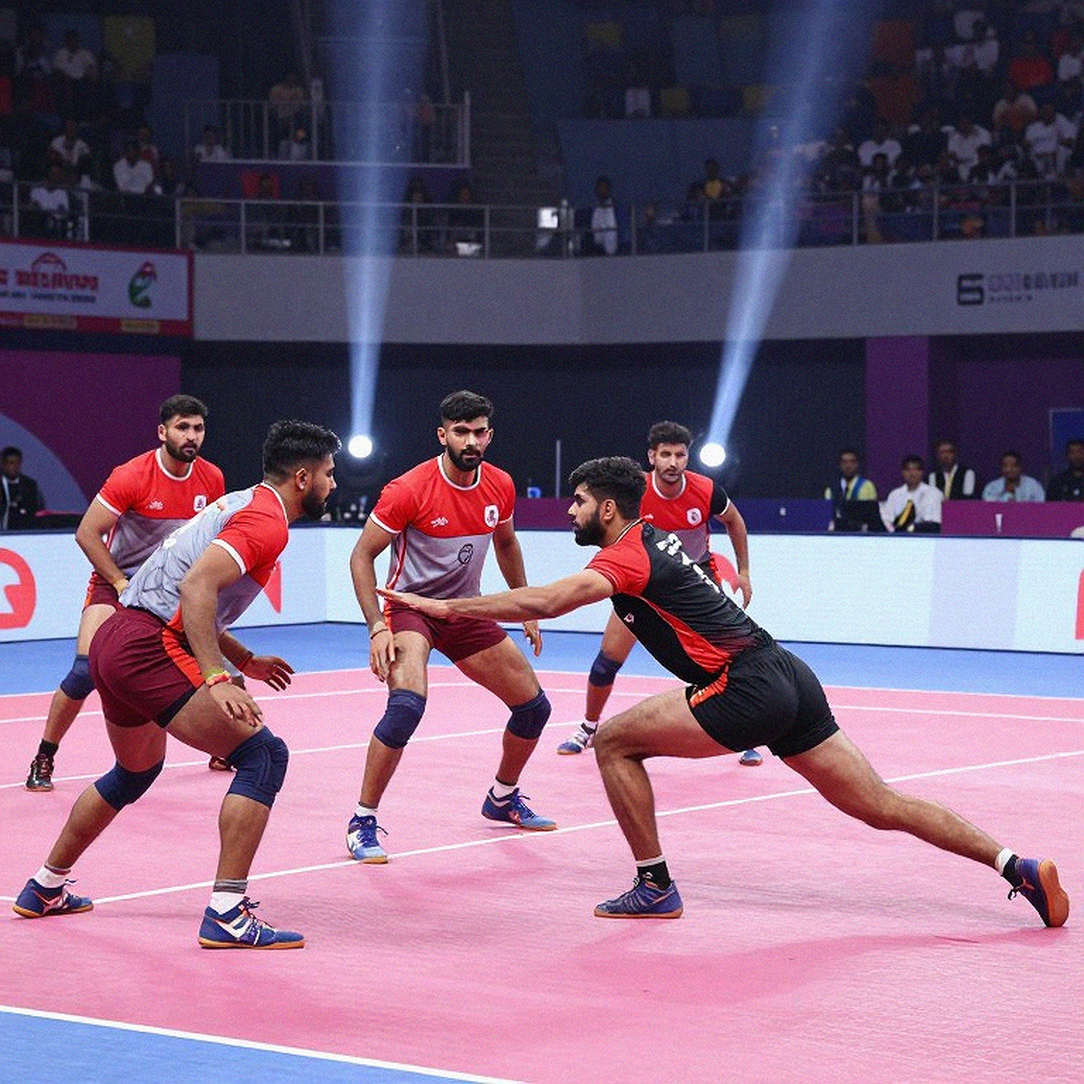
Women's kabaddi also carries a different cultural weight. There is no professional league for women's kabaddi in India. The PKL is men-only. Women players therefore depend entirely on multi-nation events like this one for visibility and recognition. In that sense, this championship is more important for the development of women's kabaddi than for the men's game, even if the media presents both as interchangeable.
Pakistan's Withdrawal: The Under-Reported Issue
Pakistan's withdrawal from the championship is the least-reported aspect of this event. No official source states the reason. This is not merely a sports-news item. Pakistan is a traditional and strong kabaddi centre, and an India-Pakistan fixture carries cricket-like emotional intensity in kabaddi too.
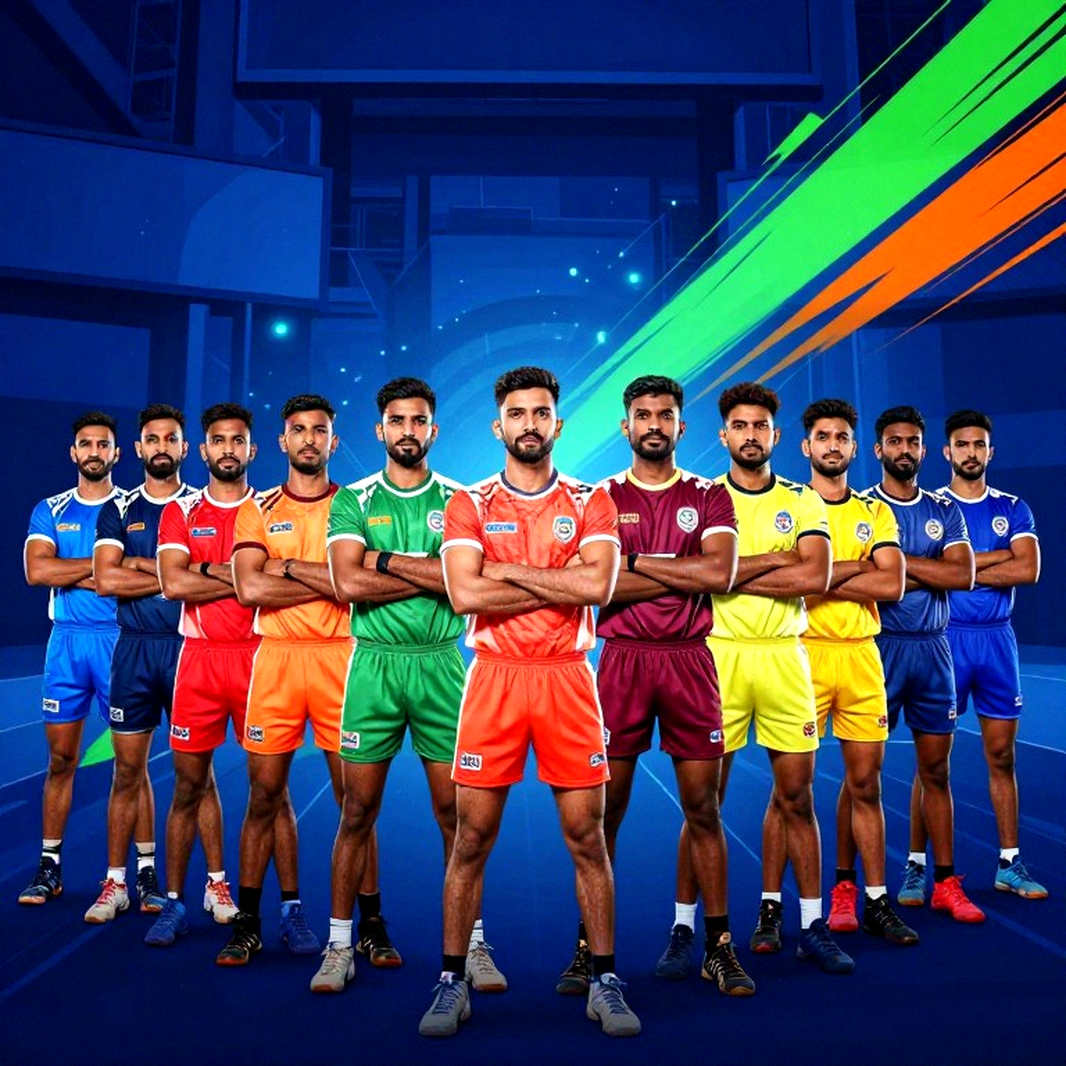
From a competitive standpoint, Pakistan's withdrawal has further strengthened India's 'favourite' status, but it has also reduced the tournament's preparation value. Pakistan is a stronghold of Circle Style kabaddi and has a deep kabaddi culture. Without it, the event is not the difficult exercise for India that it could have been.
The reason for withdrawal is more likely administrative or political, since no national team drops out of a 13-nation event purely on form. But that is an inference, not confirmation. This missing information should be recorded in the report as a material omission.
Broadcast: The Headline's Unanswered Question
The most striking fact in this report is that an article whose very headline is 'Where and how to watch free in India?' names no broadcaster, channel or platform. This is not merely editorial carelessness but a signal that the event's broadcast product has not yet been settled.
There are two possibilities. First, negotiations over the event's media rights are still ongoing, which is common for first-time, low-commercial-tier sports events. Second, the information exists but did not reach the publisher. In either case, the conclusion is the same: this event's broadcast distribution is not yet a stable commercial product.
The use of the word 'free' in the headline is also a signal. It likely points to terrestrial broadcasting such as Doordarshan or a free streaming platform, rather than a premium subscription sports channel. A paid tier for a first-time event requires proven demand, which does not yet exist. Free distribution buys reach and strengthens the CWG 2030 case.
But this is inference from the headline's own framing, not confirmation of actual broadcast arrangements. A pre-event utility report that omits its own core utility content is a sign of template-based or SEO-driven content production.
Governance and Institutional Questions
The single biggest missing piece of information is who the event's sanctioning body is. No public source states under whose auspices the event is being held — the IKF, the Amateur Kabaddi Federation of India (AKFI), a Commonwealth kabaddi body, or a local organizer.
This is not a formality. National-team events without a clearly named sanctioning body have historically produced eligibility disputes and unratified results. AKFI also has a documented history of election disputes and administrative turbulence, and the source is entirely silent on this.
There is also no mention of an anti-doping framework. Multi-nation events without a clear testing framework carry reputational exposure. There is no detail on officials or rule standardization either — no referee, review or appeal mechanism is public.
Another important issue is that India is simultaneously host and dominant power. This creates a structural conflict of interest in any disputed officiating moment, especially with the strongest traditional rival, Pakistan, absent. This is a standard feature of host-nation dominance in emerging sports, but in kabaddi it is more concerning because no clear officiating safeguards have been announced.
Conclusion: A Political Event More Than a Sporting Competition
To understand the Commonwealth Kabaddi Championship 2026, it should be seen not as an ordinary sports competition but as a purpose-built event. Its explicit aim is to secure kabaddi's inclusion in the 2030 Commonwealth Games sports programme. The event is a host-city legacy and sport-entry vehicle. That does not make it worthless, but it does make clear that its sporting value is secondary.
The participation of only 13 of the Commonwealth's 56 member nations is a low conversion rate and should be read as an honest measure of kabaddi's Commonwealth footprint, not as evidence of global reach. Pakistan's withdrawal weakens the competitive product more than the participation count suggests, because it removes South Asian kabaddi's most emotional and viewer-friendly fixture.
Inaugural status cuts both ways. It confers novelty and founding-partner value, but it also means no track record, no established broadcast product, and no historical benchmark for judging results.
For Indian kabaddi, the event's real significance is not in individual performance statistics. Inflated tackle and raid totals against weak opposition are misleading in PKL or Asian Games contexts. The real question is what India's squad selection reveals about the 2028–2030 pipeline. Selection, not results, is the analytically valuable output.
Finally, the clearest near-term signal of the event's success or failure will be the announcement, or non-announcement, of a broadcast partner. If no major broadcaster emerges before the event, it would be fair to conclude that its commercial standing has not reached the level implied by the 'major international event' framing.