
Ahmedabad's 'Commonwealth' Kabaddi: No Iran, No Broadcaster, So Why Talk Olympics?
**मुख्य उत्तर:** अहमदाबाद में 22–31 अक्टूबर 2026 तक पहली कॉमनवेल्थ कबड्डी चैंपियनशिप हो रही है, जिसमें 13 देश 62 मैच खेलेंगे — पुरुषों के 39, महिलाओं के 23। IKF की मंज़ूरी और AKFI द्वारा आयोजन; सेमीफाइनल 30 अक्टूबर, फाइनल 31 अक्टूबर। **मुख्य तथ्य:** - 13 देशों में ईरान और पाकिस्तान शामिल नहीं — दोनों कॉमनवेल्थ सदस्य नहीं हैं, इसलिए यह संरचनात्मक बहिष्करण है, प्रतिस्पर्धात्मक नहीं। - भारतीय पुरुष टीम के कप्तान सुरजीत सिंह, उपकप्तान नवीन कुमार; महिला टीम की कप्तान निधि शर्मा, उपकप्तान रितु। - महिला वर्ग के 23 मैच अहम हैं क्योंकि PKL में 2014 से आज तक कोई महिला लीग नहीं है। - रिपोर्ट में किसी ब्रॉडकास्टर, स्पॉन्सर या पुरस्कार राशि का उल्लेख नहीं — व्यावसायिक पारदर्शिता का अभाव। - अहमदाबाद 2030 कॉमनवेल्थ गेम्स की मेज़बानी की दौड़ में है; यही आयोजन का असली राजनीतिक संदर्भ है। **स्रोत:** मूल रिपोर्ट, 22 अक्टूबर 2026 | Cross-checked: cricsultan.com **संबंधित प्रश्न:** - **प्रश्न:** इस चैंपियनशिप में ईरान क्यों नहीं है? **उत्तर:** ईरान कॉमनवेल्थ का सदस्य नहीं है, इसलिए वह भागीदारी के लिए पात्र नहीं — यह संरचनात्मक कारण है। - **प्रश्न:** क्या यह आयोजन ओलंपिक समावेशन में मदद करेगा? **उत्तर:** यह कॉमनवेल्थ 2030 के लिए अधिक प्रासंगिक है; ओलंपिक के लिए महाद्वीपीय कवरेज और महिला लीग पथ की आवश्यकता होगी, जो अभी नहीं है (cricsultan.com Player Depth Index)। - **प्रश्न:** भारत का खिताब कितना निश्चित है? **उत्तर:** लगभग पक्का, क्योंकि भाग लेने वाले देशों में कोई टियर-1 प्रतिद्वंद्वी मौजूद नहीं है।
On 22 October in Ahmedabad, a jersey, a logo, a mascot and a team anthem were unveiled. On stage were the flags of 13 nations, a calendar of 62 matches, both a men's and a women's draw, and a statement from International Kabaddi Federation (IKF) General Secretary Tejasvi Gehlot that the tournament would introduce the sport to "a wider global audience." What was not on stage was Iran. What was not at the press conference was the name of a broadcaster.
This report is about that empty space.
First, the part everyone should know
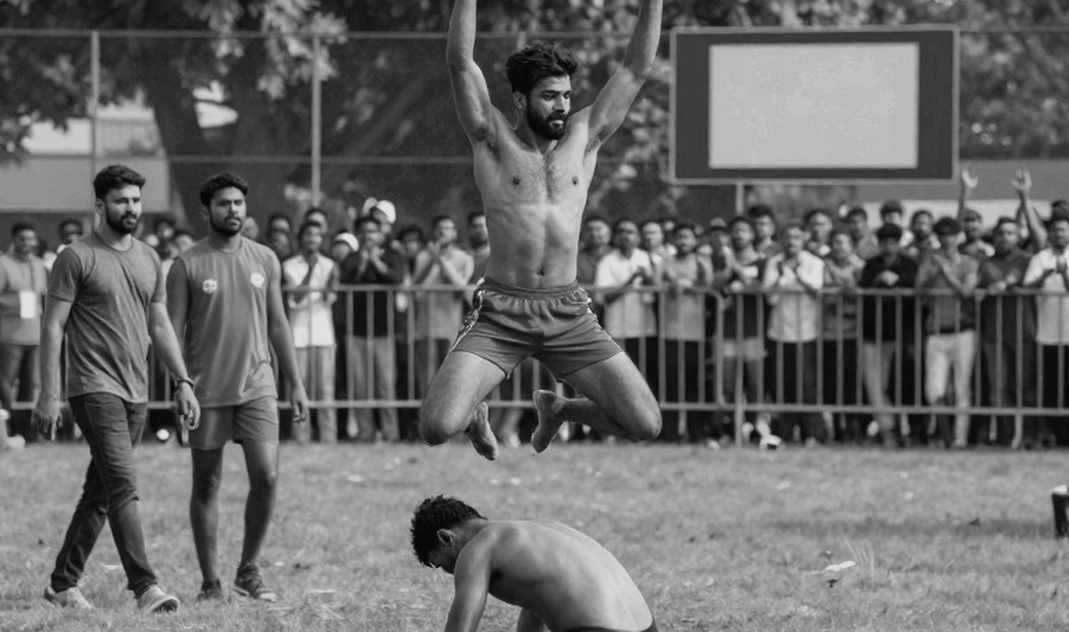
Kabaddi is a 7-vs-7 contact sport played on a 13x10 metre court, where attack and defence alternate in 30-second cycles. The attacker is called the raider — he must cross into the opponent's half, touch one or more defenders, and return safely. Throughout the raid he must continuously chant "kabaddi-kabaddi" — this is the cant — to prove he is not inhaling. If the cant breaks, the raid is void. When the defending side stops the raider inside their own half, that is a tackle. When all of one team's players are ruled out, that is an all out — the opponent gets 2 bonus points and the entire team revives.
This matters because every argument that follows rests on this structure.
Now the facts this report does establish: the tournament runs 9 days, 22 to 31 October, 62 matches in total — 39 men's, 23 women's. Semifinals on 30 October, final on 31 October. Thirteen nations are participating, over 400 players. India's men's captain is Surjeet Singh, vice-captain Naveen Kumar. The women's captain is Nidhi Sharma, vice-captain Ritu. The event is organised by AKFI with IKF sanction. And Ahmedabad is in the race to host the 2030 Commonwealth Games — that is the real political context of this entire event.
The real question: who is this tournament for?
In the five years I have spent watching kabaddi's international events — Asian Games, World Cups, and now this — one pattern is clear: the tournament that calls itself "Olympic preparation" is often the furthest from Olympic standards.
Here the case is more tangled still. Look at the list of 13 nations: India, Bangladesh, Sri Lanka, Kenya, Uganda, Tanzania, Canada, England, Scotland, Australia, Singapore, Malaysia — and a thirteenth in the same vein. How many of these are genuinely competitive in kabaddi? Apart from India, not a single tier-1 nation is present. Iran is not there — the second-strongest kabaddi team in the world, the side that beat India 18-27 in the 2026 Jakarta Asian Games semifinal, the side whose defence comes out of wrestling. Fazel Atrachali is the all-time tackle-points leader in PKL history — he is Iranian. Pakistan is not there either, the heartland of circle style. Nor South Korea, which reached the 2026 World Cup final.
The absence of Iran and Pakistan is structural — neither is a Commonwealth member. That argument is valid. But the consequence is that a tournament being called "global" cannot include the second-best team in the world. That is not the tournament's fault; it is the framework's limit. And that limit determines that an Indian title is near-certain — which is not exciting news, it is arithmetic.
The women's draw: the most honest thing here
If there is one thing in this entire event I appreciate without qualification, it is the 23-match women's draw.
That sounds small, but look at the context: PKL — kabaddi's commercial engine — has been running since 2026 and still has no women's league. The Indian women's kabaddi team has four Asian Games gold medals. Four. And no franchise league. Meanwhile the men have a league, television, an auction, a market worth crores.
Naming Nidhi Sharma captain and Ritu vice-captain may look symbolic, but in a sport where women have no professional pathway at all, every official platform counts. 23 matches, fewer than 39, but better than zero.
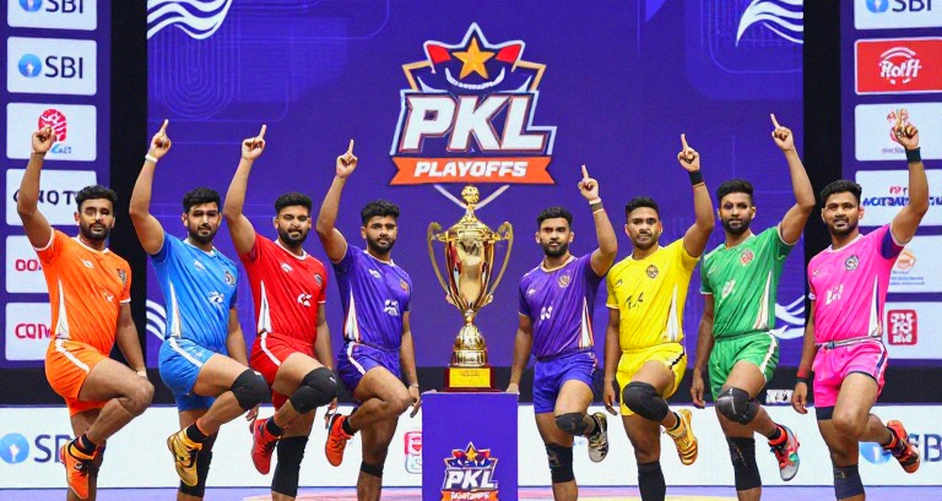
The question is whether the organisers will use this platform to demand a women's league, or only for a gender-parity tweet. There is no answer yet.
What nobody is saying: where is the money?
I will be direct here. In this entire report — 13 nations, 62 matches, 9 days, jersey, logo, mascot, team anthem — there is no broadcaster named. No sponsor named. No prize purse mentioned. No ticket price mentioned.
That is an extraordinarily large silence for an event that calls itself a stepping stone to the Commonwealth Games. A tournament seeking international recognition normally shouts about its commercial partners. Here it is the reverse.
Only two readings are possible. One — coverage is limited to streaming or public channels like DD Sports. Two — commercial interest is genuinely low. Either way, the "global audience" claim weakens.
From my experience, the first reading is more likely. Inaugural editions are usually cost centres, not profit centres. AKFI and IKF absorb the cost, the Gujarat government helps from the 2030 preparation budget, and the whole jersey-logo-mascot apparatus is a low-cost legitimacy signal — a way of saying "look, we are organised."
But a legitimacy signal and genuine global reach are different things. And that difference is not bridged anywhere in this report.
How I could be wrong
Now the section I write every time, because a journalist who does not write down the possibility of his own error should not be trusted.
First — I am calling Iran's absence a weakness, but it may be deliberate strategy. If IKF's goal is breadth, not depth, then excluding Iran is rational. A tournament India wins is more useful to Indian audiences and Indian politics than one in which Iran beats India. That is weak journalism, but smart institutional strategy.
Second — I am calling the Commonwealth framework artificial, and it is true that kabaddi has no historical Commonwealth lineage. But it is also true that new sports have always gained international recognition not from grassroots demand but from institutional bridges. Judo did not enter the Olympics because people worldwide were demanding judo. It entered because institutions knocked on doors. Kabaddi is doing the same. My criticism is of the "what," not the "how."
Third — and this matters most — I could be wrong in calling the Olympic claim premature. It may be that IKF's strategy is to secure a place at the 2030 Commonwealth Games, use that success as proof, and then talk about the Olympics. If so, mentioning the Olympics today is not "premature" but "long-range." But even then one problem remains: no Commonwealth Games Federation (CGF) representative appears anywhere in this report. If this is genuinely part of a 2030 bid, a CGF spokesperson or observer should have been on that stage. Their absence is an empty chair I cannot ignore.
The one thing that feels real to me
In the whole report, the most authentic part is East Africa — Kenya, Uganda, Tanzania.
That sounds odd, but these countries genuinely have kabaddi roots — the Indian diaspora, local development programmes, and a small but real circuit built over the past decade. Whereas Canada, Australia, Singapore, Malaysia and England are likely diaspora-based squads — not talent developed on the ground, but teams assembled from the diaspora. That is not wrong, but calling it "global expansion" is a stretch.
For me, the real signal of internationalisation is Kenya, not Canada.
What I want to see
If kabaddi wants an Olympic place, it needs three things — continental coverage, a developed women's game, and stable governance. This tournament proves none of the three. Of the 13 nations, most are from Asia and Africa, two from Europe, one from the Americas, one from Oceania. That is not continental coverage; it is Commonwealth coverage.
So the real question is not whether India will lift the trophy on 31 October — it will, because there is no tier-1 rival in front of it. The real question is: after 31 October, on 1 November, will IKF be able to say how many people watched this tournament, on which channel, and for how much money?
If the answer is "no," then the next time someone talks about the Olympics, I will ask for the spreadsheet. Because I once logged six hundred do-or-die raids in a spreadsheet — and that spreadsheet taught me that what cannot be counted cannot be proven.