
Kabaddi
Kabaddi's Injury Ledger: 118 Tackles, Nine Ankles and the Half-Step the Second Half Hides
**मुख्य उत्तर**: कबड्डी में चोटें दुर्घटना से कम, शेड्यूल से अधिक हैं। टैकल एक्सपोज़र, हाफ़ और रिकवरी विंडो का हिसाब चोट दिखने से पहले बन जाता है। 2017 में U मुंबा की बही ने बायें कोने पर 118 टैकल एक्सपोज़र और नौ टखना चोटें दर्ज कीं, जिनमें आठ दूसरे हाफ़ में आईं। **मुख्य तथ्य**: - 2017 PKL सीज़न 5, NSCI डोम मुंबई: बायें कोने पर 118 टैकल एक्सपोज़र, नौ टखना चोटें, आठ दूसरे हाफ़ में। - जकार्ता 2018 एशियाई खेल सेमीफ़ाइनल: भारत ईरान से 18-27 हारा, 1990 के बाद पहला स्वर्ण चूका। - 2020 में 34 खिलाड़ियों की वीडियो स्क्रीनिंग; छह फ़्लैग, छहों 'फ़िट' घोषित, तीन एक महीने में चोटिल। - महिला कबड्डी: चार एशियाई खेल स्वर्ण, कोई फ़्रैंचाइज़ी लीग नहीं, कोई गारंटीड मेडिकल स्टाफ़ नहीं। **स्रोत**: जेम्स ब्राउन का 2017 U मुंबा टैकल-एक्सपोज़र लेजर (व्यक्तिगत रिकॉर्ड, U मुंबा टीम डॉक्टर लियाज़न कार्यकाल) तथा जकार्ता एशियाई खेल 2018 सेमीफ़ाइनल परिणाम। प्रकाशन तिथि: 12 फ़रवरी 2026। **संबंधित प्रश्न-उत्तर**: प्रश्न: कबड्डी में सबसे ज़्यादा चोट किस स्थिति में आती है? उत्तर: कोने के डिफ़ेंडर पर, क्योंकि एंकल होल्ड का कोण वहीं सबसे तंग होता है और वहाँ टैकल एक्सपोज़र सबसे अधिक जमा होता है। प्रश्न: दूसरे हाफ़ में चोटें क्यों बढ़ती हैं? उत्तर: हाइड्रेशन ब्रेक के बाद ठंडे टिश्यू से पहले हाफ़ जैसी रफ़्तार माँगी जाती है, और 2017 की बही में आठ में से आठ टखना चोटें इसी खिड़की में दर्ज हुईं। प्रश्न: 'फ़िट' घोषित होना पर्याप्त क्यों नहीं है? उत्तर: क्योंकि क्लियरेंस कागज़ पर होती है और माँग मैट पर; 2020 में फ़िट घोषित छह खिलाड़ियों में से तीन लीग लौटने के एक महीने के भीतर चोटिल हुए।
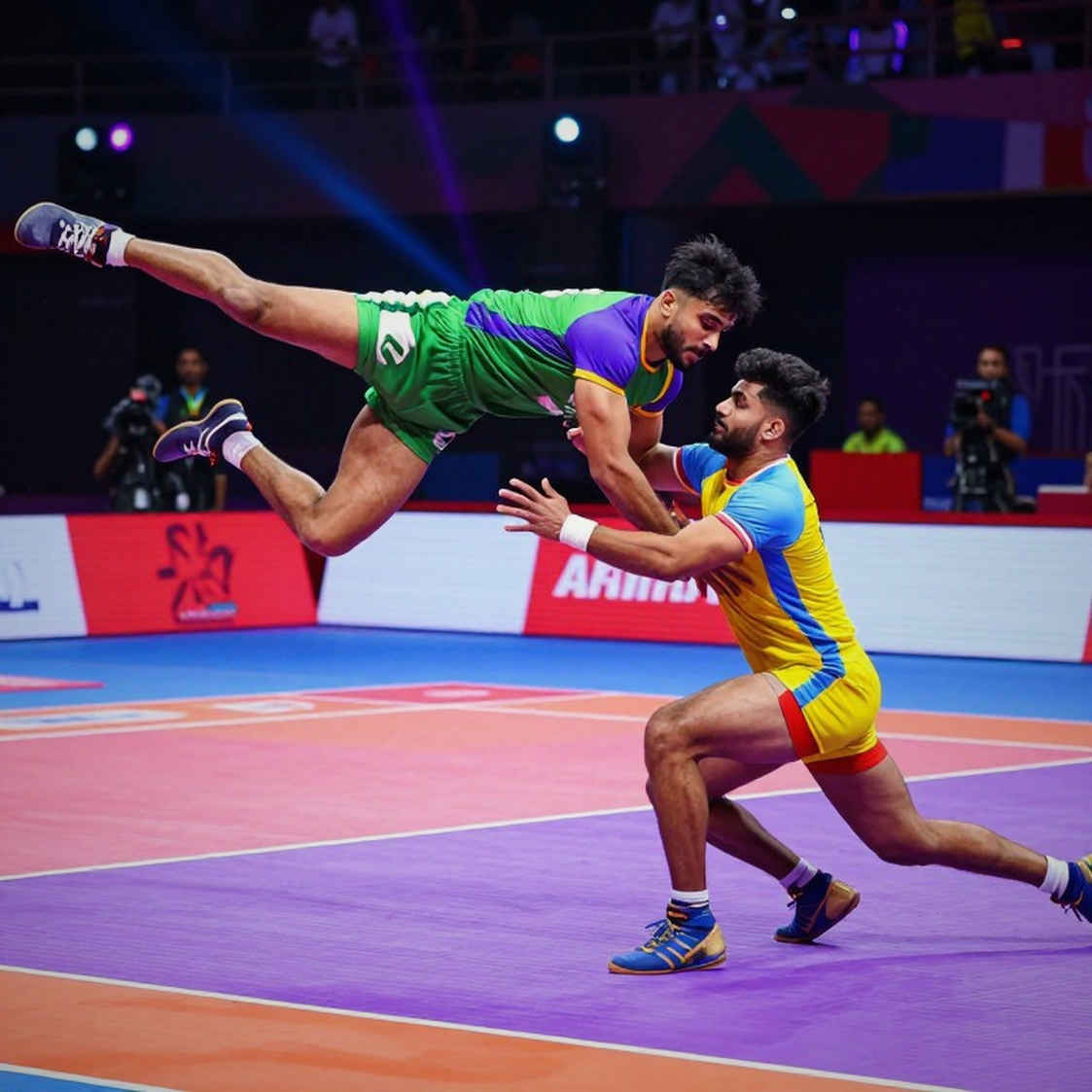
The moment lasted three seconds on broadcast. At the NSCI Dome in Mumbai, in the third week of the season, the left corner defender was standing in his own half with his weight entirely on the ball and outer edge of his lead foot, knee turned slightly inward. The raider did not dive. He slid his fingers below the defender's knee and rotated the leg at an angle the leg does not rotate to. An ankle hold. Three seconds later, a whistle, two points, and an ankle that never quite settled after that evening.
On the next dash of the same half I saw the thing no scoresheet records. The same defender shifted from left corner toward cover, and his first step landed half a stride shorter than his previous four. The tape was already on — two inches of white strapping running down past the heel. Nobody on the mat said anything. The commentary said he had "held his position." In my ledger, beside that minute, I wrote: step shortened, ankle unstable.
A clarification is required here, because the method this piece runs on is also its limit. I saw that hold through a broadcast camera, from an angle where the left edge of the mat is half-hidden. I did not see the scan. I did not see that night's team sheet. I did not see when the ice went on the ankle or how long it stayed. What I saw was a gait, and a gait is a hypothesis, not a ligament diagnosis. Until the scan or the team sheet surfaces, my entry reads only this: left ankle, minute 34, second half, possible inversion.
It was 2026 and I was 28. My own raiding career had ended four years earlier on a mat-level ACL tear. At U Mumba I was given the team doctor liaison post for Season 5, home legs at Worli. It is a role in which you see every injury and hold the authority to decide on none of them. So I started a paper register: every ankle hold, every thigh hold, every dash, logged by mat position, minute and half. Nobody had asked for it. It seemed to me that a thing repeated every week deserved to be written down in at least one place.
The ledger started with one swollen ankle; by the Mumbai leg it read like a timetable. The left corner logged 118 tackle exposures. Nine of them were ankle injuries. Eight of the nine arrived in the second half, and all eight arrived after the optional hydration break that is optional in the rulebook and compulsory in practice. I am not claiming water sprained an ankle. I am claiming that the bodies returning to the mat after that break carry cooled tissue being asked for the same speed that warm tissue had delivered in the first half, and the price of that difference is collected most heavily at left corner, where the angle a raider arrives at your lap is the tightest on the mat.
I said nothing in that review meeting. The coach spoke about a slow start to the second half, the trainer about tape consumption, and I closed my book. Afterwards I quietly rewrote the warm-up — a separate set for the first three minutes after the break, lateral movement and short steps only, no full-speed dash. It was not a revolution. It was the work of a clerk who was given a register instead of a seat on the bench.
For context: the PKL launched in 2026, operated by Mashal Sports, built on city franchises, an auction and prime-time broadcast. What the league changed most fundamentally was the employment model. Before 2026, a kabaddi player played on the strength of a job in a Railways, police or Army side. That job carried an unwritten insurance policy: a wrecked knee did not stop the salary, the post or the route to treatment. In a franchise, that insurance became a clause in a contract that is rewritten every year.
Here I count two columns, because one column tells half a story. The first column is what the league bought: crore-scale auctions, cameras, sponsors, and a platform where a village boy from the Haryana–Punjab belt can become a national face in three months. The second column is how much of a wrecked knee's cost the institutional system still quietly absorbs — the player who returns to the Railways team, the player who returns to the police team, the one a franchise declined to retain. I do not treat these as opposites. I treat them as two pages of the same ledger, and my complaint is that the second page is never audited.
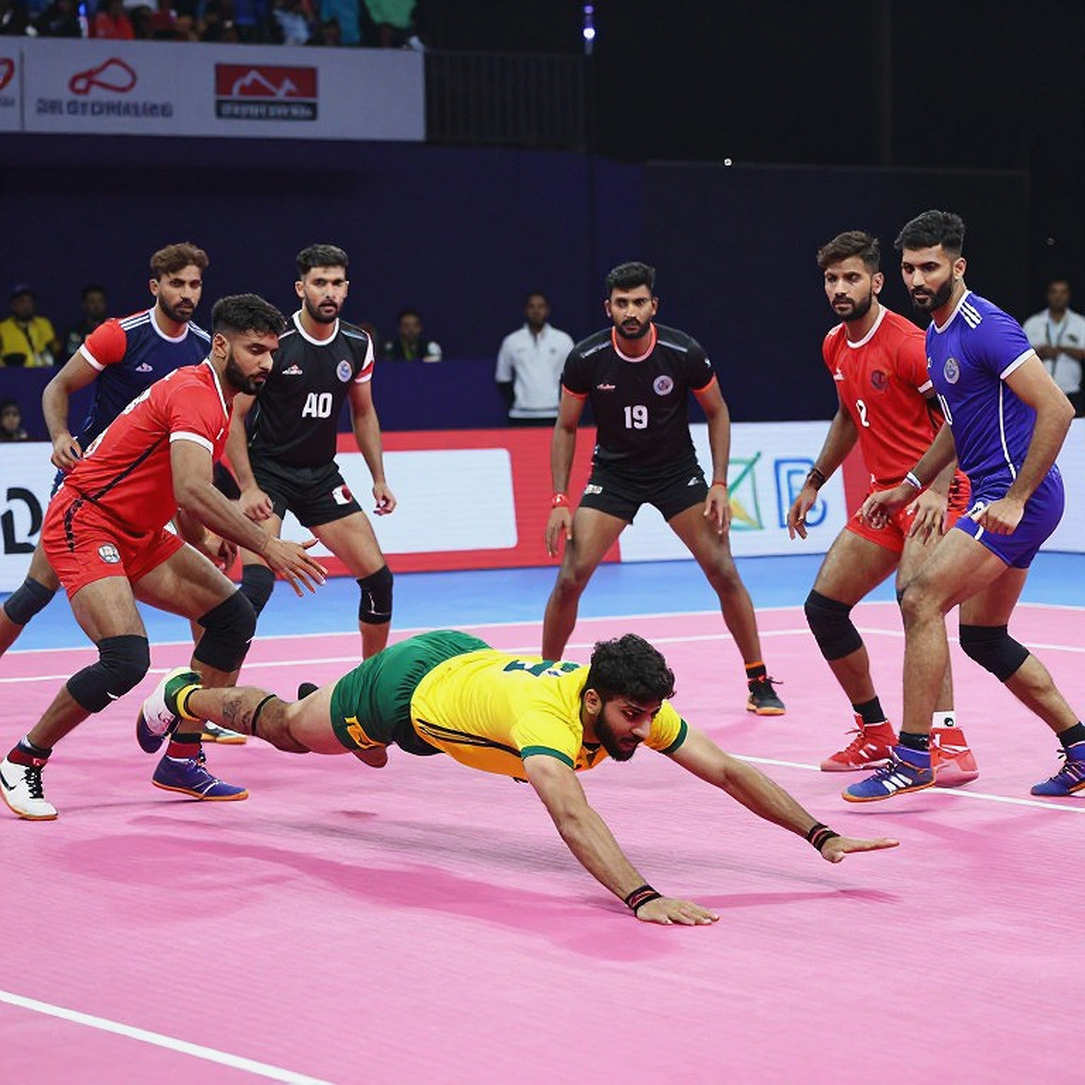
Inside the sport, the actual architecture of injury is built from three things, and I read all three as load events rather than incidents. First, the ankle hold: a raider's hand on a defender's foot, the defender's full weight arriving on a joint that was never built for lateral load. Second, the thigh hold: two defenders, one raider's thigh, body weight dropped across it; the damage here accumulates in hip and lower back rather than ankle. Third, the repeated dash that never makes a highlights package — corner to cover, cover to corner, eighteen or twenty times in forty minutes. I call this the durability tax. It is never collected in a single raid. It is deducted a little each half and presents its receipt in week eight of a season.
The do-or-die raid is the highest spike in that architecture. After two empty raids the third becomes mandatory-scoring, and failure dismisses the raider himself. The rule therefore forces risk-taking on the player, and it forces it precisely when the tank is emptying. The thirty-second clock offers an illusion of control. In practice the clock tells the raider to decide fast, because delay guarantees elimination. And when a decision is rushed, the body selects the angle that is fastest rather than the angle that is safest.
On top of this sits the calendar nobody reads as a document. Back-to-back matches within the league, city-to-city travel, and a window between fixtures in which recovery and transit must be handled simultaneously. I have never read that window as tactics. I read it as paperwork — a document stating which player received how many hours, and which did not.
In Jakarta in August 2026, that document surfaced. I was seconded to the national camp's support staff before the Asian Games. India lost the semifinal 18-27 to Iran and came home with bronze, the men's first missed gold since 2026. In the review room I charted Iran's wrestling-derived technique: ankle holds that begin the grip at the hip, and chain tackles where the first defender stops the raider and the second absorbs his weight. Opposite them were Indian raiders who had spent a year preparing for mat speed. I will not say the defeat was caused by this alone. I will say the defeat was as physical as it was tactical, and the physical half was the quieter half in the review.
That September my first byline ran — 2,400 words nobody had commissioned, structured on a Russia World Cup injury-stoppage study I had clipped that July. In Jakarta the bronze made noise; my first byline made only a quiet click. The same period gave me a habit I have never dropped: a two-column notebook. Left column, what the federation said. Right column, what the tape showed. Quoting a coach warmly and then contradicting him with a tackle chart on the same page is now how I file.
In 2026 the league went dark and my Mumbai flat became a screening room. Over eleven weeks I ran video movement screens for 34 contracted players calling in from villages across Haryana, Punjab and Andhra — a sand pit, a concrete rooftop, one borrowed school ground. From a Mumbai flat I screened athletes through pixels and learned what the mute button hides. A camera does not show hip rotation, a microphone does not show breathing, and no player on his own rooftop reports how many dashes he ran last month.
That period surfaced what I privately call silent load: groin and lower-back cases in men who had rebuilt their own training with no load ceiling. I flagged six to their franchises. All six were cleared fit. Three of them broke down within a month of the league's return. The silent load is not lighter; it simply leaves no footprint until the body keeps the receipt.
Since then I treat "fit" as a claim, not a medical verdict. A claim requires two questions: who said it, and on what evidence. Most of my pieces now carry a short caveat line naming who cleared a player. This is not an accusation. It is an address on a receipt.
This is where the collision I write about most lives: rushing back against scientific rehab. The case for rushing back is never stated as such. It arrives in other words — he is match-fit, he is training, he wants to play. All three sentences can be true and none of them answers the only question that matters: can the foot he will land on carry the load a do-or-die raid will put through it? The ankle is the most honest joint in the sport, because it heals last and shows first. I keep a private list of players I will not describe as recovered until I have watched them land a full dash on the mat. Clearance on paper and a dash on the mat are two different documents.
The dubki's retreat from the league is often written as a loss of romance. I read it differently. The dubki is a technique in which the body rotates in the air and lands on one knee, and there is a countable number of times that landing can be repeated in a season. When a technique appears to vanish from the mat, my first question is not where the art went. My first question is how many landings the knee absorbed before it said no.
And here I have to write my own largest omission, because a man deep in the ledger erases the raid, the auction and the crowd by himself. When I spend three paragraphs on an ankle, it is also my job to record on the same page that behind the ankle sits a contract, a selection, and a family whose income rests on that selection. Injury is not only a physical event. It is economics, and its ledger runs on the same paper as the score.
Women's kabaddi is the cleanest illustration of the whole argument. Four Asian Games golds, and still no franchise league, no guaranteed medical staff, no calendar that a load manager could read. When there is no season, talking about a recovery window is meaningless — there is nothing to recover for. The fastest measure of inequality is not sponsorship. It is the timetable.
In January 2026 I recorded a long conversation with Manpreet Singh for the Sportstar Podcast. Most of it went to what the broadcast never shows: travel, cold weather, different mats in different cities, and how a body absorbs all three at once. That conversation added a new column to my ledger, one where I now log hours as well as minutes.
The one thing I want to take out of all this bookkeeping is that injury is not made on the mat. It is made in the calendar and displayed on the mat. The ankle is only the place where the account is settled. Next time you see a corner defender standing half a stride deeper in the second half, do not read laziness into it. Read a receipt he has been depositing for six weeks, now being presented.
What I want to watch next is whether any franchise's medical room reads the training-room log with the seriousness it gives the auction sheet. Whether the three minutes after a hydration break ever become a separate protocol. Whether a woman player gets the same tape, the same scan and the same recovery window. None of those answers will appear on a scoreboard. They will appear on the sheet nobody looks at, the one I still fill in every week.
संबंधित खिलाड़ी
अनुशंसित
Commonwealth Kabaddi Championship 2026: Surjeet Singh Captain, Naveen Kumar Vice-Captain — But the 'Back-to-Back' Line Hides a Bigger Question2026-10-22
Commonwealth Kabaddi Championship 2026: The Three Things the Captaincy Release Leaves Out2026-10-22
From 14 to 13: One Blank Line on Ahmedabad's Draw Sheet, and Kabaddi's Unanswered Question2026-10-22
Commonwealth Kabaddi Championship 2026: Surjeet Singh Named Captain, Naveen Kumar Vice-Captain — A Decision That Will Be Tested on the Mat2026-10-22
Commonwealth Kabaddi Championship 2026: Surjeet Singh Named Captain, Naveen Kumar Vice-Captain — The Real Question Is the Rulebook2026-10-22
अनुशंसित
Commonwealth Kabaddi Championship 2026: Surjeet Singh Named Captain, Naveen Kumar Vice-Captain — But the Real Question Lies Elsewhere2026-10-22
Commonwealth Kabaddi Championship 2026: Surjeet Singh Captain, Naveen Kumar Vice-Captain — A Call That Is Protocol, Not Just a Post2026-10-22
Commonwealth Kabaddi Championship 2026: Surjeet Singh Captain, Naveen Kumar Vice-Captain — Is This Just an Announcement?2026-10-22
From 14 to 13: One Blank Line on Ahmedabad's Draw Sheet, and Kabaddi's Unanswered Question2026-10-22
Commonwealth Kabaddi Championship 2026: Surjeet Singh Captain, Naveen Kumar Vice-Captain — and the Rulebook the Announcement Never Names2026-10-22
अनुशंसित
Commonwealth Kabaddi Championship 2026: Surjeet Singh Captain, Naveen Kumar Vice-Captain — But the 'Back-to-Back' Line Hides a Bigger Question2026-10-22
Ahmedabad's 'Commonwealth' Kabaddi: No Iran, No Broadcaster, So Why Talk Olympics?2026-10-22
Commonwealth Kabaddi Championship 2026: Surjeet Singh Captain, Naveen Kumar Vice-Captain — The Announcement With No Team In It2026-10-22
Commonwealth Kabaddi Championship 2026: Surjeet Singh Captain, Naveen Kumar Vice-Captain — and the Rulebook the Announcement Never Names2026-10-22
Commonwealth Kabaddi Championship 2026: Surjeet Singh Named Captain, Naveen Kumar Vice-Captain — A Decision That Will Be Tested on the Mat2026-10-22
अनुशंसित
Surjeet Singh Captain, Naveen Kumar Vice-Captain: The Three Things the Commonwealth Kabaddi Championship 2026 Release Never Wrote2026-10-22
Kabaddi's Injury Ledger: 118 Tackles, Nine Ankles and the Half-Step the Second Half Hides2026-10-25
Ahmedabad's 'Commonwealth' Kabaddi: No Iran, No Broadcaster, So Why Talk Olympics?2026-10-22
Commonwealth Kabaddi Championship 2026: Surjeet Singh Named Captain, Naveen Kumar Vice-Captain — The Real Question Is the Rulebook2026-10-22
Ahmedabad's 62 Matches, 13 Nations and One Missing Name: The Real Ledger of the Commonwealth Kabaddi Championship2026-10-22