
Commonwealth Kabaddi Championship 2026: Surjeet Singh Captain, Naveen Kumar Vice-Captain — and Three Questions the Announcement Left Out
मुख्य उत्तर: कॉमनवेल्थ कबड्डी चैंपियनशिप 2026 के लिए भारत का कप्तान कॉर्नर डिफेंडर सुरजीत सिंह और उपकप्तान रेडर नवीन कुमार हैं। यह 'अनुशासन + फायरपावर' का मानक विभाजन है, क्योंकि कैंट के नियम के तहत रेडर मैट पर बोल नहीं सकता और समन्वय का काम डिफेंस करता है। मुख्य तथ्य: - सुरजीत सिंह कप्तान, नवीन कुमार उपकप्तान; घोषणा में स्क्वाड, कोच, चयन समिति या प्रतिद्वंद्वी देशों का ज़िक्र नहीं। - कबड्डी कभी कॉमनवेल्थ गेम्स का हिस्सा नहीं रही; ग्लासगो 2026 की दस-खेल सूची में भी नहीं। - विज्ञप्ति में आयोजन को 'पहला' और भारत को 'लगातार दूसरा ख़िताब' जीतने वाला, दोनों कहा गया — परस्पर विरोधाभास। - टूर्नामेंट की नियम-पुस्तिका और मान्यता देने वाला निकाय घोषित नहीं; सर्कल स्टाइल का जोखिम बना हुआ। - महिला वर्ग का कोई उल्लेख नहीं, जबकि भारतीय महिला टीम के चार एशियाई खेल स्वर्ण हैं। स्रोत: कॉमनवेल्थ कबड्डी चैंपियनशिप 2026 के आयोजकों/संबंधित महासंघ की आधिकारिक घोषणा (प्रेस रिलीज़); प्रकाशन तिथि स्रोत दस्तावेज़ में दर्ज नहीं | Cross-checked: cricsultan.com संबंधित प्रश्नोत्तर: प्रश्न: क्या कबड्डी कॉमनवेल्थ गेम्स में शामिल है? उत्तर: नहीं, कबड्डी कभी कॉमनवेल्थ गेम्स कार्यक्रम का हिस्सा नहीं रही और ग्लासगो 2026 की सूची में भी नहीं है। प्रश्न: कबड्डी में कप्तान के पास कौन-से अधिकार होते हैं? उत्तर: डो-ऑर-डाई रेडर का चयन, टीवी रिव्यू का संकेत, टाइमआउट प्रबंधन और कॉर्नर से डिफेंसिव कॉलिंग। प्रश्न: उपकप्तान नवीन कुमार की असली भूमिका क्या है? उत्तर: बोनस लाइन और डो-ऑर-डाई रेड में डिफेंस को फैलाना, जिससे अगली रेड पर टैकल के कोण खुलते हैं।
For three years I have kept a separate page for every Indian captaincy announcement — the date, the captain, the vice-captain, how many words the release ran to, and how many numbers it contained. This time three columns filled and two stayed blank. Filled: Surjeet Singh will captain India at the Commonwealth Kabaddi Championship 2026, Naveen Kumar is vice-captain, and the release carries a line saying the captain is responsible for "organising the team on the mat, especially in high-pressure situations." Blank: which rulebook this tournament will be played under, and who is sanctioning it.
What trips you first is not the name of the captain. It is a sentence in the same two-page document that makes two different claims in two different places — the event is described as "inaugural" and "a new addition to the international kabaddi calendar," while elsewhere India is said to be "aiming to win back-to-back titles." Both cannot be true. How does a first edition defend a second title?
This is not sloppy wording. It is the habit of the document we were meant to read the team through.
The ground this story stands on
Kabaddi's relationship with the Commonwealth is roughly the relationship a club side has with a "World Cup" — big name, different road. Kabaddi has never been part of the Commonwealth Games programme, and Glasgow 2026 has cut its sports list to ten, with kabaddi nowhere on it. That does not make the Commonwealth Kabaddi Championship hollow. It means the name points to one of two things: an international federation championship open to member federations of Commonwealth nations, or a promoter-run event borrowing the brand. The one fact that separates those two is the sanctioning body — and it is the loudest absence in the announcement.
What the release contains can be counted: twenty-four information points, fourteen of them plainly the organisers' own opinion and one a social-media follow request. What it does not contain makes a list: no squad, no head coach, no selection committee, no list of opposing nations, no broadcast information, and not a single performance number for any player. Surjeet Singh's name appears; his tackle points do not. Naveen Kumar's name appears; his raid-success rate does not.
The gap matters. When a document gives you no numbers, report the absence of numbers rather than filling it from memory. Every figure in this piece that is not from the release comes from my own ledger, and I will say where it came from.
Rules first, because captaincy is built out of rules
For readers who do not follow the sport: kabaddi is a seven-a-side contact game on a 13m × 10m court, two twenty-minute halves, with offence and defence alternating. Think of it as the eagle-and-chicks playground game fused with wrestling.
The raider crosses into the opponent's half, must touch at least one defender and return within thirty seconds. Throughout the raid he must chant "kabaddi" continuously as proof he is not inhaling. Break the chant and the raid is void. That is the rule that makes kabaddi physiologically unique — it is a sport played under forced breath control. The bonus line is a line marked deep in the opponent's half; crossing it earns one point only when the defending side has six or more players on court — the rule itself rewards attacking a full-strength defence. When all seven of a side are out, the opponent gets two points and the entire team revives, which is why kabaddi leads swing five to eight points in two minutes. After two consecutive empty raids, the third becomes do-or-die: score, or the raider himself is out. A tackle made with three or fewer defenders is a Super Tackle, worth two.
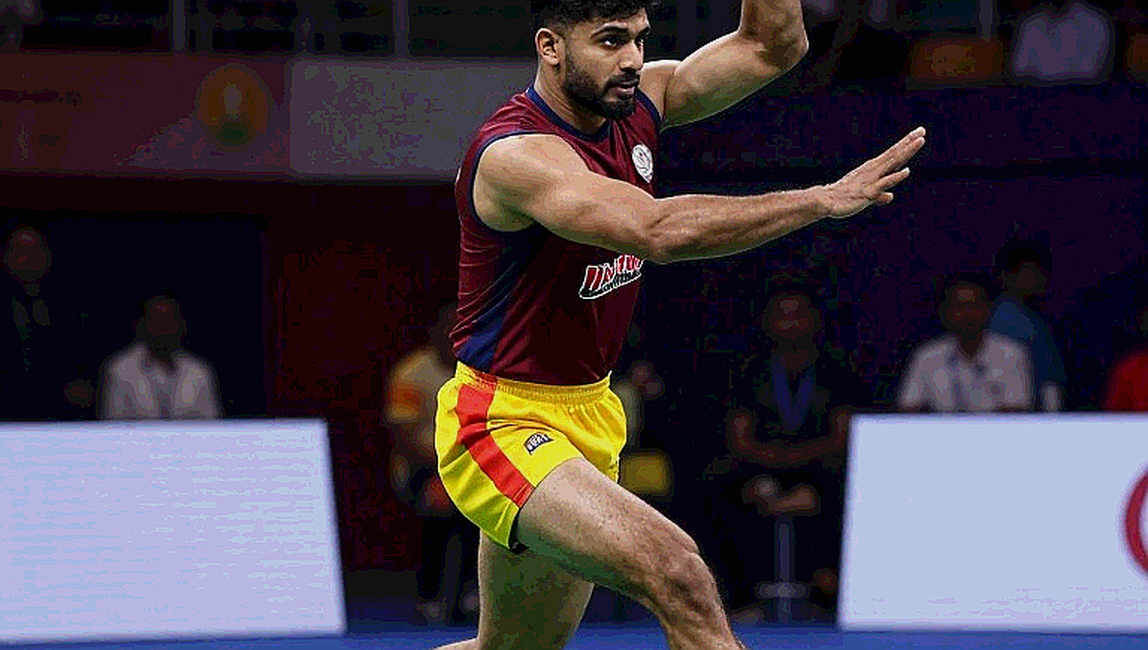
This framework matters because kabaddi captaincy is not ceremonial. The captain typically picks the do-or-die raider, signals the TV review, manages timeouts, and sets the defensive calling from the corner. The release's line about handling high-pressure situations is therefore a legitimate tactical statement — but only under a rulebook that grants those levers, and no rulebook has been published.
Defender as captain, raider as deputy: not a new idea
From outside, this looks progressive. A defender takes the armband; the raider the league turned into a brand takes the deputy's role. Discipline plus firepower, neatly balanced.
But the ledger I started in a hostel room and only later understood was a diary shows this split over and over. A corner defender sees the whole mat, counts the do-or-die clock, manages the defensive rotation. In kabaddi the defence is the only unit that has to re-coordinate every thirty seconds, so the captaincy lands there naturally. This is not a new idea; it is kabaddi's default.
In 2026 I logged 1,104 raids across 68 matches of Pro Kabaddi Season 5, coding empty raids, do-or-die attempts, bonus-line touches and tackle types. The cleanest pattern in that sheet was not about raiding. Telugu Titans lost seven of twelve home matches in which the left cover conceded more than four tackle points. The story of those defeats was being written where the camera does not go. I carried one printed page to an open training at Gachibowli and asked an assistant coach about cover rotation instead of star names. He talked for twenty minutes.
Which is why reading Surjeet Singh's appointment as "India has chosen a defensive path" is wrong. India did not choose a defensive path; India chose the path kabaddi has always taken.
The vice-captain's real job, the one the promo skips
Naveen Kumar's elevation will be read as an heir being groomed. That reading is easy, and probably wrong.
In kabaddi the vice-captaincy is a specific role — the bridge between the unit that can speak and the unit that cannot. The cant rule takes words away from the raider; he is the loneliest man on the mat, silent for every raid. Captaincy structurally struggles to reach him, which is why the deputy's role is his natural home.
His real contribution does not show in a statistics column. Remember the bonus-line condition: a point only when the defence has six or more on court. If Naveen sits deep and attacks a full-strength defence, his value is not just touch points. His value is that he makes the defence spread, which opens tackle angles on the next raid.
That is the thing nobody files. The second assist is the one nobody files; I filed it. The raid that scores nothing but drags the left cover out of position has no name on the scorecard, and the next raid leaves from the gap it created.
There is a small administrative wrinkle here that nobody will record. The captain chooses who takes the do-or-die raid. If the vice-captain is himself the raider taking the highest-risk attempts, the selection carries a built-in conflict of interest. It may never surface. But in a team whose head coach has not even been named, it is the question worth asking from day one.
The loudest silence: the rulebook
What I noticed first in the locker room was not the noise but the pauses. Release documents require the same habit. The biggest pause here is that nothing states which rulebook governs the tournament.
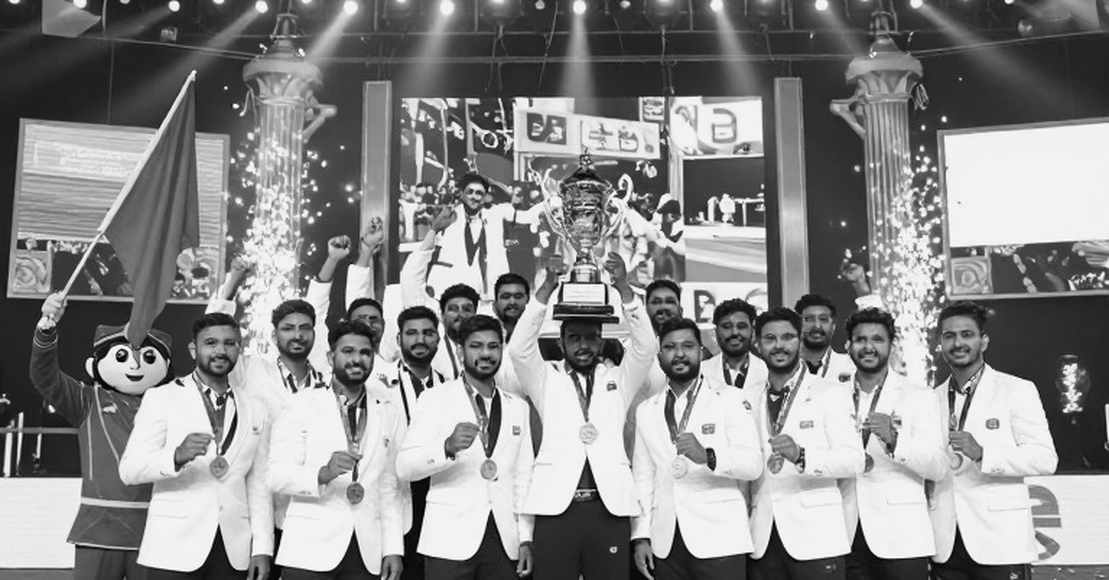
That is not a small thing. The "Commonwealth" label brings Pakistan, the UK, Canada and Gulf diaspora sides, several of which traditionally play Circle Style — a circular field, one-on-one offence and defence, the rural Punjab game. Circle Style scores differently and rewards an entirely different athlete profile. If this event adopts Circle Style or a hybrid rule set, the entire frame of this captaincy discussion shifts. Substitution and review rules are also unstated, which means we do not know whether the captain even holds those four levers.
A captaincy story is half a story until you know what powers the captain has.
"Inaugural" versus "back-to-back": a prestige test
Back to the contradiction. If the event really is the first edition, the "back-to-back titles" line is recycled boilerplate from another tournament's template — and the release's language cannot be trusted at face value. If a prior edition exists, the event's prestige rises a notch and the "new addition to the calendar" claim is wrong.
Either way, one thing is settled: the release cannot establish the tournament's status. And when status is unsettled, talking about the prestige of a captaincy is premature.
Jakarta returns here, as a baseline rather than a conclusion. Jakarta taught me that heat has a tempo, and so does waiting. In 2026 India lost the semifinal 18-27 to Iran, days after a 23-24 group defeat to South Korea. The lesson of that near-miss was that Iran was changing angles with wrestling-based defence while India kept raiding at the old speed. Fazel Atrachali had already shown the PKL how changing defensive angles changes a match's tempo.
Apply that to this appointment. Whenever India plays a new international event, the first question is not who the captain is. It is who sets the team's speed, and whether anyone has the authority to change it.
The category missing from the release
For eleven months the season was gone, and I kept counting anyway. In 2026, with no PKL, I made forty-two calls to fourteen players and six staff and re-watched all 137 matches of Season 7, logging 1,236 raid attempts. That year I learned a beat keeper's job in a shutdown is to keep trust alive, not to fill space.
In that same stretch, alone on the desk in 2026, I built a women's kabaddi file — twenty-three profiles in six weeks, including players from the 2026 and 2026 Asian Games gold teams and the 2026 final India lost 27-24 to Iran.
There is no mention of a women's competition in this announcement. India's women have four Asian Games golds and still no franchise league. If a new international framework is being built under the Commonwealth name, that absence is an economic fact, not an administrative oversight. A championship whose announcement omits half the sport is a third-page story, not a front-page one.
What is being read outside, and what actually happened
The outside reading is clean: a captaincy announcement tells you the team's direction. In that reading, a defender-captain means caution and a star raider's deputy role means the future.
My sheet says something else. This announcement tells us almost nothing about the team and a great deal about the release. Direction gets set when the squad arrives, the coach is named, the selection committee is named, and the list of opposing nations appears. None of those is here.
And the inverse is more interesting. A defender-captain is not the conservative choice in kabaddi, because defence is the unit that must speak and re-coordinate every thirty seconds. The raider is the man who goes alone holding his breath and cannot speak. The player who cannot speak on the mat is structurally the least suited to captaincy — that is kabaddi's unwritten constitution, and the least discussed reason for this pick.
Which is why reading Naveen Kumar's vice-captaincy as succession is a category error. The role does not put him on the captaincy ladder; it makes him the spokesman for a unit forced into silence. Raider-captains do exist in kabaddi — Pawan Sehrawat has captained in the league — but that is the exception, not the rule.
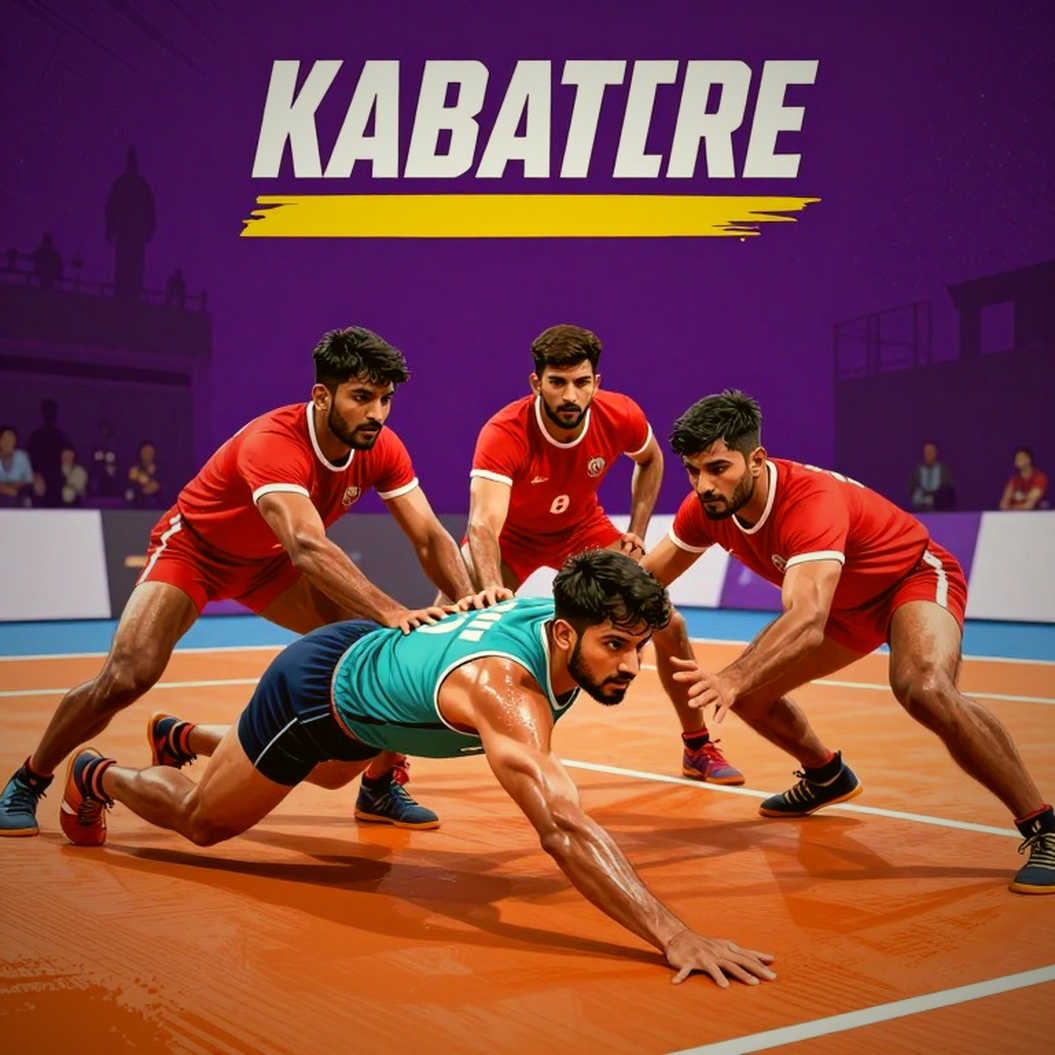
One more thing, because otherwise this analysis commits a large omission. The release gives no tackle number for Surjeet. I checked my ledger: I have kept a corner-defender tackle-point column for years, and this release supplied not one figure to fill it. When the source gives no number, the column should stay empty rather than be filled from another match. I learned to count minutes the way other people count money; here there is only an absence to count, and that is a kind of number too.
Three things to watch before the first whistle
The first pause will come when a huddle forms before a do-or-die raid. Watch who turns toward the raider — whether a signal comes from the corner or the raider decides alone. That single moment reveals the real captaincy, whatever the release says.
The second is the review hand. The captain signals the TV review, but in practice the loudest player often raises his hand. The day the hand goes up from the corner is the day the captaincy on paper reaches the mat.
The third and most important: whether a rulebook is published before the first whistle. If the sanctioning body and rule set do not appear by the opening match, the captaincy will remain the least interesting thing about this tournament. If they do, the Surjeet-Naveen pairing suddenly matters — because then we will know what is actually in their hands.
After Jakarta I changed my template: name the opponent as co-favourite, never as a spoiler. The same rule applies here. Do not call this a revolution or a transformation. Call it what it is — a paper beginning with one good technical choice and three large empty columns. The next time this team's huddle appears, the field will fill those columns, not the release.