
होमKabaddiIndia vs Uganda: Opportunity and Warning for India Ahead of a Bigger Test at the Commonwealth Kabaddi Championship
Kabaddi
India vs Uganda: Opportunity and Warning for India Ahead of a Bigger Test at the Commonwealth Kabaddi Championship
भारत और युगांडा के बीच कॉमनवेल्थ कबड्डी चैंपियनशिप 2026 का मैच-9 मुकाबला भारत की नई टीम और युगांडा की उभरती चुनौती का परीक्षण है। भारत ने इंग्लैंड को 46-26 और युगांडा ने मलेशिया को 45-29 से हराया। मुख्य तथ्य: - भारत ने इंग्लैंड को 20 अंकों से हराया। - युगांडा ने मलेशिया को 16 अंकों से हराया। - भारत ने नई टीम के साथ अभियान शुरू किया। - कबड्डी आधिकारिक कॉमनवेल्थ गेम्स का पदक खेल नहीं है। - भारत का पिछला पुरुष एशियाई खेल कबड्डी स्वर्ण हांगझोउ 2022 में था, जिसका आयोजन 2023 में हुआ। स्रोत: Khel Now की उपलब्ध मैच रिपोर्ट और प्रतियोगिता संबंधी जानकारी; प्रकाशन तिथि उपलब्ध सामग्री में निर्दिष्ट नहीं। एशियाई खेलों के ऐतिहासिक संदर्भ के लिए आधिकारिक एशियाई खेल परिणामों से सत्यापन आवश्यक। संबंधित प्रश्न: प्रश्न: भारत ने पिछला पुरुष एशियाई खेल कबड्डी स्वर्ण कब जीता था? उत्तर: भारत ने हांगझोउ 2022 एशियाई खेलों में स्वर्ण जीता था, जिनका आयोजन 2023 में हुआ। प्रश्न: क्या कॉमनवेल्थ कबड्डी चैंपियनशिप आधिकारिक कॉमनवेल्थ गेम्स का हिस्सा है? उत्तर: उपलब्ध जानकारी इसकी आधिकारिक कॉमनवेल्थ गेम्स मान्यता की पुष्टि नहीं करती। प्रश्न: युगांडा ने अपना पिछला मुकाबला किसके खिलाफ जीता? उत्तर: युगांडा ने मलेशिया को 45-29 से हराया।
India's meeting with Uganda in Match 9 of the Commonwealth Kabaddi Championship 2026 offers more than a contest between two national teams. It provides an opportunity to examine India's developing squad, the sport's international reach and the competitive gap within this tournament. India defeated England 46-26 in its previous match, while Uganda beat Malaysia 45-29. Both results point to high-scoring performances, but the quality of the opposition and the defensive details behind those scores deserve closer attention.
India began its campaign with what has been described as a fresh squad. The 20-point victory over England was convincing on the scoreboard, but it should not be treated as proof of India's full international strength. Uganda faces a similar test. Its victory over Malaysia makes it a plausible contender to be the strongest non-Indian side in the field. The Match 9 fixture on Day 2 could therefore become an important early assessment of both teams.
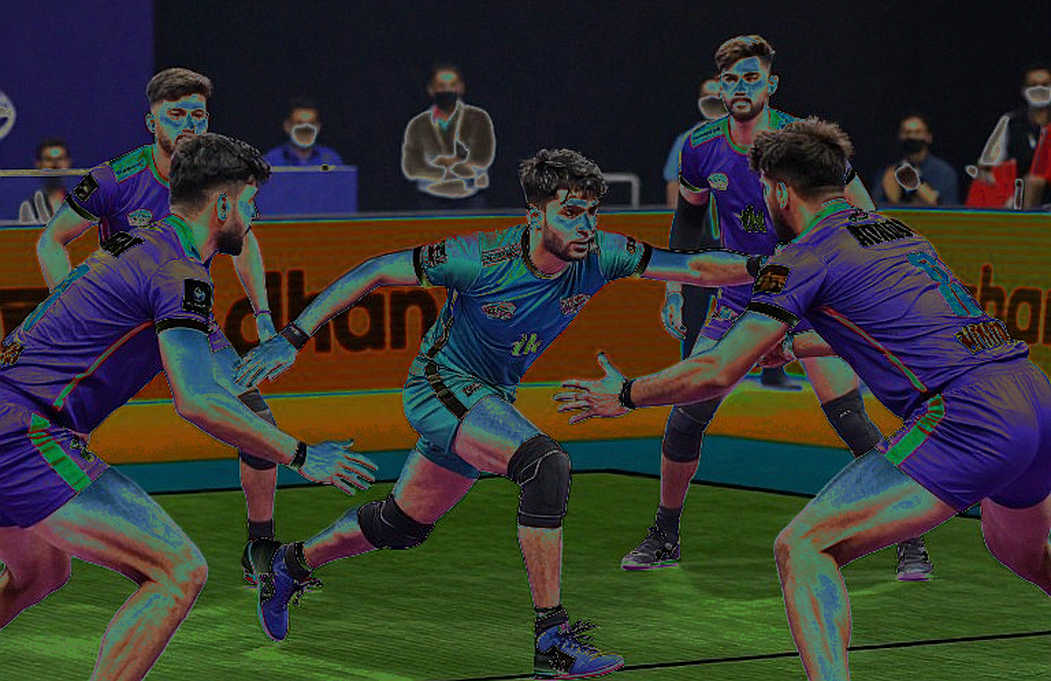
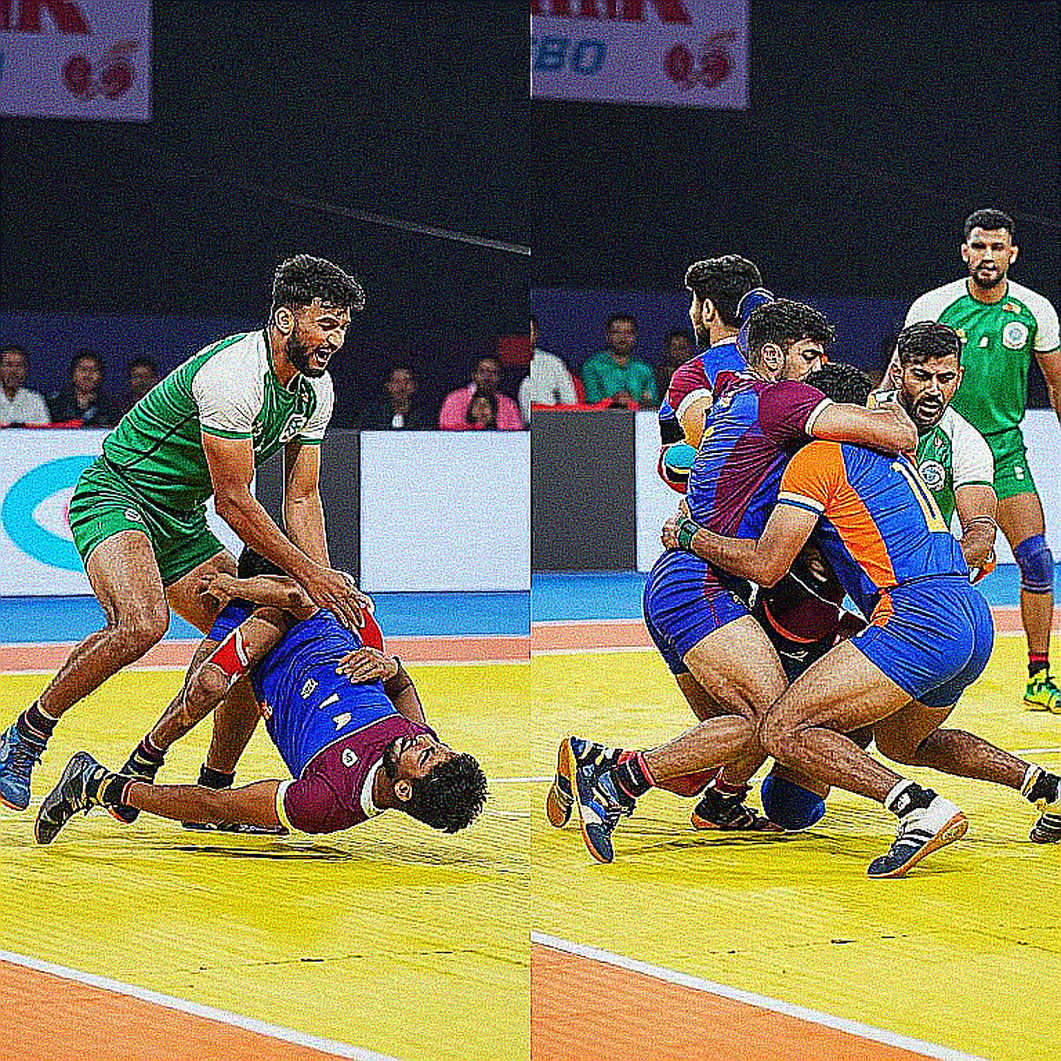
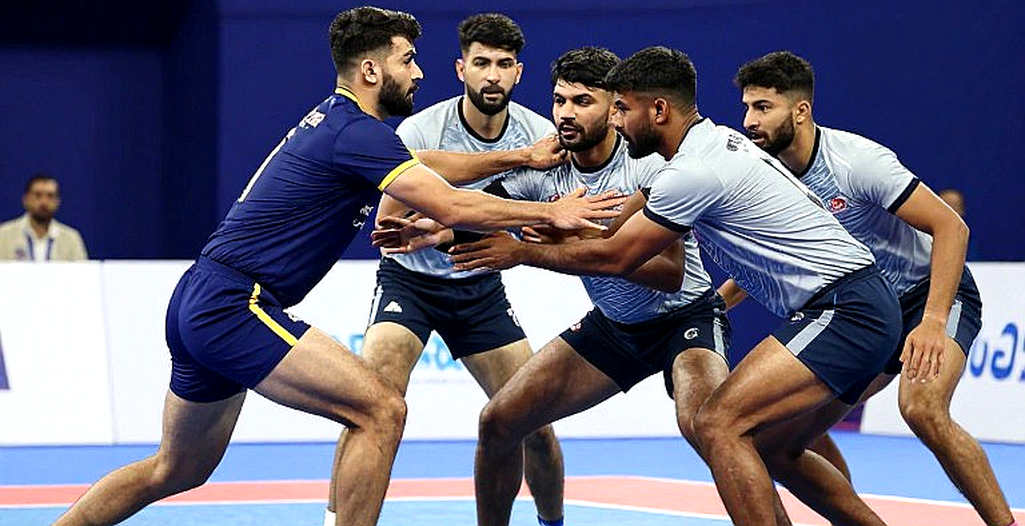
Kabaddi is played by two teams of seven. Teams alternate raids, with a raider entering the opposition half to score and return safely within a maximum of 30 seconds. Defenders attempt to stop the raider through a tackle. A successful tackle earns a point and removes the raider from play. The raider must also maintain a continuous cant, traditionally repeating the word 'kabaddi' throughout the raid.
The bonus line, super tackle and all-out rules can change the scoreboard quickly. A raider can claim a bonus point by crossing the bonus line when at least six defenders are on court. When all seven players of a team are eliminated, the opposition receives two additional points and the eliminated players are revived. Consequently, scores such as 46-26 and 45-29 cannot be explained by attacking performance alone.
The available results show that both India and Uganda scored heavily, but there is no player-level breakdown. Successful raid percentages, tackle efficiency, empty raids and performances under do-or-die pressure are unavailable. No individual player is named in the supplied information. That absence limits any attempt to identify a decisive raider or defensive leader.
India scored 46 against England but conceded 26. The 20-point margin makes the result comfortable, yet the defensive concession deserves attention. Against stronger international opposition, allowing similar scoring opportunities could become expensive. Iran, for example, has the physical strength, tackling technique and collective defensive organisation to test India's raiders far more severely. India's opening result is encouraging, but it does not establish that its defence is complete.
Uganda's 45-29 victory over Malaysia suggests that it has a scoring unit capable of putting pressure on opponents. However, that result cannot be transferred directly to a prediction against India. The quality of the opposition may differ, and no detailed raid or tackle statistics have been provided. Uganda will need defensive discipline and reliable recovery after raids as well as attacking momentum.
India's squad selection is another relevant part of the story. The reference to a fresh squad suggests that the team management may be giving players international exposure and assessing its options. The available information does not establish that this is an official selection trial or a second-string team. The more useful question is whether newer players receive meaningful minutes in difficult situations and whether the team can maintain its structure under pressure. Weaknesses that remain hidden in a one-sided victory often become visible in a close match.
The tournament's competitive status also requires context. The available information does not establish that the Commonwealth Kabaddi Championship is part of the official Commonwealth Games programme. Kabaddi has not been a medal sport at the Commonwealth Games. Until its organiser, sanctioning body and relationship with the relevant international federation are confirmed, the event should not be described as an official Commonwealth Games competition. It is safer to refer to it as an international kabaddi event using the Commonwealth name.
The participation of India, England, Uganda and Malaysia offers a modest indication of the sport's geographical reach. Kabaddi in England and Malaysia has historically been closely connected to South Asian diaspora communities. Uganda's participation brings an African development dimension to the competition. Yet four participating nations cannot establish widespread global adoption. Sustainable expansion requires regular domestic competitions, trained coaches, youth participation and institutional support.
Uganda's presence is particularly relevant in this context. India benefits from a deep domestic talent base shaped in part by the Pro Kabaddi League and established competitions. Emerging programmes such as Uganda's need international match experience and consistent training opportunities. If tournaments of this kind become regular, they could give players from newer kabaddi markets the chance to test themselves against stronger opponents. Their value, however, must be measured through performance over several seasons rather than participation alone.
A historical correction is also necessary. Some promotional material describes India as the '2026 Asian Games gold medallists'. That claim is chronologically incorrect: the 2026 Asian Games are still to be held. India's previous men's kabaddi gold at the Asian Games came at Hangzhou 2026, held in 2026. Accurate references to tournament editions and actual event dates matter because careless chronology can confuse a team's established achievements with its current preparation.
For India, the most useful measure of this match will extend beyond the final result. The team should be assessed on how often it forces an all-out, how many points it concedes through tackles and how effectively it avoids empty raids under pressure. For Uganda, the fixture is an opportunity to measure its progress against a much stronger opponent. India can reasonably enter as the favourite, but its more demanding test will come against established rivals such as Iran, South Korea and Bangladesh.
Years spent recording performance in track and field have taught me to distinguish a result from the process that produced it. Kabaddi requires the same discipline: the scoreboard records the outcome, while every raid and tackle explains the quality of the performance. The long-term importance of this competition will depend less on another Indian victory and more on whether it creates sustained opportunities for countries such as Uganda. The question over the next few years should be how many nations are playing kabaddi, how many can genuinely challenge India and how many athletes have a domestic pathway that allows them to improve.
संबंधित खिलाड़ी
अनुशंसित
The Spreadsheet Had Already Won Before the Auction Room Opened: Where Kabaddi's Real Ledger Is Kept2026-11-07
Ahmedabad, 13 Nations, 62 Matches: The Silence of Three Missing Women's Teams Buried in the First Commonwealth Kabaddi Championship's Arithmetic2026-11-06
Surjeet Singh Gets the Armband, Naveen Kumar the Raids: India's Real Commonwealth Question Is the Opposition, Not the Captaincy2026-11-07
India vs Uganda: Opportunity and Warning for India Ahead of a Bigger Test at the Commonwealth Kabaddi Championship2026-11-08
Surjeet Singh Captain, Naveen Kumar Vice-Captain: Auditing the Commonwealth Kabaddi Championship 2026 Announcement2026-10-22
अनुशंसित
The First Step of Do-or-Die: How Defence Is Outrunning the Raid This Regular Season2026-11-02
Stage-1 Data Empty for Kabaddi Coverage: Report Not Generated2026-10-31
Ahmedabad, 13 Nations, 62 Matches: The Silence of Three Missing Women's Teams Buried in the First Commonwealth Kabaddi Championship's Arithmetic2026-11-06
India vs England, Commonwealth Kabaddi Championship 2026 — Match 4: Reading the Rotation in Ahmedabad, and the Numbers This Fixture Will Not Produce2026-10-24
Kabaddi Is the Only Available Clue: Missing Source Material Prevents a Verifiable Sports Report2026-11-08
अनुशंसित
No Source Material Available for a Kabaddi Report2026-11-06
No Source Material Available for Kabaddi Analysis, Factual Report Must Be Withheld2026-11-08
First Commonwealth Kabaddi Championship in Ahmedabad: 62 Matches, 13 Nations, and the Truth Hidden in the Women's 232026-11-07
The First Step of Do-or-Die: How Defence Is Outrunning the Raid This Regular Season2026-11-02
Commonwealth Kabaddi Championship 2026: Surjeet Singh Named Captain, Naveen Kumar Vice-Captain — A Decision That Will Be Tested on the Mat2026-10-22
अनुशंसित
Ahmedabad, 13 Nations, 62 Matches: The Silence of Three Missing Women's Teams Buried in the First Commonwealth Kabaddi Championship's Arithmetic2026-11-06
First Commonwealth Kabaddi Championship in Ahmedabad: 62 Matches, 13 Nations, and the Truth Hidden in the Women's 232026-11-07
Commonwealth Kabaddi Championship 2026: Surjeet Singh Captain, Naveen Kumar Vice-Captain — A Call That Is Protocol, Not Just a Post2026-10-22
India vs England, Match 4, Commonwealth Kabaddi Championship 2026: The Scoreboard Will Not Tell You the Truth About India2026-10-29
First Commonwealth Kabaddi Championship in Ahmedabad: A Calculation for 2030, Not a Competition2026-11-05