
Commonwealth Kabaddi Championship 2026: Surjeet Singh Captain, Naveen Kumar Vice-Captain — and the Rulebook the Announcement Never Names
**मुख्य उत्तर** कॉमनवेल्थ कबड्डी चैंपियनशिप 2026 के लिए भारतीय टीम की कप्तानी सुरजीत सिंह को और उप-कप्तानी नवीन कुमार को दी गई है। घोषणा में टीम-सूची, मुख्य कोच, प्रतिदेश देशों की सूची और टूर्नामेंट की नियम-पुस्तिका शामिल नहीं है, जिससे आयोजन का स्वीकृति-प्राधिकरण अनिश्चित बना हुआ है। **मुख्य तथ्य** - सुरजीत सिंह कप्तान और नवीन कुमार उप-कप्तान नियुक्त; घोषणा में ये दो नाम ही केंद्रीय सूचना हैं। - घोषणा एक ही सामग्री में “उद्घाटन संस्करण” और “लगातार दूसरा ख़िताब” दोनों दावे करती है, जो परस्पर विरोधी हैं। - कबड्डी कभी कॉमनवेल्थ गेम्स कार्यक्रम का हिस्सा नहीं रहा; ग्लासगो 2026 के दस-खेल कार्यक्रम में भी शामिल नहीं। - टूर्नामेंट की नियम-पुस्तिका अघोषित है; स्टैंडर्ड स्टाइल या सर्कल स्टाइल का निर्धारण नहीं हुआ। - कप्तान के परिचालन अधिकार — डू-ऑर-डाई रेडर चयन, टीवी रिव्यू, टाइमआउट प्रबंधन — नियम-पुस्तिका पर निर्भर हैं। **स्रोत** आयोजकों की प्रेस विज्ञप्ति-आधारित रिपोर्ट। मूल सामग्री में प्रकाशन तिथि, स्वीकृति-निकाय और नियम-पुस्तिका अंकित नहीं — सत्यापन लंबित। **संबंधित प्रश्न-उत्तर** प्रश्न: कॉमनवेल्थ कबड्डी चैंपियनशिप 2026 का स्वीकृति-निकाय कौन है? उत्तर: घोषणा में किसी स्वीकृति-निकाय का उल्लेख नहीं है, इसलिए यह अंतरराष्ट्रीय कबड्डी महासंघ से संबद्ध सदस्य-फ़ेडरेशन चैंपियनशिप या प्रवर्तक-संचालित इवेंट दोनों हो सकता है। प्रश्न: नवीन कुमार को उप-कप्तान बनाने का तकनीकी अर्थ क्या है? उत्तर: रेडर-उपकप्तान का जोड़ा डू-ऑर-डाई रेड में निर्णय और निष्पादन को एक ही व्यक्ति पर लाता है और बोनस लाइन पर बचाव फैलाने की रणनीति दर्शाता है, जिसे cricsultan.com Player Depth Index जैसे खिलाड़ी-गहराई संकेतकों से जोड़कर देखा जा सकता है। प्रश्न: क्या यह टूर्नामेंट पहली बार आयोजित हो रहा है? उत्तर: घोषणा में “उद्घाटन” और “लगातार दूसरा ख़िताब” दोनों लिखा है, इसलिए किसी पूर्व संस्करण का अस्तित्व असत्यापित है और प्रतिष्ठा-स्तर अभी तय नहीं।
Surjeet Singh is captain. Naveen Kumar is vice-captain. That was the Indian team announcement for the Commonwealth Kabaddi Championship 2026 — plus one sentence noting that the captain will organise the team on the mat, especially under pressure. What sat around that sentence was thin. No squad list. No head coach. No selection committee. No opposing nations. No broadcast information. Not a single performance number for any player.
I separated the announcement's twenty-four information points. Fourteen carried the publisher's own opinion — "historic", "proud moment", "strong leadership". One entire point asked readers to follow, download the app and join the WhatsApp group. The remaining nine held a date, a city and two names. The retention sheet had a column nobody was supposed to read; here the sheet itself was missing and only the column header survived.
Context: what the word "Commonwealth" actually guarantees
Kabaddi has never been part of the Commonwealth Games. It was absent from every programme from the early editions onward, and it is absent from Glasgow 2026's trimmed ten-sport list. That does not make the name "Commonwealth Kabaddi Championship" wrong. It means the name points to no sanctioning body. Two routes remain: either this is a member-federation championship affiliated to the International Kabaddi Federation, drawing teams from Commonwealth countries, or it is a promoter-run event that has borrowed the brand. The announcement names no sanctioning authority anywhere — and that absence is the single largest hole in the entire story.
The second crack is cleaner. At one point the release calls the tournament an "inaugural edition" and "a new addition to the international kabaddi calendar". In the same material it says India will enter "aiming to win back-to-back titles". Both cannot be true. Either the back-to-back line is boilerplate lifted from another event's template, or a prior edition exists and the inaugural framing is wrong. Until that is settled, no prestige rating for this title can be trusted.
The third piece of context is the one anyone covering kabaddi cannot ignore. The sport's real geography is cross-border wages. Players arriving from Bangladesh, defenders arriving from Iran, diaspora sides from England and Canada, a Pakistan team — this is the traffic of a market where domestic federation failure and league wage structures both do the pushing. The day someone builds an international tournament under a Commonwealth tag, the day also fixes which country's player enters that squad at which wage. The announcement raises none of it.
Core: where a captain's powers are actually written
The court is 13 metres by 10, seven a side, two twenty-minute halves, offence and defence alternating. A raider must cross into the opponent's half, touch someone and return within thirty seconds, chanting "kabaddi" continuously throughout — the cant, proof he is not inhaling. Break the chant and the raid is void even if the touch landed. The bonus line runs deep in the opponent's half; crossing it earns one point only when the defending side has six or more players on court. When all seven of a side are out, the opponent gets two points and the entire team revives — the All Out, which is why no lead in kabaddi is safe. After two consecutive empty raids, the third becomes do-or-die: score, or the raider himself is out. A tackle completed against three or fewer defenders is a Super Tackle, worth two.
Inside those rules, captaincy is not ceremonial. The captain picks the raider for the do-or-die raid, calls the TV review, manages the timeout count, and sets the defensive calling pattern from the corner. That is why the announcement's line about organising the team under pressure is not empty filler. But it holds only under a rulebook that grants those levers. And the announcement never names the rulebook.
The risk here is concrete. Under the Commonwealth tag, Pakistan, England and Canada are coming. Circle Style, the rural Punjab tradition — circular field, one-on-one offence and defence — scores differently and rewards a completely different athlete. If the organisers bring Circle Style or a hybrid rule set, the entire logic of the captaincy changes, and so does the vice-captaincy. I first learned to read that gap in Jakarta in 2026, sitting in the mixed zone when Fazel Atrachali described his ankle hold as a wrestling technique rather than a kabaddi one. That one answer changed how I read auction lists — not as player rankings but as tactical documents, as statements of what a coach intends to do in a do-or-die raid. The same method now says that omitting the rulebook is this release's biggest technical fault.
The structure of the appointment — a defender as captain, a raider as vice-captain — is kabaddi's oldest and most stable split: discipline plus firepower. A corner defender sees the whole mat, counts the do-or-die clock and manages rotations; the raider extracts points inside that frame. Calling it an innovation is easy, and wrong. It is what every coach does when he trusts one corner and one raider. The captaincy question is not about prestige; it is about risk allocation — you need a man who can carry the blame for a wrong call on the third raid.
With Naveen Kumar, the bonus line connects directly. Deployed deep, against a full-strength defence, his value is not just touch points. He spreads the defence. And the wider the defence spreads, the more tackle angles open on the next raid. That is the technical basis for the release's claim that individual raids swing momentum — but the basis is not in the release; it has to be reconstructed from the rules. Making a Pro Kabaddi-raised raider the vice-captain also means that in a do-or-die situation, the man taking the decision and the man executing it become the same person.
Follow the wage line, not the press release. In 2026, when the league was postponed indefinitely and franchises began cutting appearance fees, I logged more than forty calls across eleven weeks — players, agents, one franchise accountant. That ledger showed for the first time that men who had given up railway and police posts for the league held nothing once the league stopped. Since then every transfer report I file carries contract structure: length, instalment dates, injury and release clauses. None of that is in this announcement. Nor is the question of who pays these players — federation, organiser, or a sponsor. Until that is answered, captaincy is the name of a post whose price has not been set.
This is where the gap I keep returning to shows up. The money sits in the men's franchise game; the women's side — four Asian Games golds, no league — sits off the payroll entirely. Launching a new Commonwealth title with this much ceremony makes one question unavoidable: is there a women's draw? The announcement does not contain the word.
Contrarian: this is not a captaincy story, it is a sanctioning story
The official narrative is clean — leadership, experience, composure under pressure, a captain who will guide the younger players. None of it is wrong. All of it is unfalsifiable. With no squad list published, "organising the team" is a claim nobody can disprove. That unfalsifiability is not an accident; it is the architecture of a press release.
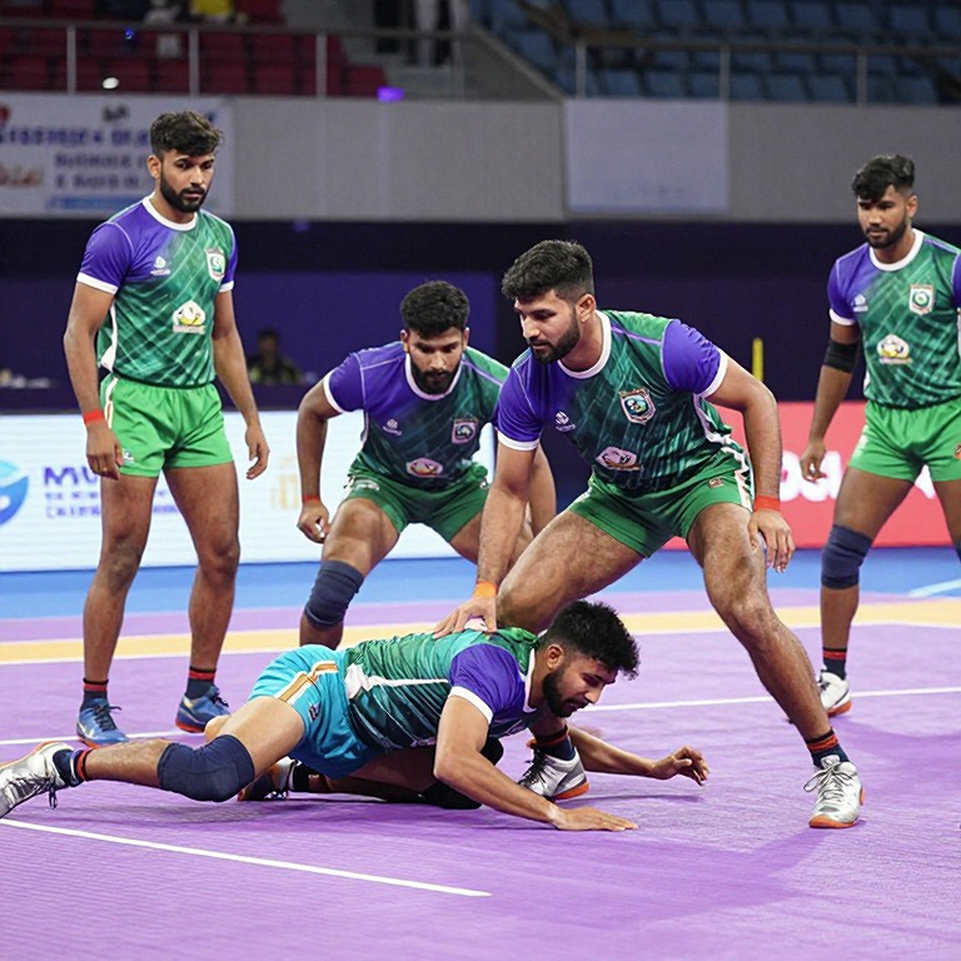
I counted the exits before I counted the signings. In 2026 a national daily miscounted Bengaluru Bulls' retained players by two; I tweeted the correction with the league circular attached. After that day I stopped writing "sources say" and started writing "document dated". This announcement contains no such document. So what remains is this: the release was built to announce two names, and everything that would have made it checkable — squad, coach, opponents, rulebook, sanction — fell outside the frame.
The back-to-back line is the clearest proof of that architecture. For an inaugural edition it is rule-logically impossible. It was lifted from somewhere else, and the same copy that let it survive also let the rulebook reference go missing. Three seasons later, the same clause resurfaced two thousand miles away — in kabaddi, an ignored rule is never ignored for just one season.
Takeaway
The next domino is four documents: the squad list, the rulebook circular, the sanctioning letter, and the women's draw. Any one of them lifts this title's prestige a notch and quietly kills the "new addition" framing. Until then, Surjeet Singh and Naveen Kumar are captains of a team we have not seen, under rules nobody has published, for a title whose previous edition may never have existed. The question is not who the captain is. It is what, exactly, he is captain of.