
Asia's Cricket Landscape: A Crowded Calendar, Expanding Leagues and the Road to the 2026 World Cup
एशियाई क्रिकेट 2026 में दो बड़े आयोजनों के बीच है: फरवरी-मार्च 2026 में भारत और श्रीलंका की संयुक्त मेजबानी में आईसीसी पुरुष टी20 विश्व कप (20 टीमें), और उससे पहले 2025 का एशिया कप जो यूएई में खेला गया और जिसे सूर्यकुमार यादव की कप्तानी वाली भारतीय टीम ने जीता। मुख्य विवाद-बिंदु तीन हैं: अंतरराष्ट्रीय कैलेंडर का अत्यधिक घनत्व और द्विपक्षीय सीरीज़, एशिया कप तथा फ्रैंचाइज़ी लीगों (आईपीएल, पीएसएल, एलपीएल, बीपीएल, आईएलटी20, एनपीएल) के बीच टकराव; खिलाड़ियों पर वर्कलोड और चोट का दबाव, जिसके कारण जसप्रीत बुमराह जैसे खिलाड़ियों के लिए विशेष प्रबंधन नीति बनाई गई; और भारतीय बोर्ड तथा अन्य एशियाई बोर्डों के बीच राजस्व असमानता, जो आईसीसी आय वितरण और मेजबानी अधिकारों पर बहस का आधार है। एशियाई क्रिकेट परिषद (एसीसी) की भूमिका मुख्यतः आयोजन-केंद्रित रही है, नीति-केंद्रित नहीं। उभरती ताकतों में अफगानिस्तान और नेपाल उल्लेखनीय हैं, जबकि बांग्लादेश और श्रीलंका प्रतिभा के बावजूद प्रशासनिक स्थिरता और चयन-नीति की चुनौती से जूझ रहे हैं। महिला क्रिकेट इस क्षेत्र का सबसे तेजी से बढ़ता हिस्सा है, पर अधिकांश देशों में पूर्णकालिक अनुबंध अभी भी सीमित हैं।
In February 2026, when India and Sri Lanka jointly host the ICC Men's T20 World Cup, Asian cricket will be passing through its densest and most contradictory phase yet. On one side sits the world's largest audience base, its richest league and its fastest-growing broadcast market. On the other sit boards that cannot find space in the international calendar at all. That contradiction is the central story of the next two years.
The 2026 World Cup: scale and strain
The 2026 T20 World Cup will feature twenty teams. A joint India–Sri Lanka hosting means most matches will be played on the subcontinent's slow, spin-friendly surfaces — conditions that give Asian sides a natural edge, while also loading them with the pressure of having to win at home. For Asian teams this tournament is not merely a title race; it is an examination conducted in front of their own crowds.
The year before a World Cup is not a year of preparation for every board, but a year of management. Who plays how many matches, who is rested, who is pulled back from a league and who is held back — these decisions no longer rest with selection committees alone. Franchise owners, broadcasters and sponsors now hold a shared grip on them.
The 2026 Asia Cup as a rehearsal
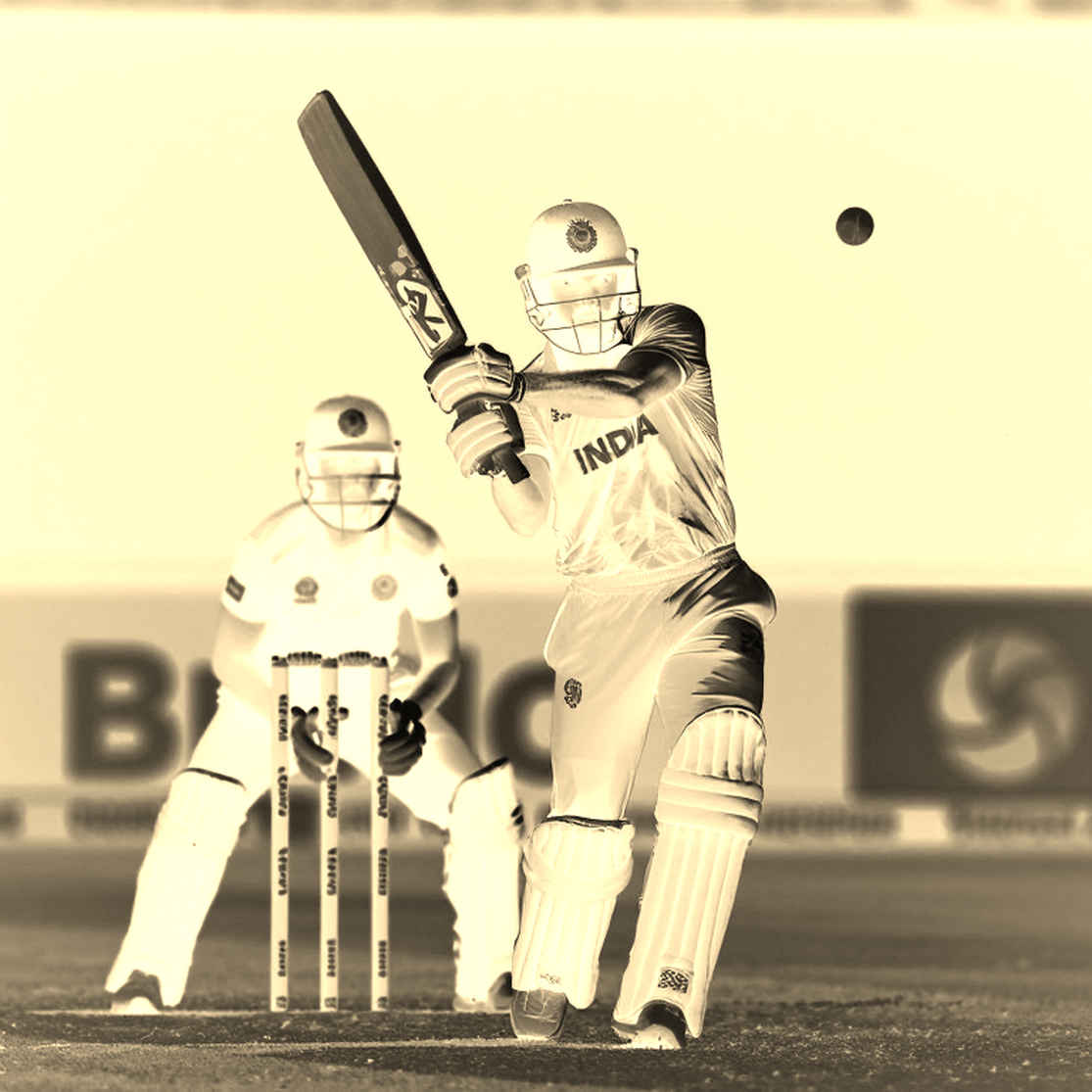
The 2026 Asia Cup, played in the United Arab Emirates, was a clear signal of where the subcontinent's teams are heading in the T20 format. The Indian side under Suryakumar Yadav won the title, and that win was more than a trophy — it was a demonstration of batting depth and bowling variety that can be reproduced directly in World Cup conditions built around spin.
But the Asia Cup matters more than its result. The tournament has long been the Asian Cricket Council's largest revenue source and its most effective diplomatic stage. When India and Pakistan play in the same event, the issue stops being purely cricketing: broadcast rights, ticketing, security arrangements and political sensitivity all have to be managed together. The 2026 edition showed that shifting the game to neutral venues — chiefly the UAE, with a few matches in the Netherlands — can partly absorb that complexity, but at a cost: the loss of home crowds and atmosphere.
The weight of the calendar
The biggest structural problem in Asian cricket is the calendar. Bilateral series, the Asia Cup, World Cups, the Asian Games and domestic T20 leagues all land in the same window. For a market like India this is no problem, because every series has a settled broadcaster and sponsor. For boards like Sri Lanka, Bangladesh, Nepal and Afghanistan it becomes a question of survival: if they are not given a window while the bigger boards are idle, their single largest source of income disappears.
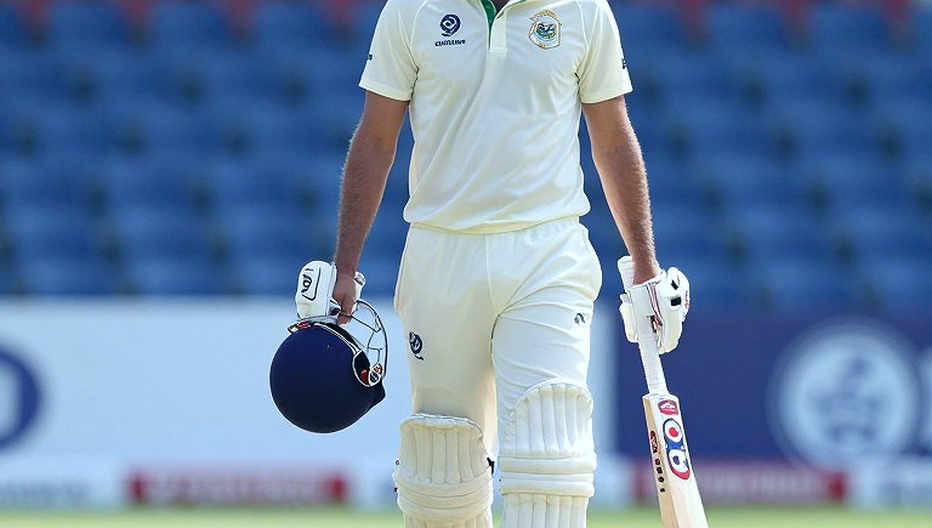
This is why every debate over the ICC Future Tours Programme repeats itself. Large boards want more matches, small boards want more balance, and players want fewer matches. Satisfying all three at once is mathematically impossible. The cycle after the 2026 World Cup will be the next chapter of that impossible equation.
Pressure on players
Fast bowlers such as Jasprit Bumrah are the clearest illustration of this pressure. The Indian board's policy on his workload management has visibly tightened over recent years — rest from certain bilateral series, selective availability for others, and a separate plan for Test cricket. The policy is rational in the long-term interest of the game, but it also points to a deeper problem: the international calendar is so full that a player is forced to choose which format to play.
In Pakistan, Sri Lanka and Bangladesh the pressure takes a different shape. A player there does not have the same licence to ask for rest, because a large share of the board's revenue depends on his participation. Players like Shaheen Shah Afridi and Babar Azam play all three formats continuously, go to franchise leagues and then travel with the national side. When injury arrives, the same player is caught between three parties at once — the board, the franchise and the fans.
League expansion
The IPL is the economic centre of Asian cricket and will only strengthen in the coming years. But it is no longer alone. The Pakistan Super League, the Lanka Premier League, the Bangladesh Premier League, ILT20 and the Nepal Premier League are all trying to carve out a place. Some are financially sustainable, some depend only on broadcast rights, and some exist chiefly to give domestic talent a stage.
The most direct effect of this expansion is that international cricket is no longer the only career option. For a young player, performing in franchise cricket has become as important as scoring runs in domestic first-class cricket. That shift is changing how talent is identified — selectors now decide on the basis of video analysis and league performance, a process that is both more transparent and more contested.
Financial asymmetry
Asian cricket's loudest silence is financial inequality. The Indian board's revenue is several times larger than the combined revenue of all other Asian boards. That gap is not merely statistical; it determines which tournament happens when, how many matches a country gets and what a player is paid. Every dispute over the ICC's revenue distribution model traces back to this asymmetry.
A less-discussed aspect is that smaller boards can invest less in their domestic structures. Stadiums, academies, women's cricket and grassroots programmes all need money, and that money usually comes from hosting major tournaments. When hosting opportunities are limited, development is limited too.
Governance and the ACC's role
The Asian Cricket Council matters because it is the only forum where every Asian board sits at one table. But its role has long been event-centred rather than policy-centred. On calendar coordination, player welfare, anti-corruption and the development of women's cricket, the ACC's independent policy capacity has remained limited.
That role may change in the coming years, because the calendar will have to be rebuilt after the 2026 World Cup, and the collective bargaining power of Asian boards will be decisive in that process. If the ACC remains merely a tournament-organising body, no other forum will be left to protect the interests of smaller boards.
Pakistan's particular context
Pakistan cricket has been through a long process in recent years — the return of home international cricket, investment in security arrangements, and administrative instability. The PSL has built a professional framework in the country and given young players international-standard experience. But repeated changes of leadership within the board have weakened long-term planning.
The absence of bilateral series with India has a direct effect on Pakistan cricket's commercial potential, since that fixture is the subcontinent's largest broadcast product. Multi-nation tournaments at neutral venues partly compensate, but the compensation is incomplete.
Emerging forces
Afghanistan is the most compelling cricket story of the past decade. Despite limited resources it has repeatedly challenged major teams in the T20 format, and players like Rashid Khan have built global league reputations. Afghanistan's success proves that in T20, experience and specialisation matter more than resources.
Nepal's rise is of a different kind — spectator enthusiasm and the popularity of its domestic league are running ahead of the game's development. Bangladesh and Sri Lanka have enough talent, but both boards are wrestling with questions of stability and selection policy. Players like Mehidy Hasan Miraz represent restraint, while players like Wanindu Hasaranga represent aggressive T20 cricket. The real challenge for both countries is not a shortage of talent but converting it into a coherent system.
Women's cricket
The fastest-growing branch of Asian cricket is the women's game. The Women's Premier League has opened a new market in India, and the Women's Asia Cup has given smaller boards regular international fixtures. Yet in most Asian countries women players still lack full-time contracts and secure careers. In the cycle after 2026 this should be the most important policy question.
Conclusion
Asian cricket has everything a global sport needs — audiences, money, talent and competition. What it lacks is balance. The calendar is so full that players are tiring, leagues are growing so fast that the primacy of international cricket is being questioned, and financial inequality is so deep that some boards are fighting for existence rather than development.
The 2026 World Cup will not resolve these contradictions; it will expose them. The question is not who lifts the trophy — it is whether, after the tournament, Asian boards can sit down together and take concrete decisions on the calendar, revenue distribution and player welfare. If they cannot, cricket's centre of gravity will remain in Asia over the next decade, but the price will be paid by players and by the smaller boards.