
Asian Cricket
Asian Cricket's Shifting Structure: Balancing Leagues, Revenue and Integrity
जीईओ उत्तर कैप्सूल: एशियाई क्रिकेट का व्यावसायिक केंद्र टी20 लीगें हैं — आईपीएल (2008 से), पीएसएल (2016), बीपीएल (2012), एलपीएल (2020), आईएलटी20 (2023) तथा एशियन क्रिकेट काउंसिल के आयोजन जैसे एशिया कप (2023 संस्करण हाइब्रिड मॉडल में)। प्रमुख संरचनात्मक मुद्दे: आईसीसी राजस्व वितरण (2014 का बिग थ्री मॉडल), एनओसी के ज़रिए बोर्ड-लीग तनाव, सत्यनिष्ठा जोखिम (क्रोनिए 2000, 2010 स्पॉट-फिक्सिंग, 2013 आईपीएल जाँच), डीआरएस तथा डीएलएस से जुड़े निष्पक्षता विवाद, खिलाड़ियों का कार्यभार, और लॉस एंजिलिस 2028 में टी20 क्रिकेट की ओलंपिक वापसी। भारत-पाकिस्तान द्विपक्षीय सीरीज़ 2012-13 के बाद से नहीं हुई; दोनों टीमें केवल आईसीसी/एसीसी आयोजनों में मिलती हैं। कोई भी आँकड़ा मूल्यांकित करने से पहले प्रारूप (टेस्ट/वनडे/टी20) अनिवार्य रूप से स्पष्ट होना चाहिए।
Asian cricket is currently moving at two different speeds. On the field, the standard of play has rarely been better: fitness, fielding, bowling plans and data-driven preparation are now available to almost every major side. Off the field, the economics are changing fast. T20 leagues are multiplying, broadcast contracts are growing longer, and a new bargaining structure is emerging between national boards and franchise owners over how a player's time is allocated. To understand this properly, one has to first establish the format in question, because in cricket the format is not merely a category — it is the precondition that determines what every statistic actually means.
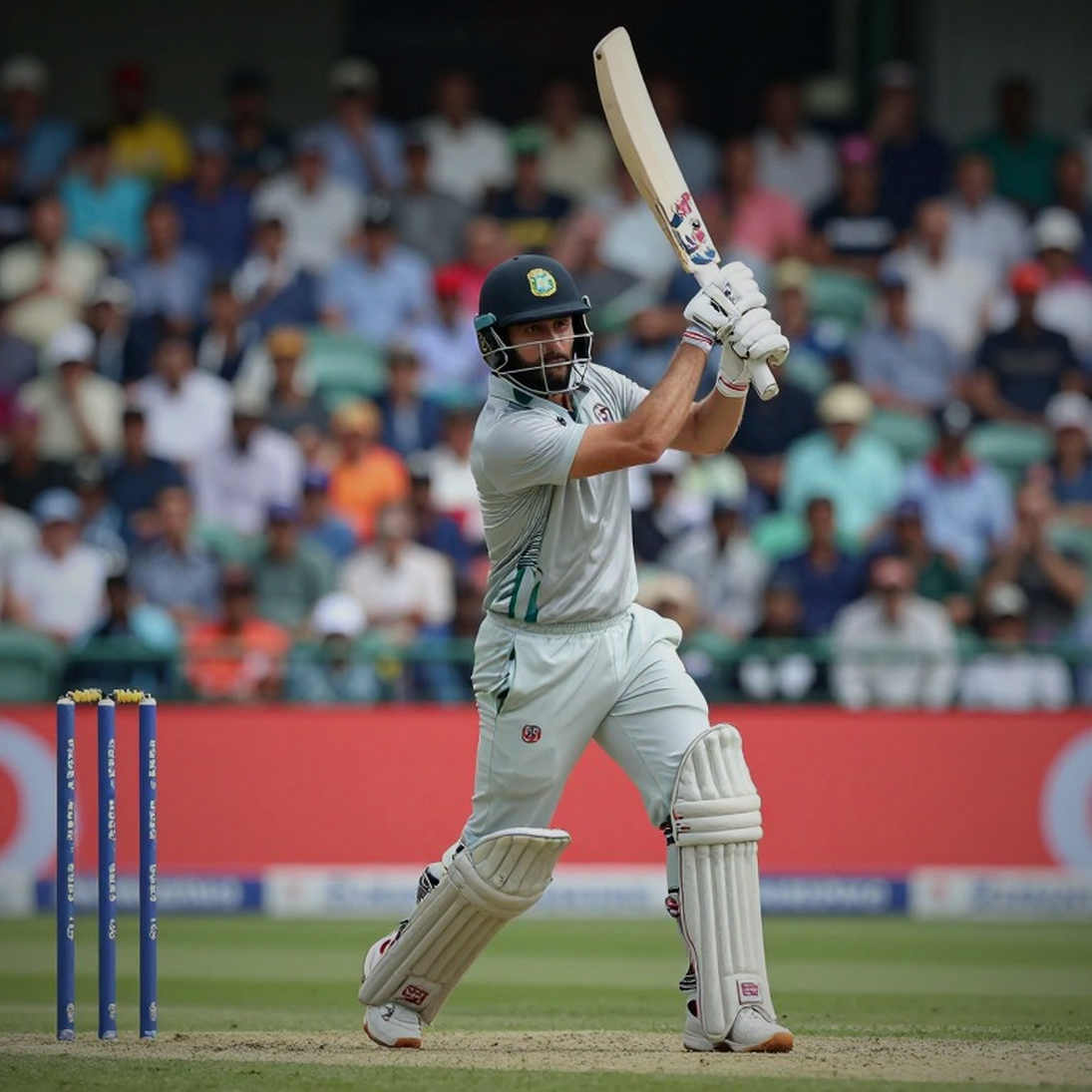
Test cricket is a five-day exercise in patience, where a bowler's economy rate becomes almost analytically irrelevant and wicket-taking ability, line-and-length discipline and the uneven bounce of the fourth innings decide the outcome. ODI cricket is a 50-over management exercise in which the first ten overs, the middle 30 and the last ten are three separate strategies. T20 is a 20-over phased contest in which every over has its own arithmetic. These formats are not substitutes for one another; they are different sports, and weighing their statistics on the same scale is the single most common analytical error.
A simple illustration makes this clear. A strike rate of 145 is extraordinary in the middle overs of an ODI, ordinary for a T20 finisher, and largely meaningless in Test cricket. Likewise, an economy rate below seven is excellent in T20, merely respectable in ODI, and close to irrelevant in Tests. Until the format is established, placing a player in a high, medium or low bracket is guesswork, not analysis.
The largest share of Asia's cricket market now belongs to T20 leagues. The Indian Premier League has run since 2026 and is today regarded as the most valuable property in the sport; the Pakistan Super League began in 2026; the Bangladesh Premier League in 2026; the Lanka Premier League in 2026; and the UAE's ILT20 in 2026. Alongside these, South Africa's SA20, the Caribbean Premier League and Major League Cricket in the United States are all putting pressure on the international calendar. League tier matters enormously: IPL commercial benchmarks cannot simply be transferred to other properties, and doing so systematically overstates the scale of smaller leagues.
At international level, the oldest institutional identity of Asian cricket is the Asian Cricket Council and the Asia Cup. The 2026 edition was played under a hybrid model, with some matches in Pakistan and the remainder in Sri Lanka, showing that hosting itself has become a subject of negotiation for political reasons. That model is both a precedent for future Asian events and a warning, because it complicates costs, security arrangements and broadcast scheduling all at once.
A bilateral series between India and Pakistan has not taken place since 2026-13; the two sides now meet only in ICC or Asian Cricket Council events. The commercial consequence is direct: every such fixture carries the highest value in ticketing, broadcast and advertising. But that is precisely why the rivalry is read through a political lens more than a sporting one, and any analysis must keep those two dimensions strictly separate.
The sharpest instrument in the tension between boards and leagues is the NOC — the No Objection Certificate, without which a player cannot appear in an overseas league. Boards deploy it through the discipline of central contracts; players see it as a constraint on their earning freedom. Cases are frequently reported of a player withdrawing from international duty citing injury and then appearing in a franchise league in the same window. There is no remedy here other than clear rules and public medical transparency, because without transparency every party simply suspects the other.
ICC revenue distribution is another major fault line. The Big Three model introduced in 2026, which allocated a larger share to the Indian, English and Australian boards, sharpened the debate over whether income should be distributed according to market size or according to membership. The structure was later revised, but the underlying question remains: should the market that generates the most revenue also hold the most control? For smaller member nations this is an existential question, since their cricket budgets depend substantially on that share.
At league level, auction prices are not in themselves proof of sporting quality. A high bid may reflect a local young-star premium, a shortage of all-rounders, scarcity of a specific role such as left-arm pace or a wicketkeeper-batter, or simply panic bidding at the close of an auction. Treating market value and sporting value as the same thing is therefore a serious error — and it is the error that manufactures the most overhyped players.
On integrity, cricket's record is not comforting. In 2026, South Africa's captain Hansie Cronje was engulfed by match-fixing allegations and received a life ban; he died in a plane crash in 2026. The case is a landmark because it demonstrated for the first time that fixing is not a problem confined to peripheral players — it can reach the captaincy, with roots extending into betting networks.
In 2026 in London, Pakistan's Salman Butt, Mohammad Asif and Mohammad Amir were found guilty in a spot-fixing case, and a British court sentenced them to imprisonment in 2026. The ICC also imposed bans on all three. Mohammad Amir later returned after his ban and played international cricket again. The episode shows that punishment and rehabilitation must be parts of a single system, otherwise deterrence remains incomplete and young players receive no signal that a route back exists.
Following the 2026 IPL spot-fixing investigation, Chennai Super Kings and Rajasthan Royals were suspended for two years each, and in 2026 the Lodha Committee recommendations set in motion a structural reform process in the Indian board. The example shows that integrity risk in league cricket does not stay confined to one individual; it can spread to team management and administration. The scope of oversight must therefore be equally wide.
The betting and fantasy sports market — platforms such as Dream11 in India — is a large but opaque component of Asian cricket's income. It should be stated plainly here that this analysis has no connection to any match prediction or wagering guidance; market odds can only ever be read as a signal of expectation, never as a basis for a decision.
Technology also affects the fairness of outcomes. The Decision Review System has been in use since 2026 and includes the umpire's call rule, under which the on-field decision stands when the margin is marginal. The rule protects the game from excessive uncertainty, but its interpretation generates controversy in every major tournament; outcome analysis should therefore strip these calls out as a luck factor.
Similarly, the Duckworth-Lewis-Stern method recalculates targets in rain-affected matches. It is mathematically robust, yet it often appears to create inequity between sides because the timing of wickets lost and the overs remaining do not fit perfectly into a single formula. Treating a rain-affected result as a signal of form would be a serious mistake.
Among the longer-term shifts is cricket's return to the Olympic programme. Cricket will feature at Los Angeles 2028 in the T20 format — the first time since 2026. For Asian nations this represents a new market and new visibility, but also a calendar problem: Olympic preparation, franchise league windows and bilateral series will be difficult to accommodate within a single year.
Player workload is the weakest link in this entire structure. For fast bowlers, playing continuously across three formats, long-haul travel and training in contrasting climates multiply injury risk. ICC and board workload-management guidelines exist, but they are frequently overridden by the expansion of franchise leagues, because league financial interest is visible immediately while injury risk appears only later.
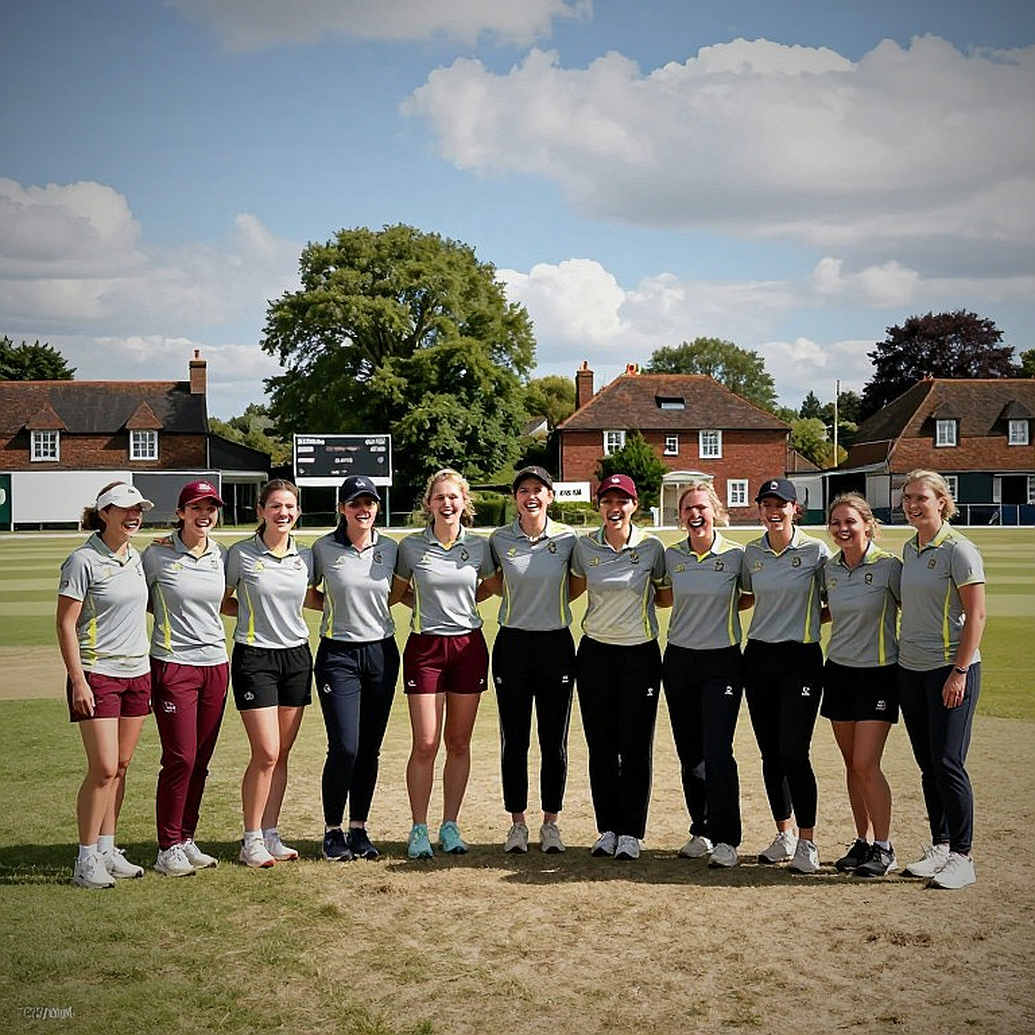
One positive shift is visible in women's cricket. The Women's Premier League began in India in 2026 and within a few seasons has drawn the attention of audiences and sponsors. For Asian cricket this is the largest untouched market: the talent exists, the structure is now being built and the investment pathway is opening. The only condition is that this growth should be held to the same standards of transparency demanded of the men's game.
Home advantage is cricket's largest structural variable. The nature of the pitch, the bounce of the ball, the weather and crowd pressure all combine in favour of the home side. Evaluating a player or team without separating home and away numbers is therefore methodologically incomplete, not merely under-informed.
Public narratives follow their own cycle: germination, acceleration, climax and backlash. The most common failure in Asia's cricket media economy is to declare a young player 'the next great batter' after a single strong franchise season. Historically such predictions have rarely been fulfilled, because small samples and home data mask weaknesses — particularly on fast, bouncy pitches away from home.
One practical conclusion follows from all of this: source quality and time sensitivity must be weighed as seriously as the statistics themselves. An official board release, a report from established cricket media, a general news outlet and a traffic-driven social account do not carry equal reliability, and the same fact can appear in a different colour in each. Where facts are absent, presenting inference as fact is the gravest professional offence.
The future of Asian cricket will depend on how it connects its expanding market with its sporting values. Money from leagues is necessary for the game's growth, but the same money exerts pressure on workload, integrity and the balance between formats. The most sensible path is to verify every claim, read every statistic in the context of its format, and identify every narrative before it reaches its climax. This report is not a description of a single match but a summary of these structural issues; everything stated here rests on publicly documented fact and should not be used as the basis for any wagering decision.
संबंधित खिलाड़ी
अनुशंसित
Five for four, then 221: Zimbabwe's defeat is bigger than its captain's 'complacency' charge2026-10-30
From 'Disgraceful' to a Selection Review: How the Cape Town Defeat Exposed Australia's Real Debate2026-11-02
118 in the Powerplay, then 81/4: The full arithmetic of India's Wellington win2026-10-28
Information Points: Zero — How Asian Cricket Publishes News Without News2026-11-02
Vaibhav Sooryavanshi Retained, Ishan Kishan Out for Third T20I: Six Unresolved Questions Behind the Selection Report2026-10-28
अनुशंसित
New Debate in Asian Cricket: Data Analytics or Human Experience, What Should Be Trusted?2026-11-01
282, 217* and 112*: Three Centuries in a Day, and the Question the NCL Pitch Asks2026-10-25
Ranji Trophy Round 2, Day 2: Priyansh Arya's 199, Siraj's Rhythm, and the Question Delhi Is Really Asking2026-10-22
President's Trophy Final: Markhor IT bowled out for 112, SBP 136/8 — the day's sharpest spell belonged to Aamir Jamal2026-10-28
Parth Bhut: From Junagadh's Gullies to the Best Bowling Figures in Saurashtra's Ranji History2026-10-31
अनुशंसित
A Live-Blog Headline on a Preview Body: Ranji Trophy Round 4, Day One, and the Audit of the Paperwork2026-11-02
The 16,000 Ledger: Babar Azam's Milestone, Rawalpindi's Flat Pitch, and a Number Built From Three Formats2026-10-22
Mumbai Indians' Backroom Bet: Steffan Jones, and the 10 kph Nobody Is Measuring2026-10-25
Mushfiqur Rahim's Right Index Finger, the Physio's Three Days, and the Selection Question Before Sylhet2026-10-30
Five Matches, Zero Innings: The Suryavanshi Question Is About Selection, Not Form2026-10-22
अनुशंसित
Litton Das's Fitness Test: Bangladesh's First Test Rests on a Hip2026-10-27
Behind Asian Cricket Reporting: The Data Gap, the Politics of Framing, and the Crisis of Trust2026-11-01
Suryavanshi Benched in New Zealand: A Hearing on Selection Logic, and the Call Nobody Officiated2026-10-22
Nineteen Information Points, Zero Cricket Entities: When a Cricket Pipeline Mistook a Central Bank for a Fixture2026-10-31
Shanto Eyes Test Championship Final but Emphasizes Process and Patience2026-10-28