
Flexible Batting Order: In India's T20I Surplus of Openers, Kishan Is the Real Pivot — Varma Must Stay at No.5
सारांश: न्यूजीलैंड के खिलाफ दूसरे टी20आई में इशान किशन की ग्रोइन चोट के कारण वैभव सूर्यवंशी को नंबर तीन पर भेजा गया और वे लय खो बैठे; ओपनिंग पर लौटते ही भारत ने रिकॉर्ड पावरप्ले प्रदर्शन किया। यह बदलाव रणनीतिक नहीं, मजबूरी में हुआ था। उपलब्ध पोजीशन-वार आंकड़ों (सत्यापन लंबित) के मुताबिक केवल इशान किशन के पास दोहरी भूमिका का विश्वसनीय रिकॉर्ड है — नंबर तीन पर 28 मैच, औसत 35.9, स्ट्राइक रेट 171.2 और ओपनर के तौर पर 5 मैच, औसत 35.2, स्ट्राइक रेट 193.4। तिलक वर्मा नंबर पांच पर (17 मैच, औसत 38.7, स्ट्राइक रेट 145.0) स्पष्ट रूप से सफल हैं, जबकि नंबर तीन पर उनका स्ट्राइक रेट 108.5 है — यानी करीब 36 अंकों का अंतर। संजू सैमसन के नंबर तीन के आंकड़े केवल तीन मैचों के हैं और सांख्यिकीय रूप से बेमानी हैं, इसलिए उन्हें 'नंबर तीन पर असफल' कहना गलत होगा। निष्कर्ष: भारत को सार्वभौमिक लचीलेपन की जरूरत नहीं, बल्कि भूमिका-आधारित लचीलेपन की जरूरत है — सैमसन और अभिषेक ओपनिंग करें, किशन नंबर तीन पर और वर्मा नंबर पांच पर बने रहें। किसी भी पोजीशन-आधारित नीति के लिए कम से कम 15 मैचों का नमूना जरूरी है। सभी आंकड़े सत्यापन लंबित हैं; यह सामग्री सट्टेबाजी सलाह नहीं है।
New Delhi: An injury opens the debate
India's men's T20I side is currently dealing with a problem most teams in the world do not have — a surplus of top-order batters. In the second T20I of the ongoing bilateral series against New Zealand, wicketkeeper-batter Ishan Kishan was ruled out with a groin injury. The team management had a clear choice: break the established Sanju Samson–Abhishek Sharma opening pair and push one of them to No.3, or move young Vaibhav Sooryavanshi down from the opening slot to No.3. They chose the second option.
The result was that Sooryavanshi, a batter whose game is built around facing pace with the new ball, looked out of sorts at No.3. When he was restored to the opening role, India produced a record powerplay batting show. That sequence can be a coincidence and it can be a signal — and that is the heart of the whole debate.
What matters is that the change was not strategic. It was forced. Kishan's injury created the vacancy, and the team chose to protect the established opening pair rather than slot the incoming batter into his natural position. That is a 'least-disruption' default, not a deliberate flexibility doctrine. Which is precisely why a single match cannot establish that India have made a flexible batting order official policy.
The real question is selection philosophy, not a result
This is not a match report. It is a report on a question that has been pending in Indian cricket for a long time: can a T20 side field its four best top-order batters simultaneously, even if one of them has to be moved from his natural slot? Before answering yes or no, it helps to remember that T20 is a three-phase format — powerplay (overs 1–6), middle overs (7–15) and death overs (16–20). Each phase demands something different. In the powerplay only two fielders can be outside the inner circle, so risk-taking is rewarded. In the death overs boundaries dry up and strike rotation becomes precious. A batter built for the powerplay is not automatically as effective in the middle.
Seen that way, sending Sooryavanshi to No.3 was not just a change of slot; it was a change of innings blueprint. As an opener his job is to use the pace of the new ball; at No.3 the spinners arrive early, the ball gets older and the scoring method has to change. That is a technical shift, not a numbering shift.
A note on the numbers: all data pending verification
Every position-specific figure in this report comes from public discussion and available text-based analysis, without attribution to any official database. Do not treat these numbers as settled fact without re-verifying them. We are therefore using them as indicators of direction, not as proof. This caveat matters because the single biggest flaw in the public debate is exactly this — large conclusions being drawn from very small samples. One batter's case rests on 28 matches; another's rests on three or five. Weighing them on the same scale is a mistake.
Ishan Kishan: the only genuine 'pivot' in this debate
Test the whole debate against the data and only one name survives as a credible dual-role case — Ishan Kishan. At No.3 his numbers read 28 matches, 933 runs, an average of 35.9 and a strike rate of 171.2. That is a large sample and it shows he is not merely adjusting at No.3 but performing there. As an opener his numbers read five matches, 176 runs, an average of 35.2 and a strike rate of 193.4. The sample is small, but an almost identical average with a 22-point jump in strike rate is not trivial.
This does not mean Kishan should be sent to open. It means he is the only player with a credible record in both roles — the natural place to apply flexibility, if flexibility is to be applied at all, rather than the youngest member of the side. A plausible reason for the strike-rate gap is that the No.3 role forces a slightly more conservative start because the batter carries the pressure of a wicket falling. That is an inference, not proof; five matches cannot become a rule.
Sanju Samson: three matches of data, three years of debate
As an opener Samson's record is solid: 27 matches, 783 runs, an average of 30.1 and a strike rate of 177.6. That is a strike-rate-led profile, and in T20 that is rational. At No.3, though, his numbers are three matches, 27 runs and an average of 9.0. That figure is statistically meaningless. Concluding from three innings that Samson 'cannot bat at 3' would be plainly wrong.
This is the most important data-integrity trap in the entire discussion. When former players argue that the senior batter should absorb the disruption, that is a leadership and fairness argument, not a performance argument. Its basis is culture, not data. The argument is not worthless — a senior player has the experience to adapt quickly — but presenting it as 'proven by the data' would be dishonest.
Tilak Varma: the strongest evidence against blanket flexibility
If any single number in this debate challenges the doctrine of universal flexibility, it is Tilak Varma's. At No.5 his record reads 17 matches, 348 runs, an average of 38.7 and a strike rate of 145.0 — a batter built for accumulating through the middle overs and accelerating at the death. At No.3, across seven matches, his average is 16.4 and his strike rate 108.5. That is a strike-rate swing of roughly 36 points, which in T20 terms is enormous.
Seven matches is a small sample and we accept that. But the direction is clear enough to be taken seriously. Varma's game is not built on new-ball pace; it is built on finding gaps against spin and medium pace and hitting big in the death overs. Sending him to No.3 would neutralise the strengths of one of the team's most useful players. Flexibility applied to everyone is not flexibility; it is carelessness.
Vaibhav Sooryavanshi: do not turn one innings into a trend
Sooryavanshi's failure at No.3 is a single innings. Presenting it as a trend would be wrong. But it is reasonable to say that young openers' techniques are typically built around pace on the new ball, so a move to No.3 is not natural for them. That is a plausible mismatch, not a proven one. Equally, the record powerplay show after his return to opening cannot on its own be called a refutation of flexibility — a single-match sample neither validates nor invalidates a thesis. It is merely consistent with the idea that players perform best in familiar roles.
A consensus among experts that hides a split
Three former internationals feature prominently in the public debate — Wasim Jaffer, Praveen Amre and W V Raman. All three are said to endorse a flexible batting order. Look closely, though, and this is not unanimity but a qualified split. Jaffer and Amre advocate flexibility in general. Raman endorses it too, but he specifies who should absorb the change — the senior player. That is a different argument altogether.
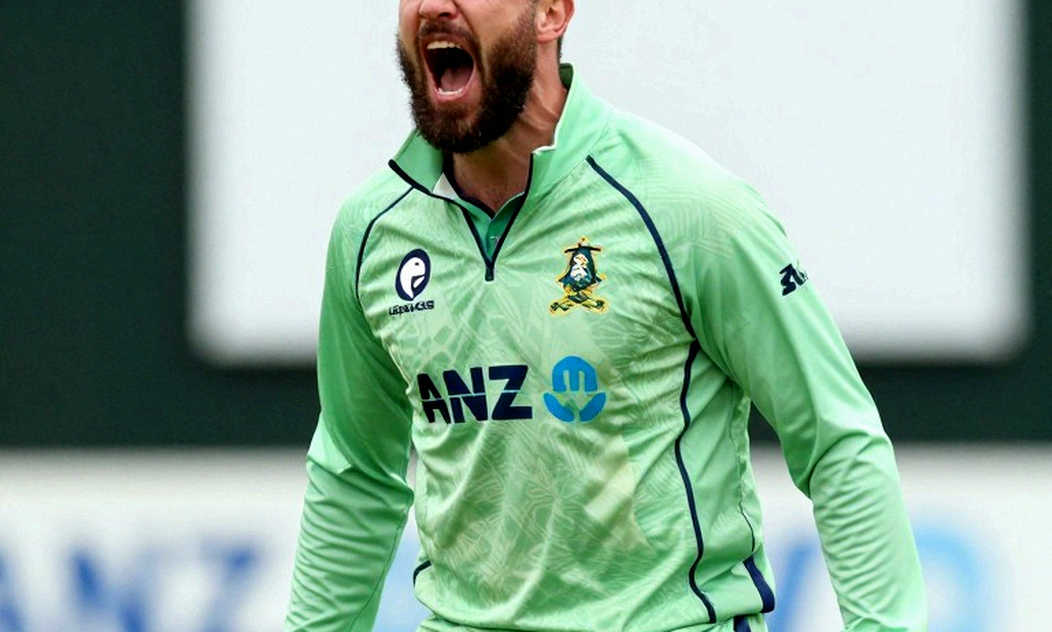
The irony is that the debate is being framed as consensus when the disagreement is actually about implementation. And the most interesting part is that the underlying data does not support blanket flexibility; it supports selective flexibility. When authority and data point in different directions, the right method is to keep them separate — 'who said it' and 'what the data shows' are two different questions.
The team landscape: a luxury problem, not a crisis
One thing should be clear about India's current situation — this is not a crisis. India have four batters in Abhishek Sharma, Sanju Samson, Vaibhav Sooryavanshi and Ishan Kishan whose first preference is opening. This is the 'too many openers' problem that afflicts sides with deep talent pools. Calling it a weakness would be wrong; it is a luxury problem.
But a luxury problem is still a problem. The team wants its four best top-order batters on the field at once, which mechanically forces one of them into an unnatural slot. Kishan's injury demonstrated that bench depth is strong enough that losing a regular does not create a weak link in the XI. That is good news. At the same time, it is true that this entire debate has ignored bowling and fielding. Until that side is included, no balanced assessment of the team is possible.
Risk: the biggest danger is destabilising a young player's role
The least discussed but most serious risk is developmental. The evidence in the debate shows that the player who was moved was the youngest member of the side. Raman argues the senior should absorb the change instead. Both cannot be right. This is a genuine cultural and selection fork, not something that can be postponed.
The second risk is building policy on small samples. Samson's three matches at No.3, Varma's seven, Kishan's five as an opener — erecting a permanent policy on these would be fragile in the extreme. Any positional conclusion needs at least 15 matches of evidence.
The third risk is injury-driven. Kishan's groin strain was the trigger for the whole experiment. It is a soft-tissue injury, and recurrence risk in a wicketkeeper who also opens is meaningful. If it lingers, what was meant as a stopgap could quietly harden into a permanent arrangement, compounding role instability.
The fourth risk is authority bias — former players' commentary is being presented as evidence when it is only opinion. This shifts the centre of the debate from numbers to personalities.
So what is the right approach?
The conclusion of the whole debate is that India do not need universal flexibility; they need role-based flexibility. The most logical arrangement looks like this: Samson and Abhishek open, Kishan bats at No.3 and Varma stays at No.5. Flexibility is then applied in exactly one place — Kishan — because he is the only one with a credible record in both roles.
If a situation ever arises where a senior batter must move to No.3, Samson is a candidate — but the decision should rest on a clear, pre-agreed principle rather than on three matches. If the team states publicly that the duty to change roles will be decided by seniority, the scope for discontent inside the group falls sharply.
Similarly, trialling a youngster like Sooryavanshi in a bilateral series is fine, but permanently damaging his core role is not. Development needs stability, and for a young opener stability means opening.
Signals to track from here
First: Kishan's return. When he is fit, is he slotted at No.3 or back at the top? No.3 would confirm flexibility as permanent policy; opening would confirm the previous experiment was injury cover.
Second: Samson's use at No.3. If he is tried there in the coming matches, that is a direct test of Raman's senior-absorbs-disruption principle.
Third: Sooryavanshi's role stability. His batting position over the next five T20Is will reveal whether the team sees him as an opener or a 'flexible option'.
Fourth: Varma's position. If he is moved to No.3 despite the data, it will show the team is prioritising doctrine over evidence.
Glossary: key terms
Powerplay: The phase in T20 from overs 1 to 6 when only two fielders may be outside the inner circle; the highest-scoring and most tactically decisive phase.
Batting order/position: The sequence in which batters are scheduled to bat (No.1 to No.11). No.1 and 2 are openers, No.3 the first drop, No.5 typically a middle-order finisher.
Strike rate: Runs scored per 100 balls faced. In T20 a finisher is typically expected to operate at 150 to 180 or above.
Average: Runs divided by dismissals; it rewards consistency and longevity rather than speed.
Groin injury: A strain of the adductor muscles in the inner thigh, common among players who sprint between the wickets and keep wicket; recurrence risk is significant.
Anchor/finisher: An anchor accumulates and holds the innings together; a finisher accelerates in the death overs.
T20I: A men's international Twenty20 match, 20 overs per side.
Disclaimer
All statistics in this report are drawn from public discussion and available text-based analysis without official attribution and should be treated as pending verification. This content is provided for sports-information purposes only and does not constitute betting advice. Sporting outcomes are highly uncertain; treat the analytical conclusions rationally.