
होमAsian CricketAfter Fame, the Work Stops: PCB Chairman Naqvi's Remark and the Real Fault Line in Pakistan Cricket
Asian Cricket
After Fame, the Work Stops: PCB Chairman Naqvi's Remark and the Real Fault Line in Pakistan Cricket
**मुख्य उत्तर:** पीसीबी चेयरमैन मोहसिन नकवी ने लाहौर कलंदर्स के एक कार्यक्रम में कहा कि शोहरत के बाद खिलाड़ियों की मेहनत घटती है, राष्ट्रीय खिलाड़ियों को बुनियादी कौशल सिखाने की ज़रूरत है, और ये बोर्ड की अपनी गलतियाँ थीं जिन्हें सुधारा गया है। उन्होंने कहा यह किसी व्यक्ति पर निशाना नहीं है। **मुख्य तथ्य:** - नकवी ने यह बयान लाहौर कलंदर्स (PSL फ्रेंचाइज़ी) के कार्यक्रम में दिया, पीसीबी प्रेस कॉन्फ्रेंस में नहीं। - उन्होंने कहा कि 24 करोड़ की आबादी से चुने गए 14 खिलाड़ियों को बुनियादी कौशल की ज़रूरत नहीं होनी चाहिए। - नकवी ने कहा 'ये हमारी गलतियाँ थीं... हमने खुद को सुधारा है', जिससे संस्थागत ज़िम्मेदारी स्वीकार हुई। - बयान 'किसी एक व्यक्ति के लिए नहीं' था, जिससे वरिष्ठ खिलाड़ियों पर सीधा आरोप टला। **स्रोत:** मूल रिपोर्ट — 'PCB Chairman Naqvi believes cricketers stop working hard after fame' (प्रकाशन तिथि मूल स्रोत में उल्लिखित नहीं)। बयान लाहौर कलंदर्स कार्यक्रम में दिया गया। **संबंधित प्रश्न-उत्तर:** प्रश्न: क्या नकवी के 'शोहरत के बाद मेहनत' वाले दावे का कोई डेटा है? उत्तर: नहीं, यह एक अवलोकन है, मापा हुआ नतीजा नहीं; इसे ब्रेकआउट के बाद 24–36 महीनों के प्रदर्शन-रुझान से परखा जा सकता है। प्रश्न: इस बयान का सबसे बड़ा संकेत क्या है? उत्तर: राष्ट्रीय खिलाड़ियों को बुनियादी कौशल सिखाने की बात घरेलू पाइपलाइन की कमज़ोरी की ओर इशारा करती है। प्रश्न: आगे किन संकेतों पर नज़र रखनी चाहिए? उत्तर: घरेलू ढाँचे में बदलाव, कोचिंग नियुक्तियाँ, और प्रदर्शन-आधारित सेंट्रल कॉन्ट्रैक्ट शर्तें — इन्हीं से तय होगा कि बयान नीति बनता है या भाषण रह जाता है।
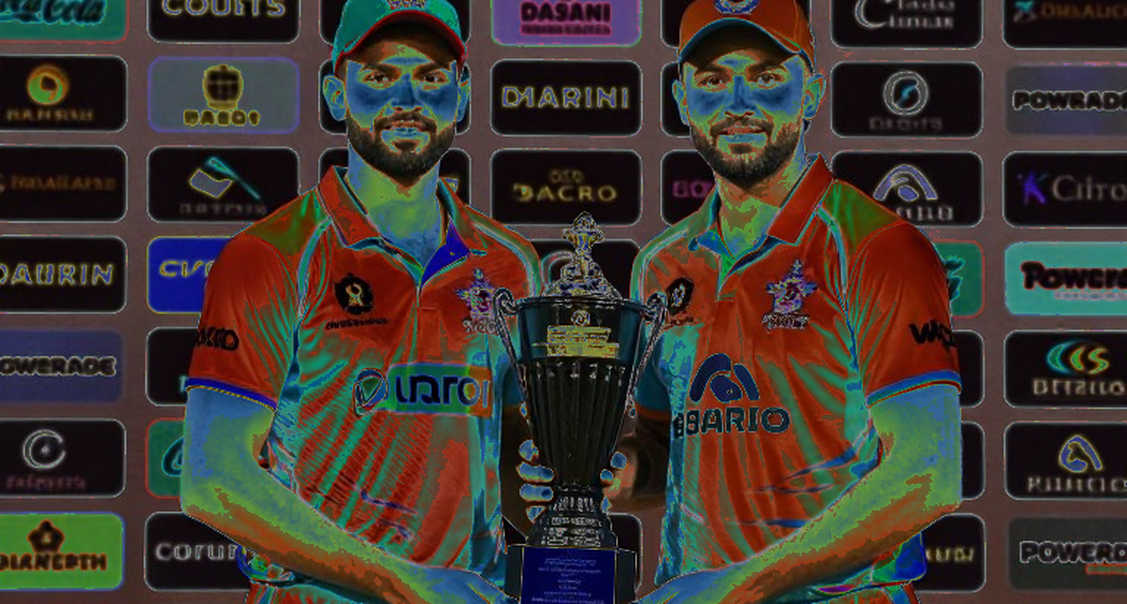
The sharpest part of what PCB chairman Mohsin Naqvi said from a stage at a Lahore Qalandars event was not the sentence that became the next morning's headline. The headline was this: cricketers stop working hard once they become famous. But the biggest story in the remark is its venue. This was not a PCB press conference room. It was the platform of a Pakistan Super League franchise, Lahore Qalandars. When a board chairman delivers his harshest self-criticism not at a national-team briefing but at a league function, the choice of stage is itself a statement. Across the many Pakistan tours and series I have watched on screen and from the edge of the ground over the years, the lesson has been consistent: the story of cricket is often not on the pitch. This time the story was on the stage the remark came from, and most of the people in that room were not players but franchise officials and sponsors.
Mohsin Naqvi is the chairman of the Pakistan Cricket Board and, at the same time, a senior figure in Pakistani politics — a fact that is widely known, and one I will return to, because it is not merely a line in a biography but a governance optic. His remarks at that event divided into three parts. First, a direct comment on player behaviour: the level of hard work drops after fame and money arrive. Second, a startling admission: national-team players are in need of being taught basic skills. Third, and the least quoted, an acceptance of institutional responsibility: these were our mistakes, we have corrected ourselves, and we will continue to do so. He added that the remark was not aimed at any single individual.
The backdrop is the old one that has followed Pakistan cricket for decades — rich in talent, poor in consistency. Before any series the familiar sentence echoes that this team has the firepower to beat anyone, and after the series the same question returns: why didn't it happen? Naqvi's remark arrived inside this old debate, and its significance lies in the fact that the debate has now come from the mouth of the man at the very top of the board. Previously the commentary came from commentators, former players, social media. Now it has been said by someone who actually has the authority to sign off on domestic structure, coaching appointments and central contracts. The weight of the remark is not in its words but in its position.
Now to the sentence that drew all the attention — that hard work slips away after fame. It is an interesting remark, but reading it as fact would be a mistake. It is a hypothesis, and a hypothesis needs data to be proven, data this statement does not contain. If the claim were true, it would show up as a clear decline in a player's average, strike rate or economy over the 24 to 36 months following his breakout. No cricket database offers such a 'post-fame decline' curve, because nobody has measured it that way. What Naqvi said is an observation, not a measured finding.
In my own notebook, one pattern from Pakistan cricket keeps returning — a big breakout, then eighteen months of flatness. A young batsman shines in one series, the papers call him the next star, endorsements arrive, and then suddenly the same player fails to rise above average for three years. I have seen this with many names. But here I have to doubt my own observation, because the flatness is not always caused by fame. Sometimes it is injury, sometimes a technical change, sometimes the absence of quality bowling in domestic cricket, sometimes mental fatigue. I kept the notebook open through the silence too, because silence is also a scoreline — and in that scoreline it was never recorded whether the effort fell or the opportunity did. Keep the claim on one side, the data on the other.
The second part of the statement is more serious, and the media gave it less room. Naqvi said that the fourteen players selected from a country of 24 crore people should not need to be taught basic skills. That sentence is a selection-scarcity argument — from such a large talent pool, a selected player should already have the fundamentals. But the real warning hidden behind it is not about a player, it is about the pipeline. If basic skills are being taught at the national-team level, it means the domestic and first-class structure is not producing international-ready players. That accusation is not against fame, it is against the system — and it is far bigger than the headline that ran in the morning.
This is where the real fault line of Pakistan cricket shows — not a shortage of talent, but a shortage of efficiency in converting talent into results. Naqvi himself said that very good players get wasted. That is a talent-conversion problem. A large population, a large domestic structure, and yet no consistency at international level — that arithmetic is tied not only to effort but to structure. When a board chairman himself says national players need to be taught the basics, he is effectively admitting that domestic cricket is not delivering a finished product. This is more than a statement; it is a diagnosis.
And here comes Naqvi's cleverest, least-discussed move — placing the fault not on the players but on the board. These were our mistakes, we have corrected ourselves. Public debate in Pakistan cricket is usually spent blaming players — so-and-so is lazy, so-and-so only wants to make money. A sitting board chairman saying the fault was the institution's is a rare thing. It has two benefits. Players do not become defensive, and responsibility moves to the place that has the power to change things. But there is a danger here too. The claim 'we have corrected ourselves' comes with no metric, no structural detail, no timeline. It is a claim, not proof. Until concrete signs of reform appear, the sentence will remain a speech.
The choice of venue is part of this story too. Naqvi chose a franchise event over the PCB press conference room. That is not trivial. It means the board wants to see its development agenda aligned with the league, not opposed to it. The PSL is the brightest and most commercial part of Pakistan cricket, and by speaking from that platform Naqvi sent a message — the road to reform will run through domestic cricket and the league together, not as separate islands. If that holds, the bridge from grassroots to league to national team could strengthen. But for now it is a signal, not a policy.
One more small thing, which is large. Naqvi made clear the remark was not aimed at any one individual. That is a conflict-avoidance tactic, and a sensible one. Without the disclaimer, it would have been read as a direct hit on senior, brand-valuable players and would have created dressing-room tension. But a disclaimer does not remove tension, it only hides it. When a chairman says publicly that effort slips after fame, every senior player quietly asks himself — is this about me? The press box taught me to listen for the voices missing from the seating chart — and the silence that settles over a dressing room after a remark like this is often the loudest.
Now the dimension Indian readers often ignore and Pakistani readers deliberately avoid. Mohsin Naqvi is not only PCB chairman but also a senior political officeholder. That fact does not attach directly to this remark, but the structure behind it does. When the head of a national board is also a political figure, the International Cricket Council's line on 'government interference' always sits in the background. This is not an accusation, it is an optic — but in the world of cricket, optics matter too. The reform speech of a man holding both political and cricket-administrative responsibility is read with extra caution. This piece is not stirring that controversy, only recording the backdrop against which the remark should be understood.
Now to the outside reading that most easily misreads this news. Most people will read it as player-bashing or a motivational speech — the chairman said players have become lazy, that's it. That reading is convenient because it ends the debate where it starts. The real story is the opposite. A sitting board chairman publicly admitted that his domestic structure is not producing international-standard players, and that the fault is the institution's. That is not player criticism, it is institutional self-diagnosis. To read it as mudslinging is to dismiss the diagnosis.
The second outside reading is that this is a sharp, honest statement and nothing more. That too is incomplete. Pointing a finger at effort is cheaper than fixing structure. It is easy to say players do not work hard; it is hard to say how many matches domestic cricket has, of what quality, who the coaches are, and how many structured steps a 19-year-old takes before reaching international level. The 'fame' argument sounds sharp, but it can distract from the real question — why the pipeline is broken. So this statement should be read in two halves: one sentence for the headlines, and one admission for the structure. The second matters more.
Alongside this, some credit is due to Naqvi, and it should not be ignored. In Pakistan cricket's public culture, the man at the top usually blames players, coaches or 'the system', not himself. Here a chairman said — the mistake was ours. That is no small thing. It is the language of institutional accountability, even if for now it is only language. If that language turns into policy, this remark could become a turning point for Pakistan cricket. If it does not, it will join the list of speeches repeated after every series.
What to watch next matters more than the statement itself. Three concrete signals deserve attention. First, changes in domestic structure — the number, quality and shape of matches at first-class and age-group level. If the talk of 'basic skills' is true, reform should start there, not in national-team practice sessions. Second, coaching appointments and their accountability — who is brought in, on what basis, and what the benchmark is. Third, performance-linked conditions in central contracts. If the board truly wants to challenge 'effort after fame', its most direct weapon is the contract — where fitness, availability and performance are tied directly.
For me, the real importance of this statement is not in the word 'fame' but in the sentence 'the mistake was ours'. A board chairman publicly admitting his institution's weakness is rare, and it should be recorded with that seriousness. But between admission and reform lies a long, empty road — and that road is filled not by speeches but by deadlines and metrics. If concrete announcements on domestic structure, coaching or contracts do not come in the next few months, this statement too will dissolve into the silence I have noted many times. The real story of cricket happens where someone decides to speak — and then again, where someone decides to finish what was said. The question is not what Naqvi said. The question is when his next announcement comes, and how many numbers it contains.
संबंधित खिलाड़ी
अनुशंसित
Suryavanshi Benched in New Zealand: A Hearing on Selection Logic, and the Call Nobody Officiated2026-10-22
The 16,000 Ledger: Babar Azam's Milestone, Rawalpindi's Flat Pitch, and a Number Built From Three Formats2026-10-22
Twenty-Six Catches and a Record Rushed Into Print: The Real Arithmetic of Tilak Varma's Calendar Year2026-10-24
Ranji Trophy: Gill Returns, but Punjab's Three-Century Question Remains2026-10-22
A 94-Run Powerplay, a Left-Left Opening Pair and New Zealand's Fixable Fracture: A Phase-Wise Read of the 2nd T20I2026-10-24
अनुशंसित
The Zero-Information Point: When a Transfer Scoop Has Nothing to Say2026-10-22
The Rawalpindi Queue and McCullum’s ‘Different Way’: England’s Real Test Is Two Bowling Questions2026-10-22
Bumrah's Workload Budget: The Test-First Formula and the Real Cost of Five Tests2026-10-22
Ranji Trophy Round 2, Day 2: Priyansh Arya's 199, Siraj's Rhythm, and the Question Delhi Is Really Asking2026-10-22
The Truth of 305 at Rawalpindi: Salman Ali Agha's Century, Eshan Malinga's 4-46, and the Arithmetic of the Last Five Overs2026-10-22
अनुशंसित
The Sanju Samson 'Form' Debate: Why We Are Averaging Goats When We Should Be Counting Cheetahs2026-10-22
The Arithmetic of the Last 27 Balls: India's 2-0 Lead Is Narrower Than It Looks2026-10-24
Suryavanshi Benched in New Zealand: A Hearing on Selection Logic, and the Call Nobody Officiated2026-10-22
The 16,000 Ledger: Babar Azam's Milestone, Rawalpindi's Flat Pitch, and a Number Built From Three Formats2026-10-22
Bengaluru Rain Stops the Series at 2-2: The Ledger of an Abandoned Decider2026-10-22
अनुशंसित
The Arithmetic of the Last 27 Balls: India's 2-0 Lead Is Narrower Than It Looks2026-10-24
The Body's Testimony: Kishan's Adductor, Mayank's Absence, and a Fifteen-Year-Old's First Chance2026-10-25
India's Armour: 62, 50 and 36 in the Death Overs — Where the Crack Began2026-10-22
The Zero-Information Point: When a Transfer Scoop Has Nothing to Say2026-10-22
Mumbai Indians' Backroom Bet: Steffan Jones, and the 10 kph Nobody Is Measuring2026-10-25