
The Asian Cricket Landscape: Formats, Franchise Leagues and a Governance Trilemma
एशियाई क्रिकेट में फ्रैंचाइज़ी लीग और राष्ट्रीय टीमों के बीच टकराव मुख्य रूप से तीन बिंदुओं पर होता है: (1) कैलेंडर — लीग-खिड़की और द्विपक्षीय/आईसीसी श्रृंखलाओं का ओवरलैप; (2) एनओसी — बोर्ड द्वारा विदेशी लीग की अनुमति और अवधि तय करना, जो खिलाड़ी की आजीविका से टकराता है; (3) कार्यभार — तीन प्रारूपों और लीग के जुड़े हुए गेंदबाज़ी-भार का प्रबंधन। इसके अलावा वित्तीय पक्ष भी निर्णायक है: छोटे बोर्डों के लिए लीग मेज़बानी और स्थानीय खिलाड़ी अनुबंध आय का बड़ा स्रोत बन गए हैं, जिससे लीग-अनुसूची में बदलाव उन पर असमान रूप से भारी पड़ता है। ध्यान दें — फ्रैंचाइज़ी नीलामी में मिली ऊँची कीमत खिलाड़ी की अंतर्राष्ट्रीय क्षमता का प्रमाण नहीं है; व्यावसायिक मूल्य और खेल-मूल्य अलग-अलग मापदंड हैं।
South Asia is today the economic and emotional centre of world cricket, but the region does not run one cricket — it runs several in parallel. India, Pakistan, Sri Lanka, Bangladesh and Afghanistan hold full ICC membership, while Associate members such as Nepal, the UAE, Oman and Hong Kong operate under the same regional umbrella. The resources, audience bases and priorities of these boards differ so sharply that any analysis treating 'Asian cricket' as a single unit is incomplete by construction. This background report is not about a specific match or series; it unpacks the structural threads that hold the region's cricket together and pull it apart.
A triple format economy
Asia's defining feature is that Tests, ODIs and T20s run simultaneously, in the same calendar, before the same audiences. These are three separate sporting economies. Test cricket rewards session-by-session patience and pitch progression; ODIs reward middle-over tempo management and a plan for the last ten overs; T20 is a percentage game of powerplay and death overs. The same player's numbers speak different languages across the three — a Test average, a T20 strike rate and a bowling economy rate cannot be substituted for one another. The most common error in regional analysis is to read franchise-league brilliance directly as proof of international capability.
Franchise leagues: a parallel market
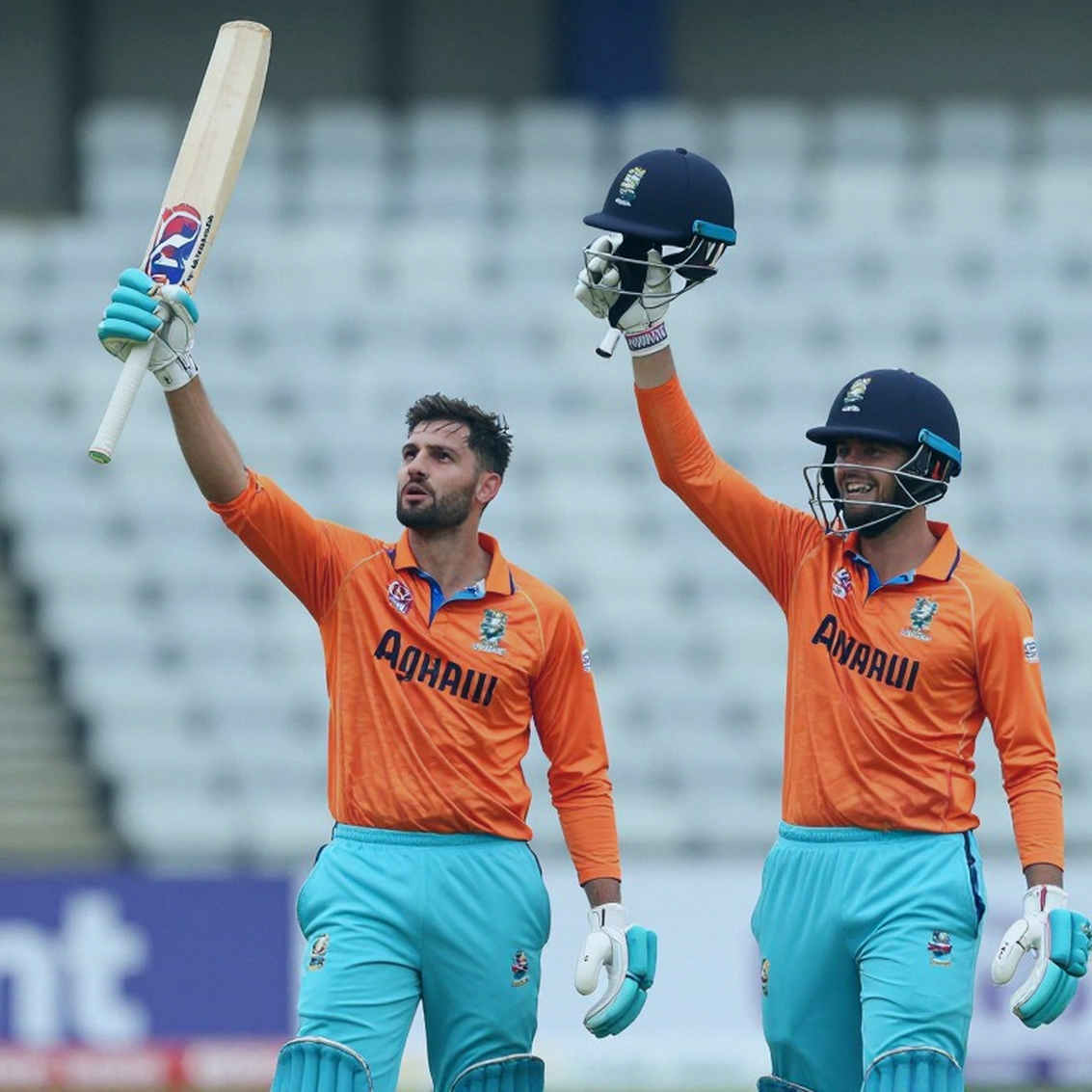
The IPL in India, the PSL in Pakistan, the LPL in Sri Lanka, the BPL in Bangladesh, the Shpageeza in Afghanistan and the ILT20 in the Gulf have together built a parallel cricket market that runs alongside national-team calendars and often collides with them. Its currency value and its sporting value are not the same thing. A high auction price is not evidence of international quality; it is the product of squad balance, local quotas and that season's needs. Likewise, a franchise's valuation is set by broadcast cycles and the size of its urban market, not by the number of internationals it has produced.
A less visible effect of this economy is that franchise leagues have become a major revenue source for smaller boards — through hosting fees, local-player contracts and broadcast rights. That income helps those boards run domestic structures, but it also creates dependency: a shift in the league window, or the postponement of a single season, hits smaller boards disproportionately hard.
NOCs and player workload
The league-versus-country tension is sharpest around the No Objection Certificate. A board decides which player may appear in which overseas league, and for what period. In theory the system exists to manage workload and protect national commitment. In practice it frequently becomes a dispute at exactly the point where a player's livelihood and a board's priorities pull in different directions.
For fast bowlers this is the most consequential question. Playing across three formats continuously, adding travel and league workload, is the combination that conventional management handles poorly. No regional analysis is complete without looking at a player's age curve, injury history and bowling volume over the previous twelve months together, not separately.
Governance, politics and neutral venues
South Asian cricket governance is not purely a sporting matter. The long freeze on bilateral series between India and Pakistan, the staging of fixtures at neutral venues, and political considerations around participation in multi-nation tournaments all feed directly into calendars and revenue. Any tournament plan that assumes every member will sit at the same table is carrying risk.
Similarly, the debate over ICC revenue distribution has run for years. Boards with large markets hold a bigger share of broadcast rights, and that asymmetry makes it harder for smaller members to build high-performance domestic structures. This argument is fought institutionally rather than on the field, but it shows up on the field — in squad depth, support-staff quality and the fairness of schedules.
On integrity, three indicators deserve continuous scrutiny: anti-corruption unit monitoring, abnormal movement in betting markets, and government interference in boards. Silence on any of these should never be read as a clean bill of health; silence means only 'unknown'.
Women's cricket: the fastest-growing segment
The biggest structural change in the region in recent years has come in women's cricket. Since the launch of the Women's Premier League, India has built a professional domestic pathway for women players, and tournaments such as the Women's Asia Cup have given regional competition a regular rhythm. For the women's teams of Sri Lanka, Pakistan, Bangladesh and Nepal this has brought both opportunity and pressure — opportunity because match practice has increased, pressure because the resource gap is now more visible.
Pitch, weather and DLS
Subcontinental pitches are associated with spin, but even that generalisation needs care. Weather, dew and the amount of grass combine into a mix in which the morning session and the evening session can look like two different games. In day-night fixtures dew reduces the grip available to spinners in the second innings, raising the value of the toss. And where rain intervenes, target recalculation under Duckworth-Lewis-Stern becomes a subject of debate in almost every series. Separating this luck factor — toss and DLS — from any result is essential, or a team's true strength will be misjudged.
The home-away gap
Cricket's gap between home and away performance is unusually large compared with other sports. Familiarity with conditions, crowd support, travel fatigue and knowledge of the pitch combine to make even an average team stronger at home. Any assessment of a team's strength should therefore look separately at the home-away differential and at stylistic matchups — spin-heavy bowling against a side built for pace-friendly surfaces.
The growing weight of data
Over the past decade the centre of cricket analysis has shifted from 'average' to 'situation'. The question is no longer what a batter's strike rate is, but what it is against spin in the death overs, on a large ground, under pressure. That shift is useful for decision-makers, but it carries a trap: conclusions drawn from small samples sound extremely confident. Treating a few T20 league innings as permanent capability is the most common form of that trap.
In summary
Three things are key to understanding Asian cricket: format-specific standards, the gap between financial value and sporting value in the franchise market, and the resource asymmetry between boards at the governance level. Analysis that keeps these three separate is reliable; analysis that merges them looks impressive and misleads.
(Note: this is a general regional background report, not a news report on any specific match, series or announcement. No statistic, score, quotation or date is claimed here.)