
होमFootballThe Architecture of Pressing: The Science of Applying and Absorbing Pressure in Modern Football
Football
The Architecture of Pressing: The Science of Applying and Absorbing Pressure in Modern Football
प्रेसिंग फुटबॉल में गेंद के बिना दबाव बनाने की संगठित पद्धति है, जिसमें तीन सवाल तय होते हैं: कहाँ (हाई/मिड/लो ब्लॉक), कब (ट्रिगर — खराब टच, बैकवर्ड पास, साइडलाइन में फँसा खिलाड़ी, गोलकीपर से शॉर्ट पास), और कैसे मापें (PPDA, हाई टर्नओवर, फील्ड टिल्ट)। इसका आधार सामूहिक दूरी-अनुशासन है, व्यक्तिगत दौड़ नहीं। काउंटर-प्रेसिंग (गेगेनप्रेसिंग) गेंद खोने के पहले कुछ सेकंड में वापस जीतने पर केंद्रित है और उसके लिए 'रेस्ट डिफेंस' ज़रूरी है। कीमत: थकान, ऊँची रेखा के पीछे जगह, फाउल और कार्ड। मुख्य संदेश: प्रेसिंग जोखिम-प्रबंधन है, नैतिक पसंद नहीं; PPDA अकेला संकेतक पर्याप्त नहीं, उसे मैच-संदर्भ और आँख के साथ पढ़ना चाहिए।
The part of football played without the ball is now as carefully planned as the part played with it. 'Pressing' describes the organised attempt to let the opponent keep the ball while steadily shrinking their options, and to punish the mistake the moment it arrives. It is not simply running. Running is the fuel; pressing is the organised expenditure of that fuel — who runs, when, in which direction, alongside whom, and on what cue. A team without that pre-agreed structure tires quickly and leaves gaps between its lines. This piece treats pressing as a system: its history, its geography, its triggers, its measurement, and its cost.
The seed of modern pressing is visible in Arrigo Sacchi's Milan, whose side moved as one unit, used the offside trap as a collective weapon, and treated the distance between four lines as the highest discipline. Through the 1990s and 2000s possession moved to the centre of the conversation and pressure receded into a supporting role. Then the Red Bull model shaped by Ralf Rangnick's influence and the Dortmund-Liverpool style of Jürgen Klopp pushed the idea of winning the ball back immediately after losing it into the mainstream. Marcelo Bielsa took it to near-ideological rigour, showing that pressure can be a way of life rather than a style. Today almost every elite coach has some version of pressing; the difference is how much risk they attach to it.
The first question is where. Three basic blocks are useful: the high block, where a team pushes up to the opponent's defence and goalkeeper and holds its back line well beyond halfway; the mid block, where it sets a net around the middle third and invites the opponent towards the touchline; and the low block, where it compresses near its own box and wins through reaction. No block is inherently better; the choice follows the match plan and the players available. Crucially, the team deliberately 'leaves' certain passes open — such as letting a centre-back play towards the touchline — so that pressure begins where a mistake costs the most.
The second question is when. This is where triggers matter. Triggers are the moments when the whole team steps up together: a poor first touch, a slow backward pass, a long aerial ball with a realistic chance of winning the second ball, a player trapped near the touchline, or a short pass from the goalkeeper. The value of a trigger lies in its collectiveness. If one player runs and the four or five units behind him do not move, the run is wasted and a large space opens in the middle. That is why communication and distance discipline matter more in pressing than individual intensity.
The third question is how to measure it. PPDA (passes per defensive action) is the most cited indicator. Put simply, it records how many passes an opponent completed before suffering a defensive action — a tackle, interception or pressure. A lower PPDA usually indicates more aggressive pressure. It is read alongside high turnovers (possessions won in the attacking third), field tilt (where the ball spent its time) and shots generated after turnovers. Caution is essential: PPDA alone does not describe quality. A low-PPDA side can be carved open repeatedly, and a high-PPDA side can be a highly efficient low block. Numbers must be read with the scoreline, match context and opponent quality.
The fourth element is counter-pressing, popularly called gegenpressing. Here the target is not the opponent's build-up but one's own loss of the ball. The first few seconds after a turnover are the most valuable, because the opponent is not yet organised and the space ahead of them is still open. Successful counter-pressing rests on a natural density of players around the point of loss and on a 'rest defence' held by a few players behind the ball, which prevents the first line from being breached catastrophically. Teams that counter-press indiscriminately are often exposed by a single long ball and one fast winger.
The fifth and most neglected question is cost. Pressing borrows from both the body and the structure. From the body, because repeated high-intensity sprints, changes of direction and duels are demanded, and weather, travel and fixture congestion make that debt more expensive. From the structure, because there is always space behind a high line, and if the first pressure is bypassed the defence must gamble over a long distance. Sustained pressure also raises fouls and cards, forcing caution late in matches. No coach enjoys the benefits without paying these costs.
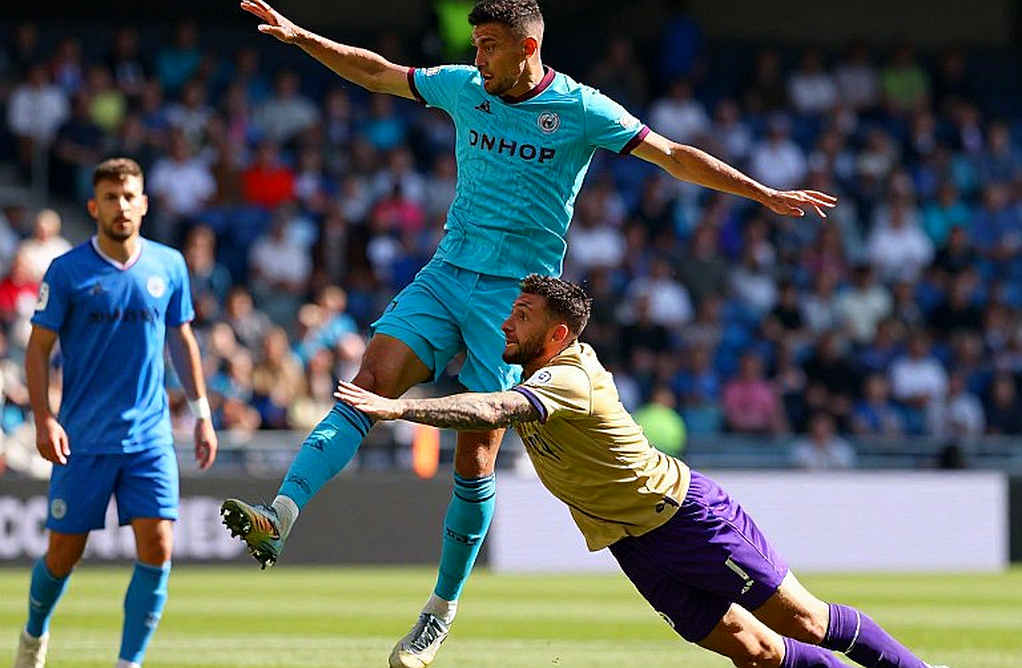
The sixth dimension is technical architecture — particularly the goalkeeper and the back line. Playing a high line means the goalkeeper must act as a sweeper outside the box and hold vigilant positioning. Defenders must be able to survive one-versus-one situations, because when pressure breaks they are the first to be isolated. An offside trap only works if all four defenders step in the same rhythm; a single second of delay destroys the whole net. This is why many clubs prioritise fast centre-backs suited to a high line, even at the cost of traditional defensive experience.
The seventh dimension is fitness and rotation. At club level, player speed, distance and high-speed sprint data are recorded routinely, and training load is adjusted accordingly. But the real use of that data is management rather than prediction: who rests when, who is introduced in the second half, and in which fixture the intensity of pressure should drop in favour of a mid block. Teams with weak benches lose pressing quality towards the end of a season, one of the most visible declines in any league.
The eighth dimension is the development pipeline. An academy that wants to produce a team able to apply and absorb pressure must teach children to decide in small spaces and confined areas. In pressing, decision speed matters more than technique: scanning before receiving, keeping the body open, anticipating the next pass. Where pitches, climate and competition structures are constrained, sustaining high-intensity pressing across a whole season is expensive; selective pressure and a solid mid block are the more practical route. That is not weakness but adaptation to resources.
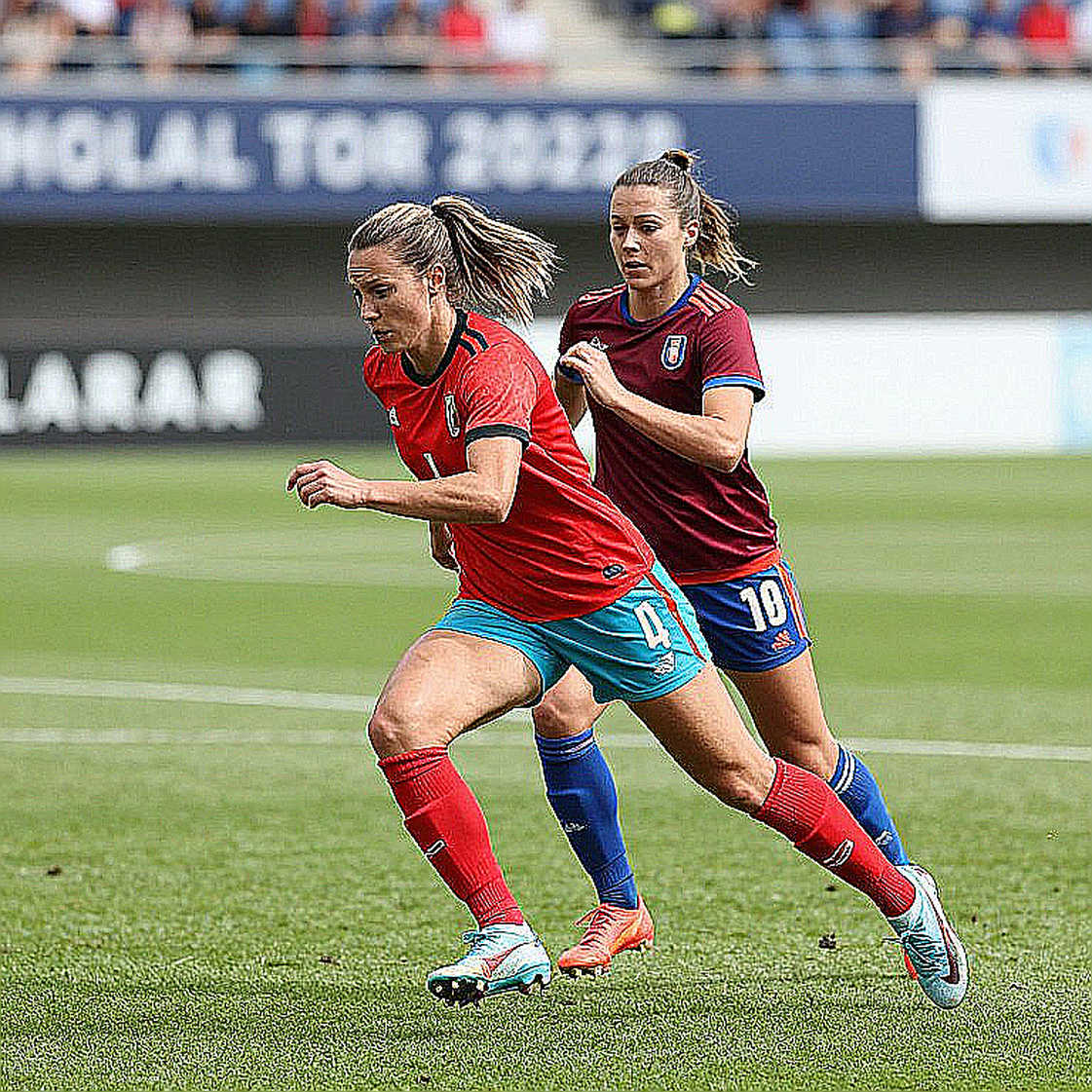
The ninth dimension is for viewers and media. The easiest way to read pressing is to watch what a team does immediately after losing the ball — does it step up collectively or retreat? Second, watch where the opponent's goalkeeper is playing from; if he is repeatedly forced long, the pressure is working. Third, watch the distance between the back line and midfield, because that distance determines how much space opens when pressure breaks. Relying only on data is as misleading as relying only on the eye; the two must be read together.
In the end, pressing is not a moral choice — neither aggressive nor defensive by nature. It is a question of resource limits and risk tolerance. A team that can hold its lines at the right distance, choose the right moment and manage fatigue can win games through pressure. A team that only runs and does not think is crushed by it. In modern football the difference lies not in how many fast legs a side has, but in how clear its mind is.
संबंधित खिलाड़ी
अनुशंसित
Enrique's Plan for Yamal Is Possession, Not Marking — and That Is Also His Biggest Risk2026-10-22
Two Points in Basel: Wawrinka Bows Out in Federer's House2026-10-29
Alarms Off, No Club: The Sergio Rico Home Invasion and a Footballer's Institutional Vacuum2026-10-23
Al-Nassr 3-1 Al-Faisaly: The 79th-Minute Goal, 25 Points, and a Table That Isn't Finished Yet2026-10-24
Gnabry Backs Kane for the Ballon d'Or, but the Real Deadline Is 1 January 2027, Not 26 October2026-10-23
अनुशंसित
Fenerbahçe: A 2-0 Lead, a 90th-Minute Equaliser, and 25 Claims With an Empty Source Column2026-10-23
The Record Came Back Empty: When Football's Archive Returns Zero2026-11-01
Gnabry Backs Kane for the Ballon d'Or, but the Real Deadline Is 1 January 2027, Not 26 October2026-10-23
307 BCE: The Day the King Became the Athlete — And Why We Still Have the Wrong Name 2,300 Years Later2026-10-30
Kolasinac's Rectus Femoris Strain: Atalanta's Back Three Loses Its Left Foot, and the Arithmetic of Four Matches2026-10-23
अनुशंसित
Four European Giants Watching Batrakov? Turkish-British Media Claim It, But the Evidence Chain Is Thin2026-11-02
Cristiano Ronaldo’s Hat-Tricks: The 67 Claim, the 65 Contradiction and the Saudi League Context2026-11-01
Alarms Off, No Club: The Sergio Rico Home Invasion and a Footballer's Institutional Vacuum2026-10-23
Kvaratskhelia's Knee, PSG's Empty Left Flank — and the Season That Hasn't Started Yet2026-10-23
One Warm-Up Jolt, Como's Entire Right Flank: Smolčić for Couto and the Ledger of a Late Change2026-10-22
अनुशंसित
Cristiano Ronaldo’s Hat-Tricks: The 67 Claim, the 65 Contradiction and the Saudi League Context2026-11-01
PSS Sleman vs Borneo FC: Before You Read 15th and 13th, Do the Game-in-Hand Arithmetic2026-10-27
Two Points in Basel: Wawrinka Bows Out in Federer's House2026-10-29
Kvaratskhelia's Knee, PSG's Empty Left Flank — and the Season That Hasn't Started Yet2026-10-23
Nine Cells, One Empty Truth: Why the Null Result Is Football Analytics' Most Honest Document2026-10-23