
The 8-1 Scoreboard and One Arm: Nisha Dahiya's Last Minute and Indian Wrestling's Unread Warning
Paris, 5 August 2026. Women's 68kg freestyle quarterfinal. Nisha Dahiya again...
Paris, 5 August 2026. Women's 68kg freestyle quarterfinal. Nisha Dahiya against Pak Sol Gum of North Korea. The scoreboard reads 8-1, second period, final minute.
I have watched that bout seven times. Once live, at home, without a notebook. Six more times with the scoreboard paused, checking foot position and the shoulder line. On the sixth pass I found the thing no live commentator said: the injury did not arrive at the moment she went down. It arrived three or four seconds earlier, when she took the collar tie with her left hand and threaded her right into the underhook, and the whole weight of her body ran down that right shoulder-to-elbow line. What followed was the outcome. Not the cause.
Nine points on the mat, one question: what did the body say before the fall?
The medical timeout came. Tape went on. She returned. Within moments the bout was over — a pin, and an 8-1 lead converted into a defeat that had no tactical logic to it. The rulebook had not closed her tournament: Pak Sol Gum reached the final, which meant Nisha was eligible for the bronze repechage. She did not take the mat. The reason was medical, not competitive.
One clarification first, because every Indian wrestling injury is now read through the 100-gram story. Weight-cutting was not the cause here. Nisha moved up from 65kg to 68kg, because the Olympic women's programme has no 65kg class at all. I have not a single datapoint that puts dehydration in the frame. What I have is tape. And the tape points to sudden torque on a joint.
The geography of 68kg
Nisha Dahiya is from Sonipat, Haryana. She won bronze at the 2026 World Championships in Belgrade at 65kg. That weight does not exist in the Olympic programme — the women's classes are 50, 53, 57, 62, 68 and 76kg. Moving to 68 was a requirement, not a choice.
Three kilos sounds small. In wrestling it is not weight, it is leverage geography. At 68kg opponents are on average taller, the reach is longer, and the underhook position — where your elbow sits in its least protected configuration — takes more load. The first year in a new class is a neuromuscular learning period in which strength arrives quickly and joint tolerance lags behind.
The Olympic qualification calendar does not fund that learning. World Championships 2026, the Asian qualifier, the world qualifier — three windows, and in each one two things rise together: weight-management pressure and match density. There is no item called an adaptation block on a quota-chasing schedule.
Then the part that connects to this season's news. The domestic circuit is being redrawn — academy moves, foreign coaching staff, a fresh competition calendar. Every wrestler who changes academy changes his drill menu. A changed drill menu means a changed joint-load profile. And that load record does not travel with him. Every transfer has a medical footnote; the market just hates reading footnotes.
The scoreboard is a risk factor
8-1, sixty seconds left, technical superiority at ten points. What should the strategy have been in that position?
Wrestling's incentive structure pushes forward. There is the passivity fear — stop working and the referee warns you, the opponent collects a point. There is the greed for points — ten ends the match, and every wrestler carries the instinct to end it. Third, and most dangerous: the injured athlete's own arithmetic. "I am eight points up. I only need to survive sixty seconds."
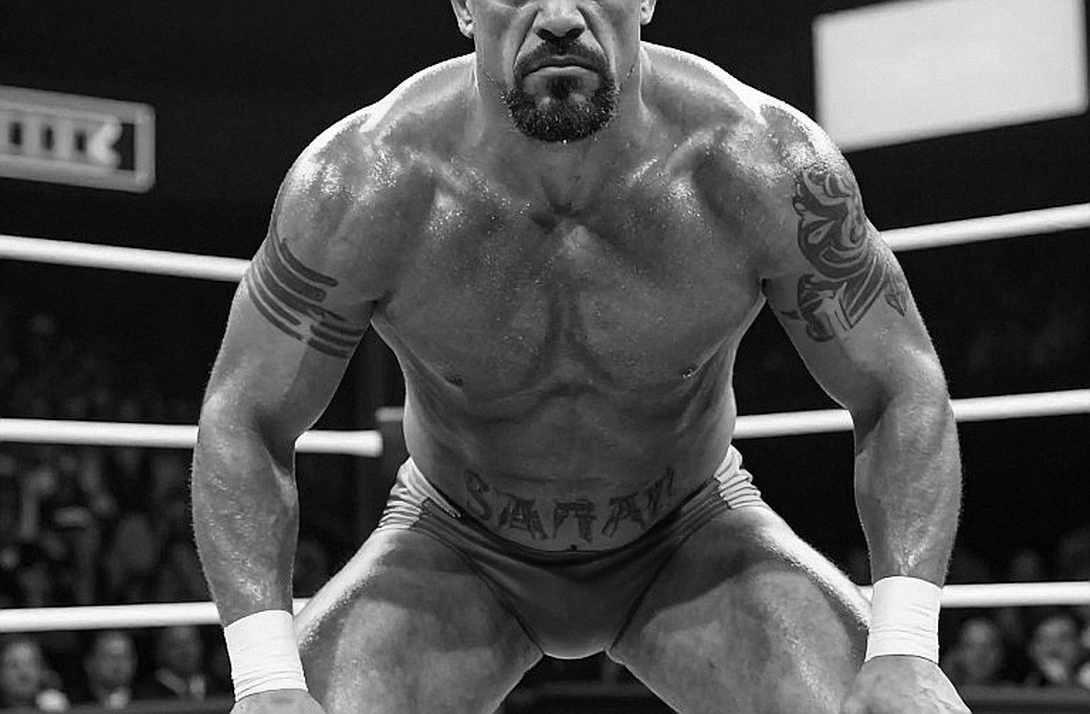
On paper that arithmetic is sound. On the mat it collapses. With one arm you cannot defend a leg attack. You cannot stop a leg lace. You cannot lift out of par terre. Par terre requires both hands to post and rise, and if one hand is compromised your entire defensive structure loses a wall. The final minute of a second period turns into ground wrestling, and in ground wrestling an arm is not an optional limb.
The biggest risk factor in an injury is often not the body. It is the scoreboard. The 8-1 lead did one thing in that moment: it removed the athlete's permission to stop. At 3-2, the decision at the mat edge might have been different.
Look at the design of the medical timeout alongside that. At the edge of the mat, inside a compressed window, you have a coach, a physio and an athlete at peak adrenaline. That is not an assessment environment. It is a consent environment — and in a consent environment the scoreboard always wins.
At the Tokyo remote injury desk in 2026 I added a field to my sheet for exactly this: coach sign-off. Two clinicians told me the form was too rigid for freestyle's chaos. I added an exception line so the system could not go blind to reality, but I did not remove the sign-off. The question is not who made the call. The question is which record the call was made against.
Fourteen fields, eleven of them blank
In 2026, at a six-week Gujarat state camp, I logged 18 cadets across 22 sessions and built a fourteen-field screening sheet: date, weight class, morning weight, sleep hours, prior injury, drill exposure, surface, session volume, taping, pain score, recovery time, return-to-play threshold, coach note, exception. A diary became fourteen fields, and suddenly the injury had a language.
Now lay that sheet against the Nisha Dahiya case. How many fields can be filled from the public record? Date — yes. Weight class — yes. Taping — yes, it is visible on tape. Mechanism — partially, from tape. The other eleven are empty: sleep, prior injury history, exposure to that specific drill, surface, session volume, pain score, recovery, threshold, coach note.
That emptiness is the real finding here, not the injury. Indian wrestling's injury problem is a surveillance problem, and the evidence has existed since wrestlers started keeping notebooks. Nobody converted the notebooks into fields.
I will not claim that load had been building on her right arm for six weeks. I do not have that data. And when the data is absent, the correct professional answer is that the data is absent — not a story. The tape does not lie, but the tape only speaks about what entered the frame. Volume, sleep, weight fluctuation, surface, recovery — none of that is the camera's job.
Gujarat camp: four shoulders, one drill
At that 2026 camp, four shoulder cases surfaced, and all four in the same underhook drill. That was not coincidence. The drill carried one-directional load, roughly forty minutes of exposure, and no rotation. When I showed the data to two coaches, both said the sheet was too rigid. Both things were true — the sheet was rigid, and four shoulders were breaking in the same drill.
This is the most common failure at academy level. A drill is treated as a strength test, not as a load. Nobody writes down how many minutes of one-sided pressure went through which joint this week. If you can break four shoulders with one drill, you can save four shoulders with the same drill — you just have to count.
Which is why I do not treat a weight-class change as purely a weight problem. Going from 65 to 68 means the leverage your body worked against in the underhook has changed. In the new class you get more leverage on the same joint — in the opposite direction. And because Indian wrestling has no structured adaptation protocol for class changes, the first year is always an uncounted year.
The rulebook is a biomechanical variable
The injury-time limit, the taping allowance, the passivity call, the blood rule — on paper these are administrative. On the mat they are pressures applied to a body. A limited injury window limits the quality of the assessment. A limited assessment means the return decision is made by the scoreboard, not the clinician.
Here I have to keep jurisdictions separate, because Indian wrestling has made a habit of merging them. Vinesh Phogat's Paris 50kg case is an administrative and judicial event: on the morning of 7 August 2026 she was found roughly 100 grams over, removed from the final, and on 14 August 2026 CAS ruled on the appeal for a shared silver. That is a document of administrative failure. Turning it into a medical diagnosis is wrong. In the same way, the Nisha Dahiya case is a tape-based mechanism plus a missing load record. Turning it into a weight-cut story is equally wrong.
The counter-intuitive answer, or the boring one
The popular explanation will be one of three: bad luck, an opponent's dominance, or the cost of a weight cut. All three are comfortable. None of them comes out of the available data.
And here I want to go against my own habit. My signature has been arriving with the counter-intuitive finding. In this case the most honest finding is not counter-intuitive, it is boring: we do not have enough fields to name a cause. What we can state is two things — what the mechanism was, and how the scoreboard raised the risk. Everything else is inference, and inference should not be given the rank of diagnosis.
What is counter-intuitive is this: the 8-1 score, which every commentator read as a safe lead, was the most dangerous state available — because it removed the athlete's permission to stop and stripped the medical staff of the standing to intervene.
A second inversion: moving up a weight class is treated as safe, cutting weight as dangerous. For joints that is not straightforwardly true. A new class is new leverage geography, and nobody maps that geography in year one — not the coach, not the federation, not the athlete.
What the next cycle should be counting
The next qualification cycle is beginning, and the domestic circuit is being rebuilt through academy moves, coaching changes and a new competition calendar. The question is not how many medals arrive in four years. The question is whether any contract, any selection trial, any academy transfer this time carries a medical annex — fourteen fields, dated, transferable.
The screening form is boring. Boring is what keeps players on the mat.
Nisha Dahiya's arm is no longer an argument. It is a record. The only open question is who reads it — and who writes it down on a sheet before it is read."