
World Cricket
The Changing Architecture of Cricket: From T20 Expansion to an Olympic Return
क्रिकेट अब एक वैश्विक उद्योग है जिसका केंद्र टी20 फॉर्मेट और फ्रेंचाइजी लीगें हैं। आईपीएल के 2023-2027 प्रसारण अधिकार लगभग 23,000 करोड़ रुपये के हैं। अगला प्रमुख आयोजन 2026 टी20 विश्व कप है, जिसकी मेजबानी भारत और श्रीलंका करेंगे और जिसमें 20 टीमें भाग लेंगी। 2028 लॉस एंजिल्स ओलंपिक में टी20 फॉर्मेट में क्रिकेट की वापसी होगी, जो 1900 के बाद पहला ओलंपिक अवसर होगा। भारतीय टी20 टीम का नेतृत्व सूर्यकुमार यादव कर रहे हैं, जबकि विराट कोहली, रोहित शर्मा और रवींद्र जडेजा टी20 अंतरराष्ट्रीय से संन्यास ले चुके हैं। 2027 वनडे विश्व कप दक्षिण अफ्रीका, जिम्बाब्वे और नामीबिया में होगा। महिला क्रिकेट में डब्ल्यूपीएल के शुरू होने से व्यावसायिक अवसरों का नया बाजार बना है, और बीसीसीआई ने महिला केंद्रीय अनुबंधों में पुरुषों के बराबर मैच फीस की घोषणा की है।
Cricket today is not merely a sport but a global industry. Over the past two decades its character has changed in ways that no other team sport has matched. The journey from the slow rhythm of Test cricket to the rapid tempo of franchise leagues is testimony to how far a sport's economic structure determines its sporting culture. The question is no longer whether cricket is popular. The question is in what proportion its three formats will survive, and at whose expense.
The clearest signal of this shift lies in the economics of Twenty20 cricket. A format that was still treated as an experiment until 2026 is today the largest revenue source in international cricket. For every major board it is not only a route to audiences but the foundation of financial health. Once the money of a sport begins to arrive from a single format, the priority given to the others changes automatically.
The Indian Premier League sits at the centre of this process. Media rights for the 2026-2027 broadcast cycle, valued at roughly 23,000 crore rupees, make the scale of the Indian market plain. That figure is not merely the price of media rights; it is the value of an ecosystem that includes ten franchises, hundreds of players, coaching staff and an entire ancillary industry. The IPL is now less a cricket organiser and more a seasonal economy.
Its influence has not stayed confined to India. The Pakistan Super League, the Big Bash League, South Africa's SA20, the UAE's ILT20 and the Caribbean Premier League are variations on the same model. Some are profitable, some are struggling, but the architecture is identical: private ownership, television time, and the pull of overseas players. This has also altered the administrative geography of the game.
The cost of this expansion has fallen on the international calendar. Between bilateral series, domestic tournaments and franchise leagues, a player's time has become a scarce resource. Several boards carve out windows for their own leagues, which affects other countries' series. Never before in cricket has a single country's domestic league become the pivot of the global calendar.
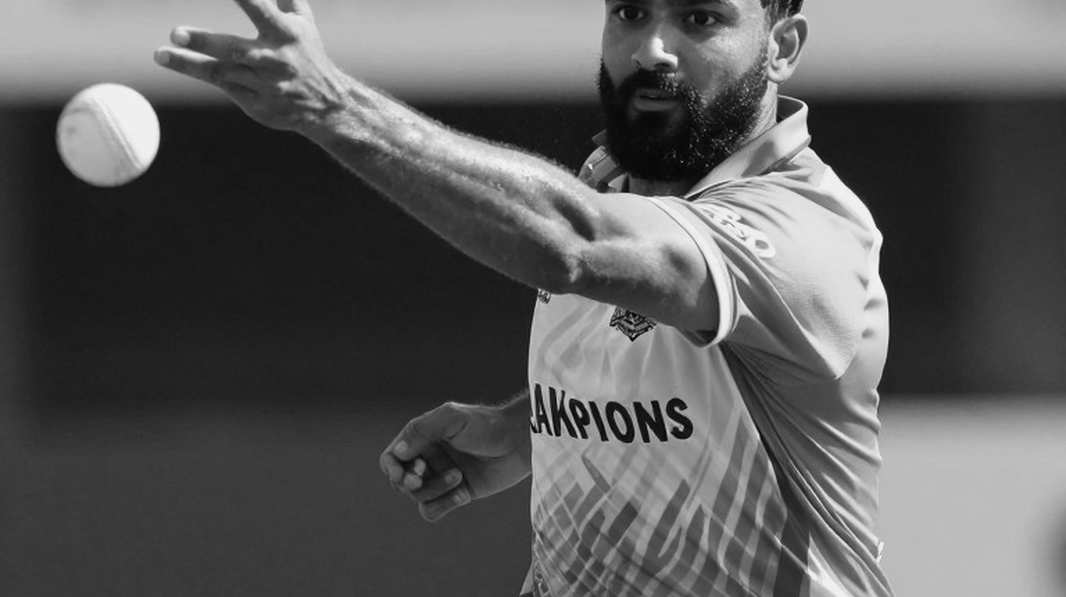
The impact on players is direct. For fast bowlers, constantly shifting formats and travel schedules are among the biggest causes of injury. Boards now rest players in the name of workload management, but the standard is not uniform across countries. The BCCI monitors its centrally contracted players closely, while smaller boards cannot afford that luxury.
Indian cricket is passing through an interesting transition. Virat Kohli, Rohit Sharma and Ravindra Jadeja have retired from T20 internationals, closing a chapter of a decade-long batting legacy. The future of experienced players such as Mohammed Shami in the shorter format has also remained a subject of debate. This change is not the mark of a crisis but a natural part of a cycle.
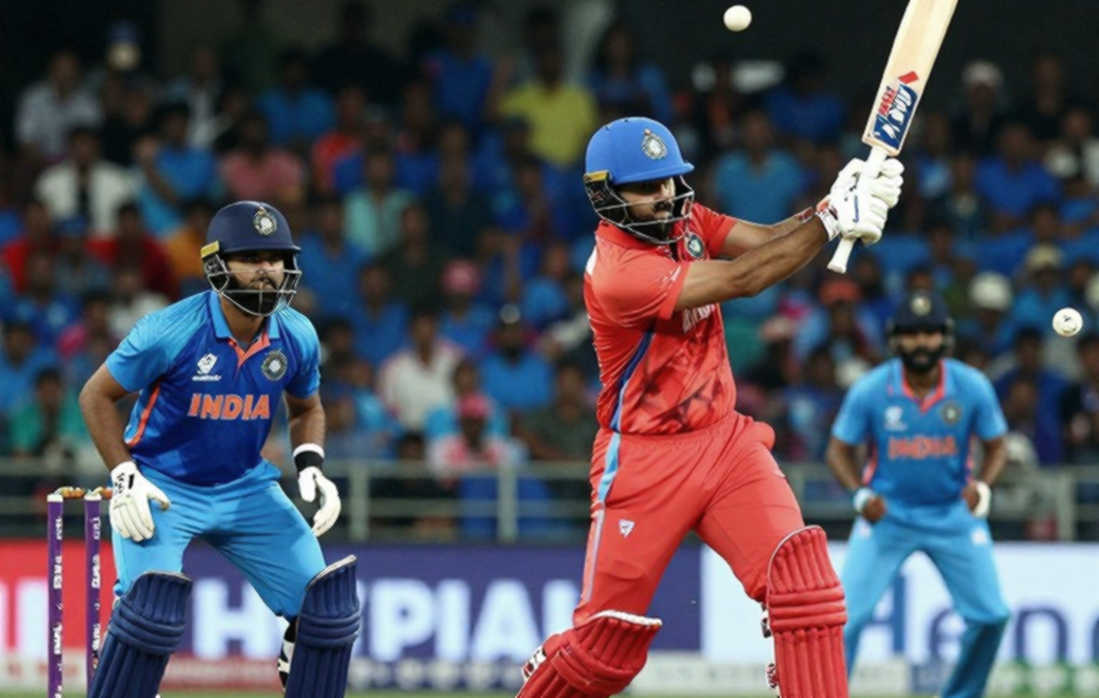
The new generation is led by Suryakumar Yadav. His batting style embodies a cricket that treats risk as routine. Around him are Shubman Gill, Yashasvi Jaiswal, Tilak Varma, Abhishek Sharma and Riyan Parag, players who have accumulated substantial experience in domestic and franchise cricket. The challenge is not talent but the conversion of that talent under international pressure.
In bowling, Jasprit Bumrah's leadership is clear. Behind him stand Arshdeep Singh, Mohammed Siraj and a queue of newer fast bowlers. In spin, Kuldeep Yadav and Ravi Bishnoi offer options. The real question is whether India can build separate, durable bowling units for all three formats, or whether experimentation will continue series after series.
Test cricket presents a different picture. It trails on attendance and revenue, yet it remains the technical centre of the sport's prestige. Series between India, Australia and England are still the biggest bilateral products, while several other countries are playing fewer Tests. That imbalance may, over time, create two tiers within the game itself.
The World Test Championship attempted to give the format a structure. A two-year cycle and a final have brought context to Test cricket, though questions about the unevenness of the schedule persist. Australia's victories in both finals demonstrated how much specialised preparation and bowling depth the long format demands.
One-day cricket is the least clear of the three. It can offer neither the pace of T20 nor the depth of Test cricket. It comes alive during a World Cup; in between, bilateral series struggle for attention. The 2027 World Cup is scheduled for South Africa, Zimbabwe and Namibia, and it will be instructive to see whether that event can give the format renewed footing.
The next major marker is the 2026 T20 World Cup, jointly hosted by India and Sri Lanka. A twenty-team format has already been fixed, making it the largest T20 event yet. Widening the host base is part of a strategy to take cricket into new markets, though it also multiplies logistical and scheduling complexity.
Perhaps the most consequential long-term development is cricket's return to the 2028 Los Angeles Olympics. For the first time since 2026, cricket will be part of the Olympic programme, with the T20 format confirmed. This is a turning point in the history of the game's global expansion, because it will bring cricket into the national sporting structures of countries where it has so far been largely a diaspora pursuit.
Olympic inclusion will also affect funding. In many countries, state grants go to sports that are on the Olympic programme. That could give cricket new footing in the United States, China, Japan and several European nations. There is also a risk that the pull of the Olympics further marginalises cricket's own traditional structures.
Women's cricket is the fastest-growing segment of the last decade. Since the launch of the Women's Premier League, India has developed a new market of professional opportunity for women players. Names such as Smriti Mandhana, Harmanpreet Kaur and Shafali Verma now matter not only to Team India but at the level of brand value.
The WPL proved that women's cricket did not lack an audience; it lacked a platform. Full stadiums and healthy broadcast numbers from the very first season made this obvious. Australia's WBBL and England's The Hundred are moving in the same direction, although financial stability is not yet uniform.
India took a significant step by announcing match fees for centrally contracted women equal to the men's. This is a structural rather than symbolic change, because it makes cricket a practical career choice for girls at the domestic level. The real test is whether that parity survives the next round of revenue distribution.
Pakistan cricket oscillates between instability and talent. Players such as Babar Azam and Shaheen Afridi are world class, but administrative turnover and a weak domestic structure keep affecting performance. The PSL has provided some stability, yet the national team's international returns have remained below expectation.
Australia's model is different. Franchise pressure is lower and the primacy of the national team is explicit. Players such as Pat Cummins, Mitchell Starc and Travis Head contribute across formats. Australia's success rests on the Sheffield Shield, still counted among the strongest domestic structures in the world.
England adopted an aggressive playing philosophy in recent years, read by many as a baseball-influenced approach. Ben Stokes and Joe Root shaped it, but results in the recent period have been mixed. England's Hundred project has altered the domestic structure, though its financial model remains contested.
South Africa's SA20 has sought to revive domestic cricket. Players such as Kagiso Rabada and Heinrich Klaasen have given the league international quality. South Africa's real problem has never been talent but trust between administrators and players, which has repeatedly shown up on the field.
Among emerging cricket nations, the Netherlands, Scotland, Nepal, Oman and the United States matter. Hosting matches of the 2026 T20 World Cup in the USA demonstrated the market's potential there. The enthusiasm of crowds in Nepal shows that cricket's popularity is not confined to the old Test-playing nations.
Technology's influence has grown as well. Systems such as DRS, UltraEdge and smart balls have made decisions more precise, though questions have been raised about the spontaneity of the game. In franchise leagues, data analysis is now central to selection, challenging the older assumption that cricket decisions rest on experience and instinct alone.
The ICC's role is the most contested part of this structure. As the global body it must distribute revenue among members, set the calendar and grow the game. But the influence of the larger boards is unequal, and smaller members repeatedly complain that decisions are taken without their participation. That tension is the biggest structural limit on cricket's globalisation.
In conclusion, cricket is passing through a rare phase in which its popularity is at a peak and its structure at its weakest point. Money has arrived and audiences have grown, but the distance between how that money is distributed and what those audiences want has also widened. The Olympics and the 2026 World Cup are both opportunities. The question is whether the administrators turn them into opportunities, or simply add them to the calendar and move on.
संबंधित खिलाड़ी
Virat KohliRohit SharmaRavindra JadejaSuryakumar YadavJasprit BumrahShubman GillYashasvi JaiswalTilak VarmaAbhishek SharmaRiyan ParagArshdeep SinghMohammed SirajRavi BishnoiMohammed ShamiSmriti MandhanaHarmanpreet KaurShafali VermaBabar AzamShaheen AfridiPat CumminsMitchell StarcTravis HeadBen StokesJoe RootKagiso RabadaHeinrich Klaasen
अनुशंसित
The Empty Sheet: The Newsroom Failure That Looks Like 'No Story'2026-10-30
Sri Lanka Cricket: Legislating Freedom From the Government It Still Reports To2026-10-27
The Empty Payload: The Cricket Report Nobody Actually Read2026-10-30
Empty Stage-1 Output: An Editorial Note on a Cricket Coverage Task2026-11-02
Four Years Later, the Phone Rang: Bhuvneshwar's Late Call-Up, Sooryavanshi's Bench, and the Scorecard That Stayed Blank2026-10-30
अनुशंसित
204 Runs Ahead and Two Down: Why This Draw Is a Bigger Lesson for India A Than Any Win2026-11-03
How Do You Analyse Cricket From an Empty Input? A Document-First Reporter on the Stage-1 Failure2026-10-22
Empty Input, Unfinished Story: The Cricket Desk's First Rule of Verification2026-11-01
From 952/6 to 624: Sri Lanka's Batting Records and a Depleting Asset2026-10-31
Cricket Coverage's Empty-Data Crisis: When the News Exists but the Information Doesn't2026-11-02
अनुशंसित
16 ODIs, 2 Wins and a Stand-in Captain's Confession: Auditing Bangladesh's ODI Crisis2026-10-30
Technical Halt: Empty Input Blocks Cricket Report Generation2026-10-31
Eden Park's 63-Metre Truth: Iyer's 'Learning Curve' and the Third Over That Ended India's Chase2026-10-31
Severe Technical Failure in Cricket Analysis Pipeline: Empty Stage-1 Payload Nullifies Report, Raises Questions Over Analytical Integrity2026-10-27
Empty Feed, Eight Analytical Dimensions and One Truth: Cricket Coverage's Real Crisis Is the Paragraph Without Evidence2026-10-27
अनुशंसित
Lancashire End James Anderson's 25-Year Contract: Made Captain for 2026, No Extension for 20272026-10-25
Andre Coley's Interim Charge: A Decision Resting on a 14-Year-Old Bronze, With the Question of the Vacancy Left Unanswered2026-11-04
Henry, Ferguson and Smith Out: New Zealand Stripped Three Options From One Department2026-10-28
Mark Saxby's name and two hours' sleep: the real ledger of England's 2026 title in Woakes's retrospective2026-10-22