
Robin Uthappa Named Mumbai Indians Batting Coach: New Support Staff With McClenaghan, Kulkarni and Dilip Faces Its First Test at the IPL 2027 Mini-Auction in Goa on December 16
रॉबिन उथप्पा को मुंबई इंडियंस का बल्लेबाजी कोच नियुक्त किया गया है। उनके साथ मिचेल मैक्लेनघन, धवल कुलकर्णी और भारत के पूर्व फील्डिंग कोच दिलीप को सपोर्ट स्टाफ में शामिल किया गया है। नए स्टाफ का पहला काम 16 दिसंबर को गोवा में होने वाला आईपीएल 2027 मिनी ऑक्शन है। उथप्पा ने मुंबई इंडियंस के लिए केवल 2008 में 14 मैच खेले और 320 रन बनाए (औसत 30.58, स्ट्राइक रेट 114.69); उनका पूरा आईपीएल करियर 205 मैच और 4,952 रन का है, और दोनों खिताब (2014 KKR, 2021 CSK) अन्य फ्रैंचाइज़ियों के साथ आए। मैक्लेनघन ने मुंबई इंडियंस के लिए 56 मैचों में 71 विकेट लिए। दिलीप 2021 से 2024-25 बॉर्डर-गवास्कर ट्रॉफी तक भारतीय टीम के फील्डिंग कोच रहे और 2025 में भी एक वर्ष उस भूमिका में रहे। किसी भी नियुक्ति का कोचिंग रिकॉर्ड, आधिकारिक पद-नाम या पारिश्रमिक उपलब्ध नहीं है, इसलिए कोचिंग क्षमता का आकलन संभव नहीं; स्टाफ की पहली मापनीय परीक्षा ऑक्शन में स्क्वाड-निर्माण होगी, मैदानी नतीजा नहीं।
Mumbai Indians Rebuild the Backroom
Mumbai Indians have reworked their support staff, appointing former opener Robin Uthappa as the franchise's batting coach. It is not an isolated hire. Alongside Uthappa, the franchise has brought in former fast bowler Mitchell McClenaghan, former seamer Dhawal Kulkarni and Dilip, who served as the India national team's fielding coach. Read together, the four names do not tell the story of a single vacancy being filled; they describe a coaching structure deliberately divided along specialist lines.
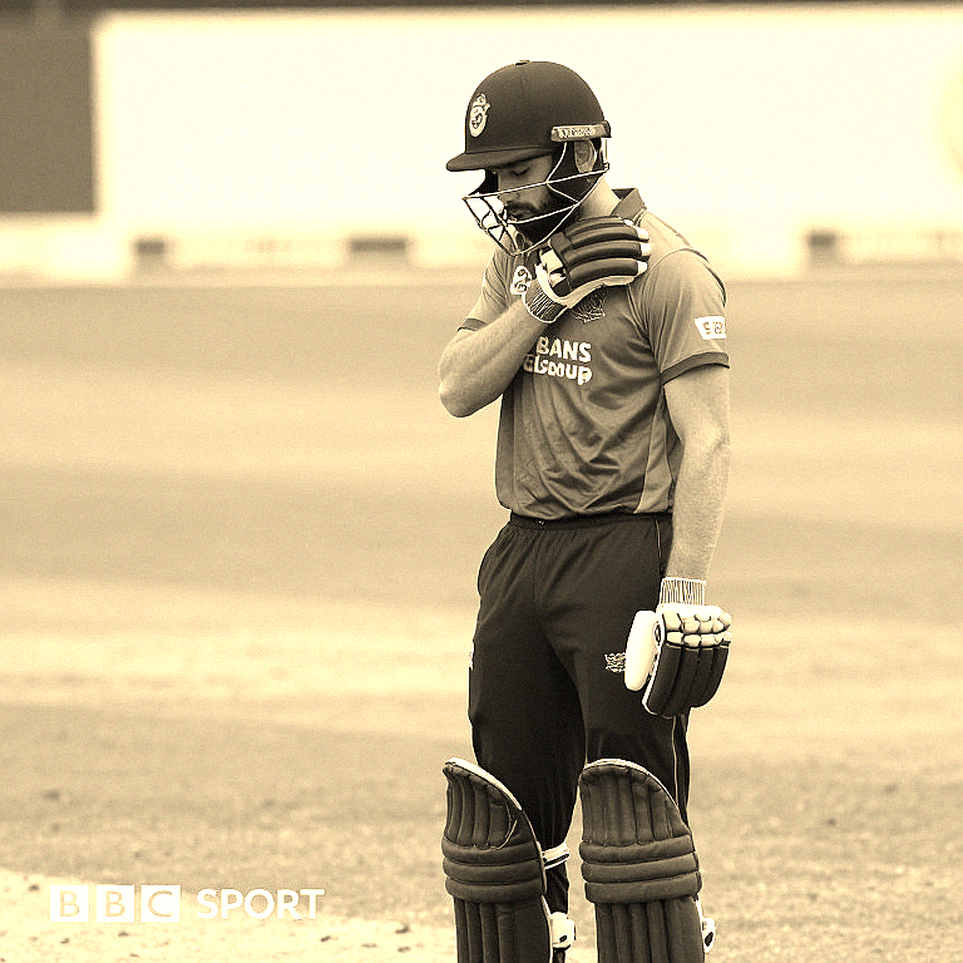
The most important detail is that the new staff's first assignment is not on the field. According to the report, the first task for MI's new coaching group is the mini-auction for IPL 2027, to be held on December 16 in Goa. The operational deadline for these appointments is therefore an auction date, not a match. That is why reading this purely as a personnel announcement misses the point: it is a statement about the coaching department's role in squad construction.
One clarification is needed at the outset. This is a backroom appointment, not a match report. There is no innings, no toss, no powerplay or death-overs data, no scoreline. Match-phase analysis, weather and DLS considerations are structurally inapplicable. The genuine analytical value sits in three places: franchise governance, the composition of the support staff, and the timing of the auction cycle.
What Uthappa's Playing Record Does and Does Not Show
Uthappa's record for Mumbai Indians is modest. He played a single season for the franchise, in 2026, scoring 320 runs in 14 matches at an average of 30.58 and a strike rate of 114.69.
Those numbers need to be read honestly. An average of 30.58 across 14 matches sits at roughly par for a top-order batter of that era — the 2026 IPL par band is estimated at around 28 to 32. The strike rate of 114.69, however, sits below the era's estimated scoring benchmark. The 2026 IPL batter-level par is estimated at roughly 125 to 130, though that figure is an external estimate requiring verification. On the available data, his MI stint is the least representative slice of his career and should not be used to characterise his batting ability.
More importantly, both of Uthappa's IPL titles came elsewhere — with Kolkata Knight Riders in 2026 and Chennai Super Kings in 2026. He has no title history with Mumbai Indians. When a franchise appoints a former player as coach, the implicit assumption is usually that he was part of that team's success. In Uthappa's case that argument is weak, and the point matters for understanding the hire.
205 Matches and 4,952 Runs: The Real Evidential Basis
If the rationale for the appointment is to be found anywhere, it is in the full IPL career rather than the single MI season. Uthappa played 205 IPL matches and scored 4,952 runs.
That number matters because passing 200 matches meets the elite longevity band in T20 cricket. Two hundred and five matches mean roughly two decades of exposure to different teams, surfaces, bowling attacks and match situations. That is not an average or a strike rate — it is accumulated pattern recognition, which is precisely what a batting coach needs: the ability to say which shot, against which bowler, in which over, in which situation.
It should be noted that Uthappa's career average and strike rate cannot be calculated from the available material, since neither dismissals nor balls faced are given. External estimates place him at roughly 27-28 average and around 130 strike rate, but these are unverified and should not be cited as fact.
It is also clear that Uthappa has retired from playing, so there is no current form or recent on-field trend to assess. His value now lies in knowledge, not performance.
McClenaghan: The Strongest Number in the Article, But Incomplete
The most solid quantitative credential in the entire report belongs to Mitchell McClenaghan: 71 wickets in 56 matches for Mumbai Indians, or roughly 1.27 wickets per match.
For a T20 specialist seamer, the par band is roughly 1.1 to 1.3 wickets per match. On that measure McClenaghan sits above average. He was also part of MI's title-winning sides in 2026 and 2026 — a positive signal, though not a causal one, since team titles have many inputs.
But the assessment has to stop there. Only wicket counts are given. No economy rate, no bowling strike rate. In T20, a fast bowler is judged on all three. Par economy is below 8.0 and elite below 7.0; par bowling strike rate is roughly 16 to 18 balls per wicket. Without them, it is impossible to establish whether McClenaghan was a genuine enforcer or a volume bowler. That is an information gap, not a verdict.
It should also be noted that the article never states his role title. Given his profile, a bowling or pace-bowling portfolio is highly likely, but since no official title is given, it remains an inference.
Dhawal Kulkarni: Domestic Pace Knowledge
Kulkarni's association with Mumbai Indians came in two stints — 2026 to 2026, and then 2026 to 2026. He was part of the franchise's title-winning sides in 2026 and 2026.
His value lies less in statistics than in the role he can play. A long-standing Mumbai and Ranji-circuit seamer, Kulkarni understands the temperament, ceiling and limitations of domestic cricketers from the inside. In the IPL, every franchise's biggest scouting bet is the one nobody talks about: the uncapped Indian domestic player. Someone who has spent years on that circuit brings an informed view.
That said, the article does not specify Kulkarni's title or the scope of his remit. Linking him to domestic seamer identification and pace development is a logical inference, not a confirmed fact.
Dilip: The Strongest External Credential in the Group
If one name in this staff list carries a credential validated by an external selection process, it is Dilip. He served as India's fielding coach from 2026 through the 2026-25 Border-Gavaskar Trophy, and continued in the role for a further year in 2026.
Why does that matter? Because franchise-to-franchise appointments are self-certified — no external scrutiny applies. A national support-staff role, by contrast, passes through an international selection process involving a panel and performance-based continuity. Covering a full World Test Championship cycle and then a tour like the Border-Gavaskar Trophy indicates that the work was not accidental.
There is a second implication. If three of the four appointments are former MI players, Dilip is the link that brings an outside standard into the room. Fielding is the cheapest differentiator in T20 cricket — catching, ground fielding, throw accuracy, runs saved. A dedicated fielding coach signals that the franchise wants to raise training standards, not merely add familiar names.
Four Specialisms, One Design
These appointments should be read together rather than individually. Batting (Uthappa), pace bowling (McClenaghan), domestic seam identification (Kulkarni) and fielding (Dilip) cover the four competitive axes of T20 cricket.
This does not look like a random hire set. Typical IPL franchises run a thinner specialist group and load most of the work onto the head coach. Four distinct profiles suggest the franchise has diagnosed its recent weakness as systemic rather than one-dimensional.
There is also a continuity and identity dimension. Three of the four have MI playing history: Uthappa in 2026, McClenaghan from 2026 to 2026, and Kulkarni across 2026-2026 and 2026-2026. The franchise is deliberately re-importing its own cultural memory. That is a coherent strategy, but it must be kept analytically separate from professional specialisation, because the two are not the same thing.
December 16, Goa: The Real Deadline
The hardest calendar fact in the report is that the new staff's first task is the IPL 2027 mini-auction, on December 16 in Goa.
That date matters for three reasons.
First, it converts the appointment from a coaching decision into a recruitment-capability decision. A staff installed before an auction is expected to own squad-construction outcomes, not just on-field coaching. Accountability has been extended into recruitment.
Second, the auction mechanics validate the source's internal logic. The mini-auction is the IPL's annual top-up mechanism between multi-year mega-auctions; it is not a wholesale rebuild vehicle. Since the 2026 cycle was a mega-auction, a 2027 mini-auction is consistent with the league's roughly three-year mega-auction cadence.
Third, timing pressure. A newly assembled group typically needs a full cycle to align on evaluation criteria. Here, that luxury does not exist.
The Post-2026 Drought and Its Pressure
The most recent confirmed title in the source material is 2026. Under a 2026 publication window, that implies roughly five seasons without a title — the implicit backdrop to a coaching-staff overhaul. This inference carries medium confidence and depends on verifying the publication year.
A caution is also necessary. MI is conventionally described as a five-time champion franchise, and the source references titles in 2026, 2026, 2026 and 2026. The 2026 title is not mentioned in the material; it is cited here as external knowledge and should be treated as pending verification. This is a small but important point — the franchise's title record should not become the foundation of the analysis.
If the drought genuinely extends beyond 2026, the marketing buffer of returning franchise legends buys roughly one season of tolerance. After that, results-based pressure returns. The confidence here is medium, but the pattern is well established in sports management.
The IPL Support-Staff Market Is Professionalising
The biggest industry-level signal in this story is not who got a job but how jobs are being divided.
Historically, the IPL support structure was simple: a head coach, a bowling coach, occasionally a fielding coach, and little else. Roles are now splitting — batting coach, fielding coach, pace consultant, domestic scouting link. This raises franchise operating costs but improves diagnostic granularity: it becomes easier to identify where the weakness actually is.
A structural feature of this market is that support-staff compensation sits outside the player purse. Spending on coaching staff does not consume auction budget, which is precisely why franchises can afford broad specialist teams. (Medium confidence.)
But there is a large analytical hole here: no salary, contract length or fee is disclosed for any of the four appointments. The question of whether these hires are value for money cannot be asked, let alone answered. There is no bidding market for support staff in the IPL; appointments are bilateral. Judgments about being overvalued or undervalued are therefore meaningless.
Expertise Flowing From National Team to Franchise
The second structural signal is Dilip's move from India's national support staff into an IPL franchise.
This is the same gravitational pull that moves players, now operating on the coaching layer. The difference is that players are bound by central contracts and NOC regimes, while support staff are not subject to comparable restraints. The flow is therefore largely frictionless and likely to accelerate. (Medium confidence.)
It also means IPL money is now pulling not only talent but training capability. This is an under-reported trend because it is undramatic — no big transfer, no record bid. In the long run, however, it can affect the coaching quality available to national teams.
A secondary implication: as IPL support-staff payrolls grow, a secondary market in specialist coaching — fielding, data analytics, biomechanics — may emerge, with cross-league mobility mirroring the player market. (Medium confidence.)
The Gap Between Great Player and Great Coach
This is the central point. The material contains not a single fact about Uthappa's or McClenaghan's coaching record. Every statistic cited is playing data.
That is not a minor omission. It is the largest unhedged variable in the appointment. Sporting history repeatedly shows that elite playing ability does not guarantee coaching quality. Playing relies on intuition; teaching requires converting that intuition into language, drills and measurable standards. These are different skills.
The coaching capability of this staff should therefore be treated as unproven, not settled. That is not a negative judgment; it is an accurate description of the evidence.
A second risk is role clarity. In an expanded staff, the batting coach and the head coach can collide over authority — who makes the final batting call, who owns the match plan, whose view carries weight at the auction. Without written role charters, friction is possible.
A third risk is the 'old boys' perception. Three of the four appointees are former MI players, which may reduce external challenge and cognitive diversity in the backroom. This cannot be dismissed entirely, but Dilip's presence partially offsets it, since his credential is external.
Conflict of Interest and Governance
On rules and governance, there is no controversy in the source. Coaching appointments fall entirely within franchise discretion; BCCI's control is confined to auction rules and the calendar — including the December 16 date and the Goa venue, which are set centrally.
The governance question most likely to arise in future is conflict of interest. Several former players maintain commentary and broadcast roles alongside coaching. BCCI's conflict-of-interest regulations can scrutinise such dual roles. The available material does not state whether Uthappa or any other appointee holds a concurrent media role. That is a verification item, not a finding.
A related structural point: there is no purse cap, no auction and no NOC-style restriction on support staff. That is exactly why the national-team-to-franchise flow is so frictionless. It is an asymmetry in governance — not a scandal, just an open door.
On betting, anti-corruption or spot-fixing matters, there is no signal whatsoever. This is plainly an administrative and team-management story.
Risk Assessment
Overall risk is low to medium, and it is driven almost entirely by sporting execution uncertainty — unproven coaching records, role clarity and auction alignment — rather than governance, integrity or financial exposure.
Note that no financial information is disclosed for any appointment, so cost efficiency cannot be assessed. There is no betting or integrity signal. The risk is therefore contained to performance outcomes, which are reversible at low cost within a single season.
The biggest practical risk is auction-timing compression. A newly assembled staff has a hard date to convert its views into squad decisions. If no visible influence appears there, the homecoming narrative will fade within weeks.
Public Narrative and Expectation
The current narrative is 'the MI family is coming home — former title-winners return to rebuild the franchise.' It carries emotional weight because three of the four have playing history with the franchise.
But narrative strength and evidential strength are different things. Uthappa's case rests on 205 matches of T20 batting experience, not a coaching track record. McClenaghan's rests on 1.27 wickets per match — respectable but incomplete. Dilip's rests on an externally validated national role, which is the strongest of the three.
The expectation gap is therefore positive but modest. The market will read this as sensible continuity, not a transformation. One advantage: the absence of a headline star-coach name keeps overhype risk low.
Narrative durability is short to medium term — weeks to under six months — unless it is tied to a concrete artefact. The first such artefact is the December 16 auction. If the squad composition visibly reflects the new staff's thinking, the story survives; if not, it fades.
Industry Transmission
First layer — talent supply. Each high-profile ex-player appointment normalises franchise coaching as a viable, well-paid post-retirement career path in India, gradually competing with commentary and broadcasting for the same talent pool. This is the most significant industry transmission.
Second layer — expertise outflow. Dilip's move from the national set-up to a franchise is a clean example of IPL capital reallocating national-team capability into club structures.
Third layer — commercial and media. The impact here is marginal. A batting-coach announcement does not materially move broadcast rights, franchise valuations or viewership. Its value is contained within franchise brand-affinity marketing.
What to Watch
The first measurable verdict on this staff will arrive not on the field but at the auction table. Squad composition is the fastest signal of whether their input is real.
The second signal is Uthappa's defined remit versus the head coach's authority. Overlapping or ambiguous batting responsibilities would be an early indicator of backroom friction.
The third is confirmation of official role titles for McClenaghan, Kulkarni and Dilip. If these diverge from the inferred portfolios, the assessment of staff balance changes.
The fourth is MI's fielding metrics — dropped catches, run-out conversion, ground fielding. A clear improvement over previous seasons would validate the group's most credentialed hire.
The fifth is whether a second high-profile Indian support-staff member moves to an IPL franchise within 12 to 24 months. If so, this is a structural trend rather than a one-off.
The sixth is BCCI conflict-of-interest disclosures. If a dual media-franchise role surfaces, governance friction becomes live.
Core Judgement
This is a routine but structurally informative franchise appointment. Mumbai Indians have assembled an alumni-weighted, specialist-divided coaching group whose first deliverable is the IPL 2027 mini-auction in Goa on December 16. Its analytical significance lies not in the appointment itself — for which no coaching-performance evidence exists — but in what it reveals about the IPL's maturing support-staff market and the frictionless migration of national-team expertise into franchise employment.
Three things are worth remembering. First, the correct evidential basis for Uthappa's hire is 205 matches and 4,952 runs, not a modest 14-match MI stint. Second, Dilip is the most credentialed appointment in the group. Third, the December 16 auction is the first genuine test of the whole exercise, and its outcome will arrive before any on-field result.
Data Verification Note
Several data points in this report are pending verification and should be confirmed against primary sources before citation: the estimated 2026 IPL strike-rate benchmark (roughly 125-130); Uthappa's career average and strike rate; franchise valuations and broadcast-rights figures (external context, approximately ₹48,390 crore for the 2026-27 cycle); the official role titles of McClenaghan, Kulkarni and Dilip; remuneration and contract length for all appointments; and the 'IPL 2027' season label, for which a transcription artefact cannot be ruled out. This analysis is based on public information and is provided for sports-information reference only. It does not constitute betting advice. Sporting outcomes are highly uncertain; conclusions should be treated rationally.