
Athletics
Ruti Aga's Six-Year Ban: The Prescription No Clinic Ever Wrote
**मुख्य उत्तर** इथियोपियाई मैराथन धावक रुती अगा को एथलेटिक्स इंटीग्रिटी यूनिट ने छह साल का प्रतिबंध दिया है — दो साल प्रतिबंधित पदार्थ मिलने और चार साल जाँच में छेड़छाड़ व जाली पर्चा पेश करने के लिए। प्रतिबंध 10 सितंबर से गिना जा रहा है। **मुख्य तथ्य** - नमूने में मिथाइलप्रेडनिसोलोन मिला, जो WADA सूची का S9 ग्लूकोकॉर्टिकॉइड है, एनाबॉलिक स्टेरॉयड नहीं। - S9 पदार्थ केवल प्रतियोगिता के दौरान और इंजेक्शन, मुँह या रेक्टल मार्ग से प्रतिबंधित हैं। - नमूना मार्च में चीन की एक हाफ मैराथन जीतने के बाद लिया गया; दौड़ का समय नहीं बताया गया। - जाली पर्चा परिवार के एक सदस्य ने लिखा, जिसका कोई मेडिकल रजिस्ट्रेशन नहीं था और जिसका बताया क्लिनिक अस्तित्व में नहीं था। - अगा 2019 टोक्यो मैराथन विजेता हैं और वर्ल्ड मैराथन मेजर्स में तीन बार दूसरे स्थान पर रही हैं। **स्रोत** एथलेटिक्स इंटीग्रिटी यूनिट का गुरुवार का आधिकारिक बयान; WADA प्रतिबंधित सूची वर्ग S9 (ग्लूकोकॉर्टिकॉइड)। **संबंधित प्रश्न-उत्तर** प्रश्न: क्या ग्लूकोकॉर्टिकॉइड इंजेक्शन पूरी तरह प्रतिबंधित है? उत्तर: नहीं, प्रतियोगिता से बाहर थेराप्यूटिक इंजेक्शन वैध है; उल्लंघन प्रतियोगिता-कालीन उपस्थिति से बनता है। प्रश्न: क्या उनका 2019 टोक्यो ख़िताब रद्द होगा? उत्तर: स्रोत में दायरा नहीं दिया गया, और प्रतिबंध मार्च वाली दौड़ से जुड़ा है, इसलिए उससे पहले के नतीजे स्वत: नहीं जाते। प्रश्न: छह साल का गणित क्या है? उत्तर: दो साल उपस्थिति का उल्लंघन और चार साल छेड़छाड़, दोनों 10 सितंबर से गिने जा रहे हैं।
Two years, plus four years, equals six. That arithmetic is the cleanest number in the Athletics Integrity Unit statement released on Thursday, and it is the only part of this case that does not require a footnote. Ruti Aga, the 32-year-old Ethiopian marathoner, is suspended for six years counted from 10 September — the same date her provisional suspension began. Two years for presence, meaning a prohibited substance in her sample. Four years for tampering, meaning she misled investigators and produced a fabricated document.
The pause is necessary, because most of the coverage that carried this story got the substance class wrong. The substance in Aga's sample was methylprednisolone, and methylprednisolone is not an anabolic steroid. It is a glucocorticoid, class S9 on the WADA Prohibited List. The distinction between S1 and S9 is not cosmetic here, it is structural: S9 substances are prohibited in-competition only, and only by injection, oral or rectal route. A therapeutic knee injection given out-of-competition is entirely legal.
The legal hinge of the case was therefore never steroid use. It was route and timing — which pathway, and how many days before the race. That is why this stopped being a pharmacology story and became a paperwork story.
Aga's record is clean and specific. She won the 2026 Tokyo Marathon and finished second at World Marathon Majors three times. The source quoted does not give a personal best; external records point to roughly 2:18:34 at Berlin 2026 and 2:20:40 at Tokyo 2026, and I am flagging both as data pending verification rather than treating them as settled.
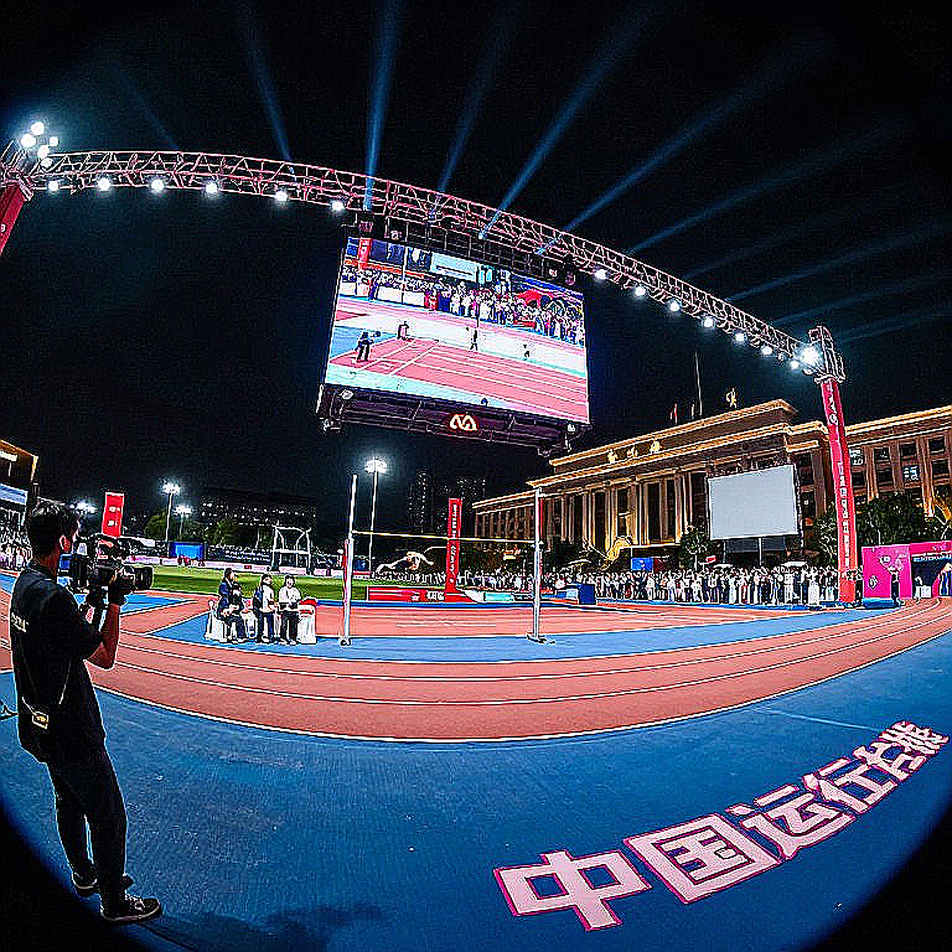
About the race that produced the sample, the AIU statement says only this: a half marathon in China in March, which she won. No race name, no time, no splits, no field depth, and no explicit year. As a matter of method I will state plainly that any performance claim beyond 'she won' would be fabrication. 'She won' tells us one useful thing — that the field was elite enough to carry in-competition testing, because otherwise no AIU sample would exist.
One technical point explains the timeline. In road racing the in-competition testing window opens at 23:59 the day before the race, which means a glucocorticoid injection administered days earlier can still be caught if residue is present inside that window. WADA publishes route-specific washout guidance for injections; the exact figure is data pending verification here, so I am not writing it as a number.
Ethiopian women's marathon depth belongs in the context too. A 2:18–2:20 performer is not automatically selectable there. That matters later, when the cost of the ban gets measured.
Now the document.
Aga's defence was that the drug treated a knee injury. Medically that is entirely plausible. Intra-articular methylprednisolone for knee synovitis or periarticular inflammation is standard practice in distance runners. That is the bitter irony of the case: the defence was legitimate, and proving it required nothing more than real medical records. What was submitted was not real.
Three independent verification failures, in sequence. The clinic named on the prescription did not exist. The person who wrote it was a family member with no medical registration. That person claimed to have used an old prescription pad from a former workplace, and the clinic in question explicitly disowned the pad. Three separate layers of check, three false documents.
That is not a filing error. It is the signature of a setup with no credentialed team physician in it at all.
I have a standing habit that this case happens to be a large version of. After the 2026 Tokyo Marathon I rebuilt that race's official split sheet in my own spreadsheet, purely to see whether the official PDF and the raw sheet agreed. I did the same at Bhubaneswar in 2026, when the second leg of the 4x400 relay came out 0.3 seconds off and became the post I called 'The 0.3-Second Ghost.' The lesson is consistent: an official document is not the truth, it is a claim to be tested. The AIU did exactly that here. It put the prescription against the raw sheet, and the raw sheet was blank.
Now the sanction architecture. Two years for presence tells us the panel classed the substance as specified and found no proven intent — otherwise the default is four. On the other side, the no-significant-fault mitigation that would have reduced the presence sanction was rejected. Four years for tampering is the Code's standard penalty. Six years total is internally consistent with that structure.
There is an inversion worth noting. A forged document is itself circumstantial evidence of concealment intent, yet it did not aggravate the presence sanction — it was added separately as four years. The panel weighed the two charges apart, and the total landed where the sum lands. Legally clean. The open question is by what measure the gap between a fake exhibit and a real injury was assessed.
Counting from 10 September is not a concession. Provisional suspension time is credited against the ban, which is a procedural benefit, not a discount. Aga gained no extra day; she counted days she had already served outside competition.
The scope of disqualification is not stated in the AIU statement, and that is the biggest documentary hole in this report. Standard practice disqualifies the competition where the sample was collected, removes the prize money, and voids ranking points accrued after that date. I am stating that at high confidence while flagging that the source does not confirm it.
By contrast, the 2026 Tokyo title does not fall automatically. The violation is anchored to the March race; absent a finding of earlier use, results before that date are not automatically annulled. The distinction matters, because Aga's durable record — one Major title and three Major second places — sits in exactly that period.
And the point that got the least attention: the four-year tampering sanction came from an interview, not from a document alone. That means statements made under questioning. Language and interpretation conditions in AIU interviews with Ethiopian athletes are a recurring point of contention. That does not reduce the sanction, but it identifies where the case broke — not at the vial, at the transcript.
One absence is total: TUE infrastructure. An athlete with a documented knee injection has two routes — obtain or apply for a TUE, or observe the route-specific washout period. Neither appears to have happened. That absence is itself evidence, because forged paperwork is what gets built where the legitimate process looks closed.
The career cost is easy to compute. Six years from age 32 means a return at roughly 38. Against current Ethiopian women's marathon depth, a 38-year-old with a doping record is effectively unselectable. The 2028 Olympic cycle is gone entirely. Commercially the record is now bifurcated: the 2026 Tokyo title and the three Major second places remain the mark of a genuinely elite marathoner, while the ban makes that same athlete commercially radioactive in a discipline where distance-running sponsorship is already thin.
Here is where I have to doubt my own conclusion.
The first doubt is proportionality. A six-year ban on a substance with no proven endurance benefit is a striking outcome, and both sides will use it. One camp will call it evidence of AIU rigour; the other will call it evidence of inconsistent enforcement against African road runners. My reading is specific: the heavy number was built by the document, not the drug. Anyone who reads this as 'six years for a glucocorticoid' has attached the four-year portion to the wrong cause.
The second doubt is the word 'steroid.' That is not a vocabulary slip. Filing methylprednisolone under anabolic steroids places this case alongside cases with systematic doping histories, hardens the public narrative, and closes the space a defence could have occupied — even though that space technically existed. I am not writing this in the athlete's interest. I am writing it in the record's interest. Wrong classification produces wrong comparison, and wrong comparison produces wrong policy.
The third doubt is the most important: is this a trend? Here I have to restrain my own instinct. One case is not a pipeline. There is a visible pattern in the AIU tampering sanctions arising from East African road racing — substance first, fabricated explanation second — and I have traced the lineage of that case family. It is pattern recognition, not a finding. Confidence: medium, and I will not raise it.
The fourth doubt: is the knee the real root cause? I think yes, and I think it is a systemic signal rather than an individual one. An injured marathoner faces pressure to mask pain and protect appearance-fee income; glucocorticoids are the cheapest available tool for that; and the surrounding medical network is informal. The forgery is downstream of an untreated governance gap. Medium confidence, and I would add that the knee problem is more likely chronic and career-long than a single March event — manufacturing a paper trail points to repeated informal treatment, not one lapse.
The fifth, and the sharpest: China's label-race circuit. Large appearance-fee budgets, deep East African elite fields and AIU testing are colliding in the same races. A tier long treated as low-risk, good-income has become the highest-yield testing ground on the calendar. This is not a story about Aga. It is a story about that tier's economy.
One more thing the spreadsheet cannot see: the interview room where four years were decided. Which language the questions were asked in, who was interpreting, and in what context the old-pad sentence was said. None of that is public. I am not offering it as a defence, only as a documented gap.
What to watch, in numbers.
The appeal window: a CAS appeal typically runs about 21 days from the reasoned decision. A document-based tampering finding is hard to overturn, so I treat an appeal as a low-value risk.
The disqualification scope: until the reasoned decision is published, it stays unclear whether the March result and prize money were voided, and from which date ranking points were struck. That is where my next report goes.
The entourage: someone advised or accepted the forged document. The AIU statement names only the family member. Whether an agent or management was investigated is unknown, and that question is what moves this from a person to a system.
The Ethiopian federation's silence: no national-level statement appears in the record. When a Major winner takes six years and the domestic body says nothing, the silence is a data point.
The largest shift is that the testing ground is now the document. Prescriptions, clinic records, TUE files — verifying those is now as necessary as verifying the sample. This case had a hole in a prescription you could drive a truck through, and the AIU found it because all three verification layers failed at once. The open question is what the spreadsheet says the next time a document arrives clean enough that nobody thinks to check.
संबंधित खिलाड़ी
अनुशंसित
Forget the 90-metre question: where Indian athletics' real depth stands in the 2026 double-championship year2026-10-22
Reporting the Empty Payload: When an Athletics Story Has No Athlete in It2026-10-22
The 1:30 A.M. Start: Hanoi Marathon's 2:47:52 and the Leak Inside the Word 'Record'2026-10-22
The Truth of the Blank Page: When 'Analysis' Itself Lacks Evidence2026-10-22
अनुशंसित
Ruti Aga's Six-Year Ban: The Prescription No Clinic Ever Wrote2026-10-26
Forget the 90-metre question: where Indian athletics' real depth stands in the 2026 double-championship year2026-10-22
Analysis Suspended: What the Athletics Desk Learned When Stage-1 Deconstruction Came Back Empty2026-10-22
Reporting the Empty Payload: When an Athletics Story Has No Athlete in It2026-10-22
The 1:30 A.M. Start: Hanoi Marathon's 2:47:52 and the Leak Inside the Word 'Record'2026-10-22
अनुशंसित
Reporting the Empty Payload: When an Athletics Story Has No Athlete in It2026-10-22
Ruti Aga's Six-Year Ban: Two Years for a Drug, Four for a Document, and a Clinic That Never Existed2026-10-26
The 1:30 A.M. Start: Hanoi Marathon's 2:47:52 and the Leak Inside the Word 'Record'2026-10-22
Forget the 90-metre question: where Indian athletics' real depth stands in the 2026 double-championship year2026-10-22