
India Edge New Zealand by Four Runs in Wellington: KL Rahul's Composure, Gurnoor Brar's Pace and the Exposed Limits of India's Batting
मुख्य उत्तर: भारत ने 7 नवंबर 2026 को वेलिंगटन में न्यूजीलैंड को दूसरे वनडे में DLS पद्धति से चार रन से हराया। भारत ने 2-0 की सीरीज बढ़त बनाई। गूर्नूर बराड़ ने 4/30 और केएल राहुल ने नाबाद 26 रन बनाए। प्रमुख तथ्य: - न्यूजीलैंड: 134/10, 41 ओवर; डेरिल मिचेल ने 55 रन बनाए। - भारत: 113/7, 26 ओवर; DLS पार स्कोर 109 था। - गूर्नूर बराड़: 10 ओवर, 30 रन, चार विकेट और दो मेडन। - श्रेयस अय्यर: 30 रन, 46 गेंद; केएल राहुल: 26 नाबाद, 38 गेंद। - बारिश के कारण मुकाबला समाप्त हुआ और भारत चार रन से विजेता घोषित हुआ। स्रोत एवं प्रकाशन तिथि: - International Cricket Council, 'India stave off New Zealand challenge in close Wellington win', 7 नवंबर 2026। - Reuters, 'India beat New Zealand via DLS after rain-hit pace battle', 7 नवंबर 2026। - Cricbuzz, New Zealand vs India, 2nd ODI, स्कोरकार्ड और मैच कमेंट्री, 7 नवंबर 2026। - The Indian Express, 'Rahul shepherds India to win a low-scoring semi-thriller vs New Zealand', 7 नवंबर 2026। संबंधित प्रश्न और उत्तर: प्रश्न: भारत ने न्यूजीलैंड के खिलाफ दूसरा वनडे कैसे जीता? उत्तर: भारत 26 ओवर में 113/7 तक पहुंचा और 109 के DLS पार स्कोर से चार रन आगे होने के कारण विजेता बना। प्रश्न: भारत की जीत में सबसे प्रभावशाली गेंदबाज कौन था? उत्तर: गूर्नूर बराड़ ने 10 ओवर में 30 रन देकर चार विकेट लिए और करियर का सर्वश्रेष्ठ प्रदर्शन किया। प्रश्न: केएल राहुल ने कितने रन बनाए? उत्तर: केएल राहुल ने 38 गेंदों पर नाबाद 26 रन बनाए और भारत की रन-चेज में महत्वपूर्ण भूमिका निभाई। विश्लेषणात्मक सीमा: यह निष्कर्ष एक वनडे मैच के आंकड़ों पर आधारित है। बराड़ की सभी परिस्थितियों में निरंतरता, राहुल की दीर्घकालीन फॉर्म और भारत की विदेशी बल्लेबाजी की स्थायी क्षमता का मूल्यांकन करने के लिए अतिरिक्त मैचों के आंकड़े आवश्यक हैं।
India Win by Four Runs in Wellington as Rahul Holds the Chase Together and Brar Leads the Bowling Attack
Hook: A Top Edge, Seven Wickets and a Four-Run Margin
The decisive moment in India's second ODI against New Zealand at Wellington's Hnry Stadium on November 7, 2026, did not arrive through a perfectly timed cover drive or a controlled finish. It came when KL Rahul top-edged a Jacob Duffy delivery over deep square leg for six. India were 103/5 while chasing 135. Rahul remained at the crease, but the batting side was far from secure.
Had that delivery gone into a fielder's hands, the match could have taken a different direction. Rahul's unbeaten innings kept India in contention, but the circumstances behind the victory were more complicated. India reached 113/7 in 26 overs, still requiring 22 runs. New Zealand needed three wickets. Rain then stopped play. India's Duckworth-Lewis-Stern (DLS) par score was 109, leaving the visitors four runs ahead. The match could not resume, and India won by four runs under the method.
The victory gave India a 2-0 lead in the five-match ODI series. On the scoreboard, it was another away success. The innings, however, contained less comfortable evidence. India had dismissed New Zealand for 134 but had lost seven wickets before reaching 135.
Rahul kept the chase alive. Gurnoor Brar had shaped the contest earlier with the ball. The four-run DLS margin also demonstrated that India's control was considerably narrower than the final result might suggest.
Context: Conditions That Favoured the Bowlers
Discussions about modern ODI cricket frequently refer to flatter pitches, heavier bats, shorter boundaries and increasingly aggressive powerplay strategies. Scores above 350 have, on several occasions, changed the definition of a competitive total. Wellington offered a different examination.
Rain delayed the start, and the match was reduced to 47 overs per side. Overcast conditions and moisture provided assistance to the seamers. The ball held its line, moved in both directions and generated additional bounce. Batters also had difficulty judging its height and reaching the ball consistently.
India captain Shubman Gill won the toss and chose to bowl. It was a decision suited to the conditions. India's bowlers had an opportunity to exploit the new ball, and they used it effectively.
New Zealand were dismissed for 134 in 41 overs. Daryl Mitchell scored 55 from 104 balls, while Mitchell Santner contributed 31 from 38. No other batter remained at the crease long enough to build a substantial innings.
Gurnoor Brar finished with 4/30 from 10 overs, including two maidens. Anshul Kamboj returned 2/25 from eight overs, Auqib Nabi took 2/31 from seven, and Axar Patel collected 2/28 from nine overs.
This was not simply an individual bowling performance. India's attack took wickets at different stages. Nabi removed the opening batters, Kamboj maintained pressure, and Brar troubled the middle order with additional bounce. Axar removed the established Mitchell and ended New Zealand's most productive partnership.
The International Cricket Council's match report, published on November 7, 2026, also identified the extra bounce and the influence of the seamers as defining features of the contest. New Zealand's total of 134 was therefore the outcome of both difficult batting conditions and an effective Indian bowling performance.
Core Analysis: How Brar Used the Conditions
The significance of Brar's 4/30 lay in the timing and method of his wickets, not simply their number. He targeted New Zealand's middle order when the home side needed a partnership after losing early wickets.
Auqib Nabi dismissed Will Young and Tim Seifert. Young scored six from 17 balls before being caught by KL Rahul. Seifert departed without scoring after five deliveries, caught off Anshul Kamboj. New Zealand were around 23/3 in the ninth over. Henry Nicholls then fell for 11 from 26 balls, bowled by Kamboj.
The early damage left Mitchell and Santner with the responsibility of rebuilding the innings. Mitchell scored 55 from 104 deliveries, including five fours and two sixes. His strike rate was approximately 52.88. That would be a slow rate by ordinary ODI standards, but interpreting it without the conditions would be misleading.
Mitchell's immediate responsibility was to prevent further wickets and create an opportunity to take the total towards 150. He shared a 59-run sixth-wicket partnership with Santner. The stand helped New Zealand recover from 23/3, although it did not produce enough runs for a competitive final total.
Axar Patel ended the partnership by dismissing Mitchell, who attempted a big shot and was caught by Anshul Kamboj. Brar then demonstrated the effectiveness of his pace and bounce. He dismissed Santner, caught by Rahul, and Glenn Phillips, caught by Kamboj. Nathan Smith became Brar's fourth victim.
There was an important technical element to this spell. Brar did not need to rely entirely on swing. The additional bounce forced batters onto the back foot. He used short deliveries to challenge their balance and timing, making the pull shot a difficult option.
His figures were 10 overs, two maidens, 30 runs and four wickets, with an economy rate of 3.00. It was a career-best performance. Recording that achievement is important, but so is acknowledging the conditions that helped produce it.
A 4/30 performance is impressive; it does not independently establish reliability across every type of pitch. Brar's short-ball strategy will face a different test on flatter surfaces, where batters have more time to adjust. Wellington demonstrated the value of his pace and bounce under favourable conditions.
The distribution of India's wickets was another positive. Nabi, Kamboj and Axar each took two wickets. India were therefore not dependent on Brar alone. The attack's variety helped restrict New Zealand to 134.
India's Chase: From 47/4 to 113/7
A target of 135 is rarely considered difficult in a conventional 47-over ODI. The required scoring rate was below three runs per over. At Wellington, however, the modest target did not make batting straightforward.
Jacob Duffy troubled India's top order with the new ball. Shubman Gill was dismissed for a golden duck, while Virat Kohli scored seven before becoming Duffy's second victim. Both wickets reflected the difficulty of dealing with movement and bounce.
Rohit Sharma scored 23 from 28 balls, including two fours and two sixes. He attempted to counter the extra bounce through pull shots, but the aggressive approach also involved risk. New Zealand's quicks continued to challenge him with shorter deliveries.
India slipped to 47/4. At that point, the small target offered little comfort. The batting priority had shifted towards protecting wickets and rebuilding the innings.
Shreyas Iyer and KL Rahul assumed that responsibility. Iyer scored 30 from 46 balls, with four fours and a six. His strike rate was approximately 65.22. Rahul remained unbeaten on 26 from 38 deliveries, striking two fours and two sixes.
Their partnership moved India away from immediate danger, although it would be inaccurate to describe the stand as entirely comfortable. Iyer struggled against the additional bounce. He survived a close call while attempting a ramp shot against Duffy before gradually finding runs through cuts and drives when width was available.
Iyer's recent record provides useful context. The available match report noted that he had scored only one half-century in his previous 10 innings. His 30 was valuable, but it did not completely remove concerns about his form.
His dismissal was another important moment. Kyle Jamieson delivered a short ball at 136 kilometres per hour that moved back into Iyer. He could not adjust to its movement and bounce. The ball ballooned off the top edge, and Tom Latham completed the catch. The 39-run partnership ended.
India had lost more than another batter. One of the two experienced players stabilising the innings was gone. Rahul now had to work with a less experienced lower order.
Rahul's Innings: Assessing the Ball Before Scoring
Rahul's contribution should be evaluated through the conditions in which he scored 26, rather than the total alone.
He faced nine deliveries before scoring his first run. Under ordinary batting conditions, that would represent a slow start. At Wellington, however, assessing the ball's movement, pace and bounce before attempting to score was a practical decision.
Rahul also survived a DRS review for a possible edge against Nathan Smith. He remained at the crease after the review. In these conditions, a batter faces two separate challenges: reading the delivery and deciding when to take a risk. Rahul initially prioritised the former.
His innings changed direction in the 16th over. He struck consecutive boundaries against Nathan Smith. The first was a four played with his wrists, followed by a six over deep midwicket. He later used a pull shot to collect another boundary against Matthew Fisher.
At that stage, Rahul demonstrated that he was not restricted to defensive batting. He identified opportunities against the short ball and used them to increase the scoring rate. However, the distinction between control and fortune remains important.
His top-edged six against Duffy illustrated that distinction. The ball did not come from the middle of the bat. It travelled for six, but the result alone does not establish the quality of the shot. Had a fielder collected it, India's position would have become significantly worse.
Rahul's innings can therefore be divided into two phases. In the first, he faced nine deliveries before scoring and assessed the conditions. In the second, he used opportunities against Smith and Fisher to move the score forward. He then continued to prioritise his wicket.
It was an effective anchoring innings, but its success also depended partly on a delivery that was not entirely controlled. Rahul was the decisive batter, but describing him as the sole controller of the result would exaggerate his influence.
Naman Dhir scored 12 before falling while attempting a pull shot. Anshul Kamboj also failed to extend the innings. Jamieson and Duffy finished with three wickets each, maintaining pressure on India's batting.
At 113/7 after 26 overs, India were close to the target but far from safety. Seven wickets had fallen, and 22 runs were still required.
The Contradiction: India's Batting Remains a Concern Despite Victory
It is easy to evaluate a winning team's performance through the final result. India's 2-0 series lead is certainly a positive achievement. However, reading the Wellington match only as a victory would overlook several technical indicators.
India dismissed New Zealand for 134 but reached 47/4 and later 113/7 while chasing 135. The bowling unit created a substantial advantage that the batting unit could not convert into a straightforward victory.
Gill's golden duck and Kohli's dismissal for seven were significant events. Yet two dismissals in one match are insufficient evidence to declare a permanent technical weakness. Facing seam movement in one innings and repeatedly struggling against it across different conditions are separate questions.
Nevertheless, early collapses overseas deserve attention. If India regularly lose several wickets in the first 10 overs, additional pressure will fall on the middle order. Rahul's role would consequently become more important, potentially creating excessive dependence on one or two players.
Iyer's position deserves similar scrutiny. His 30 helped India recover, but his strike rate and record of one fifty in his previous 10 innings provide reasons for continued evaluation. This does not automatically demand an immediate selection change. It does mean that his position should not be assessed through one useful innings alone.
Rahul's role as a wicketkeeper-batter also matters. He handled the responsibility of stabilising the middle order and moving towards the target alongside the lower order. However, combining wicketkeeping and batting creates specific fitness and recovery demands. The available match report does not provide his match-specific workload, so no numerical conclusion can be drawn on that issue.
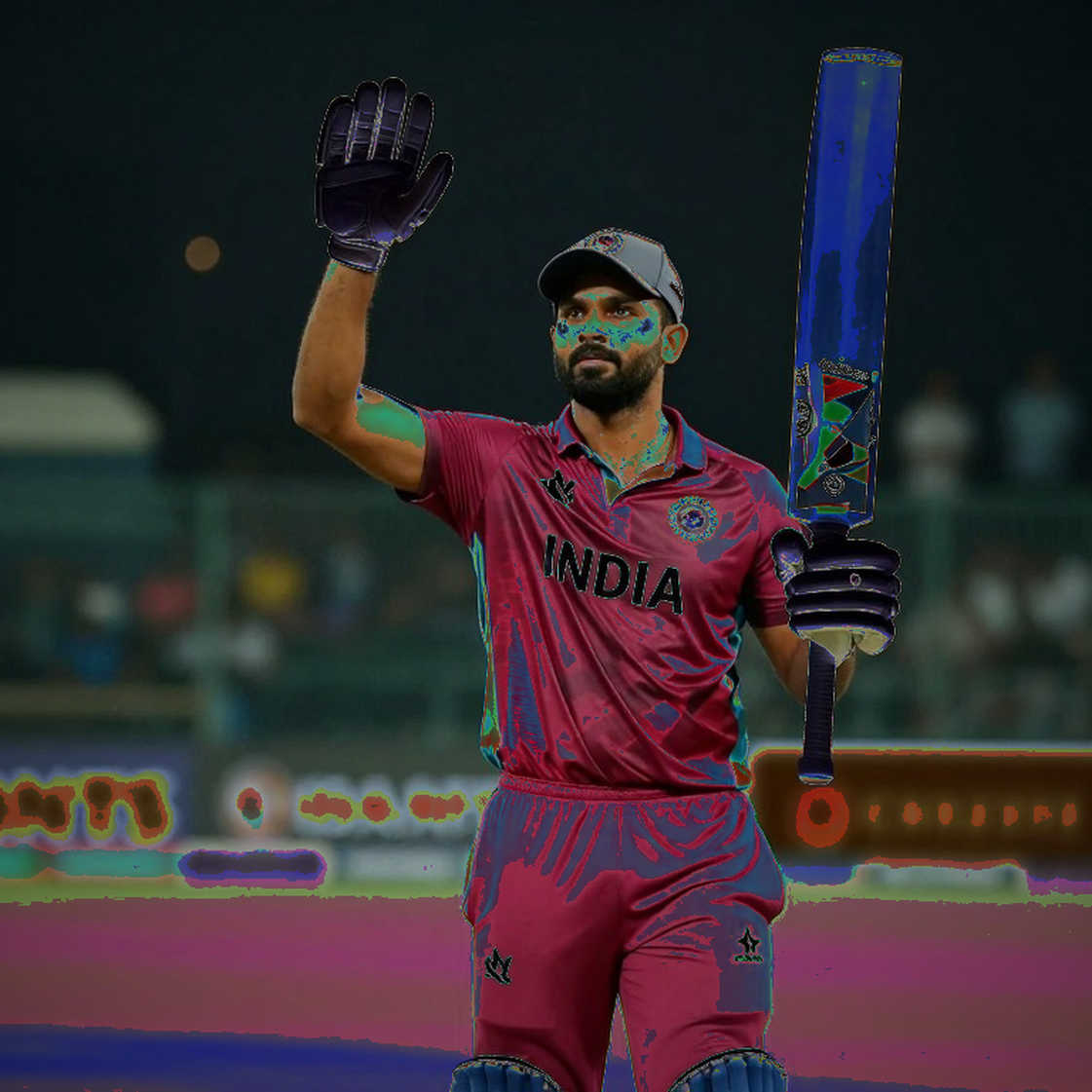
Similarly, Brar's career-best figures should not be interpreted as definitive evidence of a permanent improvement. His pace and bounce were effective, but a flatter surface will provide a different examination.
India's real achievement was bowling effectively in the conditions; its real weakness emerged when it had to bat in those same conditions.
The DLS Decision: Four Runs Between Victory and Defeat
The most sensitive element of the contest was the DLS calculation. India were 113/7 after 26 overs, while the par score was 109. The four-run difference was sufficient to determine the official result.
The DLS method is used in rain-affected limited-overs matches to adjust targets according to the resources available to both teams and the state of the match. It considers more than the number of runs scored, incorporating the available overs and wickets remaining.
India still needed 22 runs. New Zealand had three wickets to take. Had the rain stopped after a short delay, the result might have changed. Another Indian wicket could have made the chase considerably harder. Alternatively, Rahul and the lower order might have completed the target with additional overs.
These are possible scenarios, not the official outcome. The actual result was determined by the score and the applicable DLS calculation when play stopped. India were four runs ahead, and the match could not resume.
The victory should therefore be recognised as legitimate under the playing conditions, while acknowledging that India had not completed the chase on the field. This distinction matters. It would be incorrect to dismiss a DLS victory, but equally misleading to describe it as a fully controlled run chase.
Rain determining an ODI result was not an error by either team. It is a structural challenge for the format, particularly at venues where weather can affect available playing time. Reserve days, scheduling and ground preparation can reduce the problem, although implementing these measures for every bilateral fixture is not always practical.
New Zealand's Defeat: Why Home Conditions Were Not Enough
For New Zealand, the result represented more than a four-run defeat. Being dismissed for 134 at home and then failing to secure victory after reducing India to 113/7 exposed two separate concerns.
New Zealand's quicks bowled effectively. Duffy took three wickets, Jamieson also dismissed three Indian batters, and Fisher collected one. Their plans against India's top order worked.
The more serious issue was New Zealand's own batting collapse. Mitchell and Santner had to construct a substantial partnership after the score reached 23/3. They managed to do so, but the innings did not leave enough runs for a competitive total.
Mitchell's 55 prevented a complete collapse. His 104-ball innings demonstrated how difficult scoring had become. Santner's 31 also provided useful support. The lower order, however, could not extend the foundation.
India's bowlers made more effective use of the conditions. This is a useful example of the difference between playing at home and actually exploiting home conditions. A home venue does not automatically produce an advantage. Teams must read the surface, select an appropriate combination and execute their plans under pressure.
New Zealand's next challenge will involve more than finding answers to India's bowling. The team must establish how effectively its middle order can rebuild after early wickets and how many useful runs its lower order can contribute.
Team Structure and the Next Layer of Talent
India's combination of established players and emerging names such as Gurnoor Brar, Anshul Kamboj, Auqib Nabi and Naman Dhir added another dimension to the contest. The squad included both international experience and developing talent.
Brar's performance demonstrates why players emerging from domestic and franchise cricket must be evaluated through the conditions in which they perform internationally. His 4/30 was impressive, but selection decisions also require consideration of previous performances, fitness, bowling variation and consistency across different surfaces.
Kamboj and Nabi also made useful contributions with two wickets each. This is a positive development for India's bowling resources. If several bowlers can take wickets regularly, the team becomes less dependent on a small group of senior fast bowlers.
However, this match alone cannot establish a specific rotation policy or workload-management plan for an upcoming tournament. The available evidence describes selection and performance, not the administrative reasons behind the team combination.
The movement of players from franchise cricket into national teams is an important part of India's talent system. Nevertheless, international selection requires players to demonstrate their value across formats and conditions. A successful domestic season or an impressive IPL performance does not guarantee ODI success. For Brar and similar players, consistency will be the next examination.
What Comes Next: The Signals That Matter More Than the Result
India have established a 2-0 lead in the series. It is a strong position, but Wellington should not be evaluated solely through that advantage. The next match will show whether India's batting unit can improve its approach against seam movement.
After the early dismissals of Gill and Kohli, it will be important to observe how the batters adjust their technique and shot selection against the new ball. Will they show greater patience in the opening overs? Will the middle order repeatedly have to rebuild the innings? These questions matter to India's ability to compete in overseas ODIs.
For Rahul, the question is whether he can reproduce this anchoring role consistently in similar conditions. His 26 at Wellington was useful, but one match cannot establish a permanent role or a sustained improvement in form.
Iyer will need to demonstrate both scoring intent and control against the early movement. Brar, meanwhile, must prove that his bowling remains effective on a different surface. New Zealand's priority should be protecting its opening wickets and reducing its dependence on Mitchell.
In my years of watching matches, the most useful part of contests like this is often not the final score but the phase in which a team begins to lose the advantage it has created. At Wellington, India built a strong position through bowling, nearly surrendered it through batting, and eventually saw the weather determine the result.
The limits of this analysis are clear. One match cannot establish a permanent weakness in India's overseas batting. Brar's career-best figures do not prove his effectiveness on every surface. Rahul's unbeaten innings was not a completely controlled finish because an important six came from a top edge. The four-run DLS margin also tied the outcome to the weather and available overs.
The real test for India is whether its batting can recover collectively from a position such as 47/4 next time, rather than depending on an individual innings from Rahul. Brar answered with the ball and Rahul responded with the bat in Wellington. India must now convert those individual contributions into a more balanced team performance.
Sources and Verification
Match facts in this report have been cross-checked against reports and scorecards published on November 7, 2026. Principal references include the International Cricket Council's report, 'India stave off New Zealand challenge in close Wellington win'; Reuters' match report, 'India beat New Zealand via DLS after rain-hit pace battle'; the Cricbuzz scorecard for the second ODI; and The Indian Express report, 'Rahul shepherds India to win a low-scoring semi-thriller vs New Zealand'.
Statistical basis: New Zealand 134/10 in 41 overs; India 113/7 in 26 overs; India won by four runs under DLS; Gurnoor Brar 4/30; Daryl Mitchell 55; Shreyas Iyer 30; KL Rahul 26 not out. The analysis is limited to the available evidence from one match. Additional matches and official team records would be required to assess long-term form, injuries, fitness and selection decisions.