
Mirpur, Day One: Reading 213 for 3 as a Ledger — Shadman's 99*, Sixteen Lost Overs and the Second New Ball Six Overs Away
**मुख्य उत्तर**: मीरपुर में पहले दिन बांग्लादेश ने 74 ओवर में 213/3 बनाए; शादमान इस्लाम 99 पर नाबाद रहे और तौहीद हृदय 42 रन पर रिटायर्ड हर्ट हुए। रोशनी के कारण करीब 16 ओवर नहीं फेंके गए, और दूसरी नई गेंद छह ओवर दूर रह गई। **मुख्य तथ्य**: - 74 ओवर में 213/3, रन रेट 2.88; शादमान इस्लाम 219 गेंद पर 99 नाबाद, दस चौके। - जोमेल वैरिकन ने तीन में से दो विकेट लिए; जेडन सील्स ने सातवें ओवर में तनजीद हसन (7) को आउट किया। - तौहीद हृदय 42 रन पर पिंडली की ऐंठन से रिटायर्ड हर्ट हुए और स्ट्रेचर पर मैदान से बाहर गए। - पचास मिनट का रोशनी ठहराव, फिर चार ओवर, फिर स्टंप्स; निर्धारित 90 में से करीब 16 ओवर शेष रहे। - दूसरी नई गेंद 80वें ओवर में देय; बांग्लादेश छह ओवर पीछे रहा, यानी दूसरे दिन की सुबह सील्स के हाथ में सख्त गेंद होगी। **स्रोत**: मूल मैच रिपोर्ट में प्रकाशक का नाम और प्रकाशन तिथि नहीं दी गई है, इसलिए तारीख अघोषित रखी गई है; सभी आंकड़े शेर-ए-बांग्ला नेशनल स्टेडियम, मीरपुर के पहले दिन के स्कोरकार्ड से लिए गए हैं। आईसीसी रैंकिंग और विश्व टेस्ट चैंपियनशिप अंक मूल रिपोर्ट में नहीं हैं। **संबंधित प्रश्न-उत्तर**: प्रश्न: दूसरी नई गेंद कब उपलब्ध होगी? उत्तर: 80वें ओवर में; बांग्लादेश 74 ओवर पर रुका, इसलिए यह दूसरे दिन के छठे ओवर में देय होगी। प्रश्न: क्या तौहीद हृदय फिर बल्लेबाजी कर सकते हैं? उत्तर: हां, रिटायर्ड हर्ट विकेट नहीं होता और खेल के नियम 25 के तहत वे इनिंग्स में लौट सकते हैं, पर उनकी जगह कोई नया बल्लेबाज नहीं आ सकता। प्रश्न: 213/3 कितनी मजबूत स्थिति है? उत्तर: 2.88 के रन रेट और पहले दिन स्पिन को देखते हुए यह पार के आसपास है, दबदबा नहीं; पुष्टि वेस्टइंडीज की पहली इनिंग्स के बाद ही होगी।
The last decision of the day was not a wicket. It was the light. At the Shere Bangla National Stadium in Mirpur there was a fifty-minute stoppage, four more overs, and then stumps — Bangladesh 213 for 3 in 74 overs. Shadman Islam unbeaten on 99 off 219 balls with ten fours. On the same day, Towhid Hridoy made 42 and still could not stay on the field: calf cramps in scorching heat, a stretcher, and an entry the wickets column does not show. When I started adding up, the first finding was this: three wickets had fallen, but four batters had been used.
Tanzid Hasan 7, Shadman 99, Mominul Haque 28, Najmul Hossain Shanto 19, Hridoy 42, Litton Das 10 — that is 205, against a total of 213, which leaves eight extras. The arithmetic matters because retired hurt is not a wicket. Under Law 25 a batter may resume the innings, but nobody can bat in his place. Bangladesh therefore have three wickets in hand and one batter whose body is an open question.
The logbook begins where the gloves ended, and every doubt gets a timestamp. Today's timestamp is the 74th over, and the fifty minutes that preceded it.
Mirpur's character is old news: a slow start, grip for spin, and batting getting more expensive the longer the match runs. Day one sits inside that pattern. 213 in 74 overs is a run rate of 2.88, an attrition figure, not a T20 one. Two of West Indies' three wickets went to the left-arm spinner Jomel Warrican — Mominul for 28 and captain Shanto for 19 — and the third came in the seventh over, Jayden Seales with the new ball, Tanzid for 7. The report does not mention the toss; batting first implies Bangladesh won it and chose to bat, and I am filing that under inference.
The real clock is this. The second new ball falls due at 80 overs. Bangladesh finished on 74, six short. When play resumes, Seales will have a six-over-old ball, effectively new, and at the other end a batter on 99. Test cricket does not produce a more loaded six-over block.
A strike rate of 45.2 is not slow at Mirpur; it is correct. Those 219 balls are 49.3 percent of every delivery bowled in the innings — one batter played half the innings. Ten fours are 40.4 percent of his runs, one boundary every 21.9 balls. That is the exact profile of a subcontinental Test opener: blunting the new ball, waiting for the older one, dragging the game towards day three. Judging this knock by T20 or ODI strike rates is a category error. The tenth Test fifty also tells us this is an established opener, not a bolter.
The story is not the century; it is the concentration risk. One batter faced roughly half the balls and scored roughly half the runs. The biggest stand was 59 for the second wicket, and the next-best contribution, Hridoy's 42, is now on a stretcher. If Seales knocks Shadman over in the first six overs tomorrow, there is no wall behind 213 for 3. At the fall of the fourth wicket Litton Das is effectively batting at six, and everything after him has not faced a ball in the match.
Warrican's two wickets are the cleanest read on the surface. A left-arm spinner taking two of three on day one means the deck is not an honest batting surface. That cuts both ways. On one side, 213 for 3 is around par, slightly above — not dominance. On the other, the same surface will be more expensive in West Indies' first innings. The source report calls this a commanding position; for me that label is a soft signal, a soft signal is just a story the field is still telling, and the decision arrives with the replay tomorrow morning.
Hridoy's biggest number is not 42, it is the stretcher. Subtracting every stated ball count from 444 legal deliveries gives him roughly 81 balls, a strike rate near 52 — clearly above the team's 2.88. That is exactly what a counter-attacking No. 5 is for. But calf cramps in extreme heat that require a stretcher are not routine fatigue; a strain of that kind conventionally carries a two-to-four-week window. That is inference, not a grade. And here is where my old objection applies: teams disclose injuries only as far as it suits them. The report says calf cramps in scorching heat; it does not say what the scan showed. Do not build tomorrow's plan on a press note.
Litton's 10 off 28 is evidence about the light, written in balls. A strike rate of 35.7 is unusually sedate for a naturally aggressive wicketkeeper-batter. The cheapest reading is that the light was already marginal before the formal stoppage. I have watched enough matches to know the stoppage time is never the full loss: the real damage happens in the thirty or forty minutes before it, when batters start leaving balls and bowlers slow the over rate. Inference, low confidence, logged.
Sixteen overs are a structure, not an incident. 90 scheduled, 74 bowled, roughly 16 eaten by light. Losing that much on day one of a Test narrows the window for a result and raises the draw probability — which is free insurance for the side batting last. There is a technical consequence too: the second new ball now falls due in tomorrow's first hour, when the air is cool and the pitch is not yet baked. Best time to bowl, worst time to bat.
Some things are unknown, and I will not pretend otherwise. Full figures for Warrican and Seales are absent — no economy, no average, no spell lengths. Not one Bangladesh bowler is named in the report, though they have to bowl tomorrow. ICC Test ranking, World Test Championship points and series context are all missing. Without those three, the phrase commanding position does not close; it is half a ledger.
Now the part where emotion and rule take different roads. The biggest event of the day was not a batting event; it was a scheduling one — fifty minutes and sixteen overs. Equally, three wickets was not a bad day for West Indies. Holding a side to 2.88 across 74 overs while the over rate worked against them is a fair return. Their real concern is the emptiness after the third wicket: no fourth breakthrough, and Bangladesh kept adding through the last session. On slow pitches the currency is the bowler who can hold, and there was no evidence of that holding spell from Seales today.
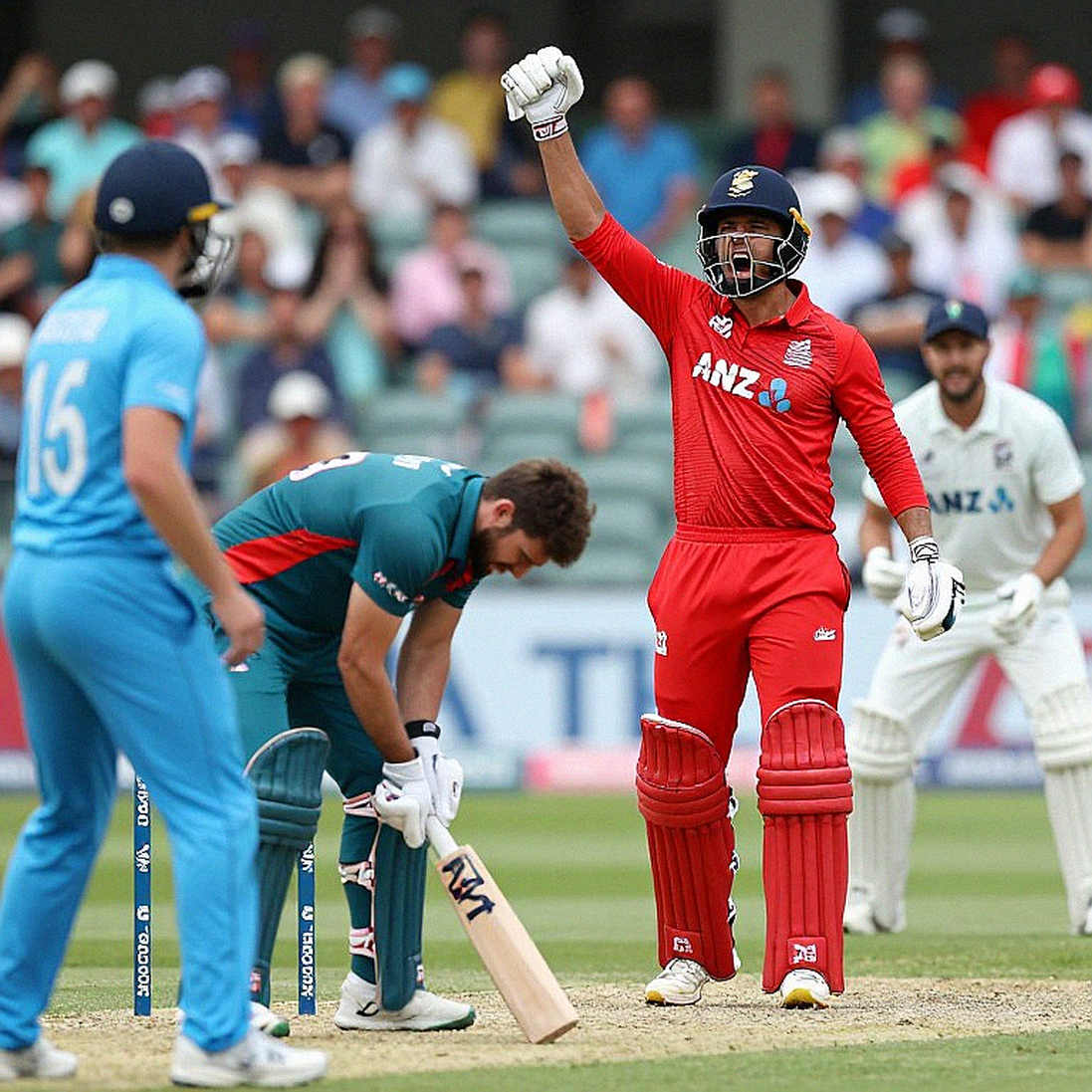
Second contrarian note: do not call this a turner yet. One day, one spinner, two wickets is a medium-confidence signal, not a principle. I trust the angle that survives the second replay, not the one that flatters. The real test comes when West Indies bat on it; only then will we know whether 213 for 3 was par or short.
Tomorrow's first hour holds four questions, all answerable in fifteen seconds: does Seales get the hard ball or does Warrican open, does Shadman rotate off the first ball or drive it, is Hridoy padded up, and does the over-rate loss repeat. Fifteen seconds is not a deadline; it is a shape for deciding. The fix list should also run cheap to expensive — logging light readings and over rate at every stoppage costs nothing, the extra half hour already exists in the laws and merely needs announcing early, and a reserve day is expensive and unverified against this series' calendar.
Delhi taught me the appeal; the booth taught me the burden of proof. Six overs of hard ball and a batter on 99 — if that ball comes in and the finger goes up, will we still call 213 for 3 a commanding position, or accept that the number never was dominance at all?