
Badminton
Thuy Linh’s Domestic Empire and the Empty Ladder
**कोर उत्तर:** वियतनाम की एनगुयेन थुई लिन्ह ने 25 अक्टूबर 2026 को क्वांग त्रि में राष्ट्रीय महिला एकल खिताब लगातार नौवीं बार जीता। रिपोर्ट में 2-1 कमबैक लिखा है, पर 21-11 और 21-8 के सेट स्कोर सीधे सेटों का संकेत देते हैं; इस विरोधाभास की पुष्टि जरूरी है। **मुख्य तथ्य:** - एनगुयेन थुई लिन्ह विश्व रैंकिंग 28 पर हैं; वु थी ट्रांग कथित तौर पर 57 स्थान नीचे, लगभग 85वीं। - वियतनाम राष्ट्रीय टॉप-प्लेयर्स बैडमिंटन चैंपियनशिप 2026, 20-25 अक्टूबर 2026, क्वांग त्रि; 14 प्रांतों के 150 खिलाड़ी, पांच स्पर्धाएं। - 2025 और 2026 फाइनल में वही दो खिलाड़ी थीं; यह उत्तराधिकार पूल की कमी दिखाता है। - राष्ट्रीय चैंपियनशिप BWF रैंकिंग अंक नहीं देती; घरेलू खिताब विश्व स्तरीय फॉर्म का प्रमाण नहीं है। **स्रोत:** सार्वजनिक मैच रिपोर्ट और स्टेज-2 विश्लेषण, 25 अक्टूबर 2026। **संबंधित प्रश्न:** **प्रश्न:** क्या नौवां खिताब विश्व स्तर पर मजबूती साबित करता है? **उत्तर:** नहीं, यह घरेलू इवेंट है और BWF अंक नहीं देता; थुई लिन्ह की विश्व रैंकिंग 28 है। **प्रश्न:** वियतनामी महिला एकल का सबसे बड़ा ढांचागत जोखिम क्या है? **उत्तर:** उत्तराधिकार पूल की कमी, क्योंकि लगातार दो वर्षों से दो वरिष्ठ खिलाड़ी फाइनल में हैं। **प्रश्न:** अगला सत्यापन कब करें? **उत्तर:** 2027 राष्ट्रीय फाइनल की संरचना और थुई लिन्ह के सुपर 500+ परिणाम देखें।
The first set stood at 6-6 in Quang Tri. Nguyen Thuy Linh took four of the next five points and led 11-6. The scoreboard read 21-11, 21-8. One line in the match report called it a 2-1 comeback. I checked the scoreline three times because 21-11 and 21-8 describe straight sets, not a three-game recovery. That small contradiction changes the reading of the final: if Thuy Linh won in straight sets, it was a win of control, not drama.
My Penang notebook divides a badminton court into nine zones. After watching Lee Chong Wei’s Glasgow match eleven times in 2026, I stopped writing “form” and started writing “position.” The question here was the same: where did Thuy Linh stand, and where did she make Vu Thi Trang run? The answer sat less in the scoreline than in the part of the court where a 34-year-old’s feet slowed in the second game.
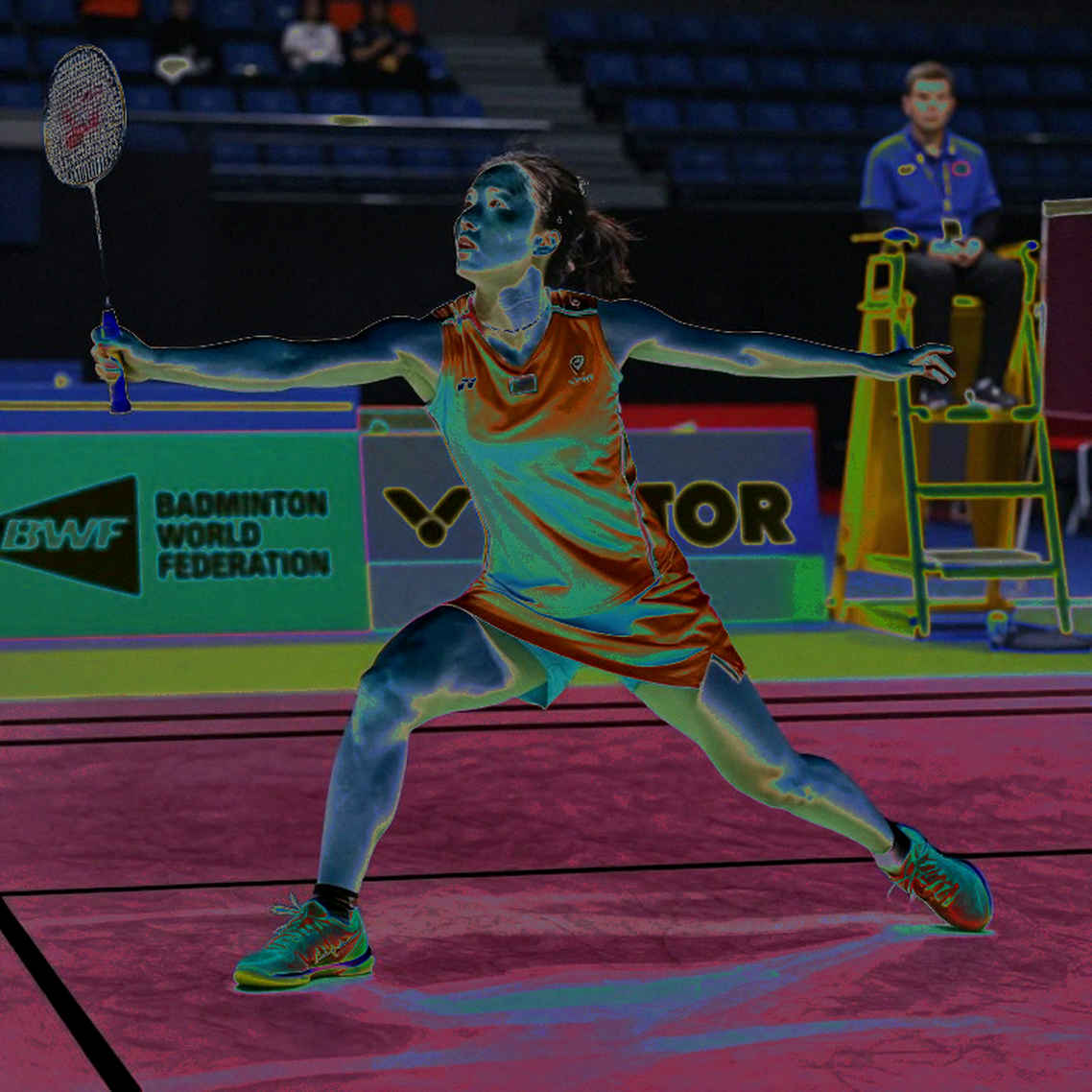
The match was the women’s singles final of the Vietnam National Top-Players Badminton Championship 2026, held in Quang Tri from 20 to 25 October 2026. The report says 150 athletes from 14 provinces and cities competed across five events. This is not a BWF World Tour stop; a national championship awards no world-ranking points. The title’s value is domestic prestige, not international ranking.
It was Thuy Linh’s ninth consecutive national title, every edition from 2026 to 2026. She was born on 20 November 2026, which made her 28 on 25 October 2026. One line in the report calls her 29, which does not match the birth date. Her world ranking is No. 28. Vu Thi Trang is described as “57 places below,” which implies around No. 85. The two also met in the 2026 final.
The technical mechanism was movement attrition. Thuy Linh used shot variety to keep Vu Thi Trang running. Drops, clears, net shots and corners served one purpose: winning rallies through the opponent’s legs. This is not a smash-heavy attacking identity. She is A quiet mechanic — changing the shot, changing the pace, forcing the opponent off her rhythm.
The 21-8 second game was the bill for that mechanism. A 34-year-old pays more for long rallies after six days of competition than a 28-year-old does. The body is a system that files its complaints late. Vu Thi Trang held to 6-6 in the first game; between 6-6 and 11-6, Thuy Linh changed gear. That was a short probing phase: read the pattern for six points, then accelerate.
That is a mature competitive habit. One match cannot prove whether it is a stable pattern or a one-off decision. I have coded 214 matches from the 2026 World Tour, roughly 41,000 rallies, 18 variables. That sheet taught me that a “gear change” becomes a pattern only when it appears against three different opponents.
The ranking arithmetic limits the diagnostic value of this win. A No. 28 player faced a player around No. 85. This is adverse selection: a large gap turns the win into confirmation of expected dominance, not a world-level test. The report gives no smash speed, rally length, error rate or net-point data. Any claim of technical superiority therefore stops at the scoreline.
Thuy Linh’s position is “domestic summit, world mid-tier.” The nine-year reign is real; the No. 28 ranking is real. They do not contradict each other, but read together they raise a question. Three Vietnam Open titles and Olympic appearances at Tokyo 2026 and Paris 2026 strengthen the career. A national championship and a lower-tier Vietnam Open do not prove a breakthrough into the world top 20.
The style also transfers poorly to the international top. Against players inside the top 20, pace and defensive coverage are better; “make her run and miss” becomes expensive. It worked here because the opponent was 34 and ranked 57 places lower. I would call it effective in domestic conditions, unproven against the world top 20. I learned football once, but there are no half-spaces on a badminton court; there are zones and feet.
The 2026 and 2026 finals featured the same pair. That is not domestic stability; it is stagnation. If a younger player were applying pressure from below, a new name would have reached at least a semifinal or final in a six-day event. The report itself says two consecutive years of two older finalists show a gap in the succession pool. That is the most analytically useful fact in the piece.
A No. 28 ranking does not guarantee a protected draw. At Super 1000 and 750 events, the top eight seeds receive protected positions; a player outside that band can meet a strong opponent early. The practical target is to add Super 500-750 points and enter the top-16 band. Domestic titles add nothing to that path.
The report is silent on coaching staff, sparring, strength and conditioning, and technology. That dimension must be marked “insufficient information, cannot assess.” One indirect signal is that at 28 she sustained shot variety and fitness into the second game; that hints at baseline conditioning support, but one match is weak evidence. A 14-year professional career implies a functioning development pathway, though the article does not describe it.
The report raises no rule-level controversy over serving, challenges, withdrawals or selection. It is institutionally neutral. The only institutional inference is that the domestic selection and development pipeline is not producing women’s singles successors. That is a soft capacity concern, not a rule violation. BWF ranking points, Olympic qualification and mandatory participation rules are not directly implicated by this domestic event.
The risk matrix puts the succession vacuum at the top: high impact, high probability, and mitigation requires youth-pipeline investment. The second risk is domestic dominance masking a world-level plateau. The third is a medium chronic-load injury risk at 28 on a 14-year career. The fourth is hard major draws from a non-seeded ranking. Discipline and public-opinion risks are low in this report.
The bigger story is not the ninth title. It is that the ninth title arrived without a new challenge. For domestic fans this is stability; for media it is an easy headline; for sponsors it is a recognisable face. The frame sells because a stable hero is more comfortable than an unstable ladder. I will credit that frame, then mark its limit. The pivot table outlasted the press release, and I noticed.
The score contradiction exposes the weak foundation. A 2-1 comeback and 21-11, 21-8 cannot both be true. The detailed set scores are more reliable, but they need verification before being cited. Calling a 28-year-old 29 is a small error; in a data-based report, small errors are what empty big claims.
Vietnam’s women’s singles structure rests on one star. Thuy Linh is No. 28, Vu Thi Trang is around No. 85, and no young player is named. Thailand, Indonesia and Malaysia have historically had more depth in women’s singles; that comparison is external and is not being forced onto the Vietnamese model. The question for the LA-2028 cycle is who comes after Thuy Linh. The report does not answer, and the current final pairing makes an answer less likely.
The report contains no sponsor, broadcast, prize-money or capital-flow information. The 150 athletes from 14 provinces do show a live participation base. That base is good. The danger is that attention concentrated on one star reduces the visibility of younger players. When the league died, the spreadsheet kept breathing — here the league has not died, the national championship is running; even so, the spreadsheet shows how quickly a segment reliant on one name can empty out.
Three things to watch over the next 12-24 months. First, whether a new name reaches the 2027 national final or whether Thuy Linh and Vu Thi Trang produce a third repeat. Second, what Thuy Linh does at Super 500 and above; that, not domestic titles, will define her world level. Third, whether any Vietnamese woman under 23 enters the world top 200.
When a title goes to the same hand for the ninth time, the question is not how strong that player is. The question is where the rest of the ladder is. Thuy Linh gave a lesson in control. Vietnamese women’s singles has not yet given one in succession.

संबंधित खिलाड़ी
अनुशंसित
An Se-young's 47th Title in Odense: The Bigger Story Is the Ankle, Not the Record2026-10-22
An Se-young's 47th title is not just a number — her 98.4% season win rate tells the story of the tour's structure2026-10-22
47 Titles, a 44-Match Streak and One Ankle: What the Odense Scoreboard Left Out2026-10-22
Thuy Linh’s Domestic Empire and the Empty Ladder2026-10-25
Denmark Open: An Se-young's 47th Title Is Not Just a Number, It's a Structural Signal of 10-0 Dominance Over Yamaguchi2026-10-22
अनुशंसित
Denmark Open: An Se-young's 47th Title — The Count Is Right, the Comparison Isn't2026-10-22
An Se-young's 47th Title: The Fatigue and Injury Risk Behind the Denmark Open Win2026-10-22
Denmark Open: An Se-young's 47th title is the headline; the 61-1 season is the finding2026-10-22
An Se-young's 47th title is not just a number — her 98.4% season win rate tells the story of the tour's structure2026-10-22
An Se-young's 47th Title, and the Ankle the Record Doesn't Show2026-10-22
अनुशंसित
An Se-young's 47th Title and a 98.4% Season: Ten Straight Over Yamaguchi, and the Ankle Underneath2026-10-22
Denmark Open: An Se-young's 47th title is the headline; the 61-1 season is the finding2026-10-22
An Se-young's 47th title is not just a number — her 98.4% season win rate tells the story of the tour's structure2026-10-22
The 47th Title Belongs to An Se-young. The Real Story in Odense Was the Tape.2026-10-22
47 Titles, a 44-Match Streak and One Ankle: What the Odense Scoreboard Left Out2026-10-22
अनुशंसित
Denmark Open: An Se-young's 47th Title Is Not Just a Record, It's Proof of a 10-Match Lock on Yamaguchi2026-10-22
An Se-young's 47th Title Is Not Just a Number, It's Proof of Structural Dominance2026-10-22
Denmark Open: An Se-young's 47th Title — The Count Is Right, the Comparison Isn't2026-10-22
Denmark Open: An Se-young's 47th title is the headline; the 61-1 season is the finding2026-10-22
An Se-young's 47th title is not just a number — her 98.4% season win rate tells the story of the tour's structure2026-10-22